Levy pause exposes US frailties
Decision to exempt electronics reflects industry's inability to meet demand









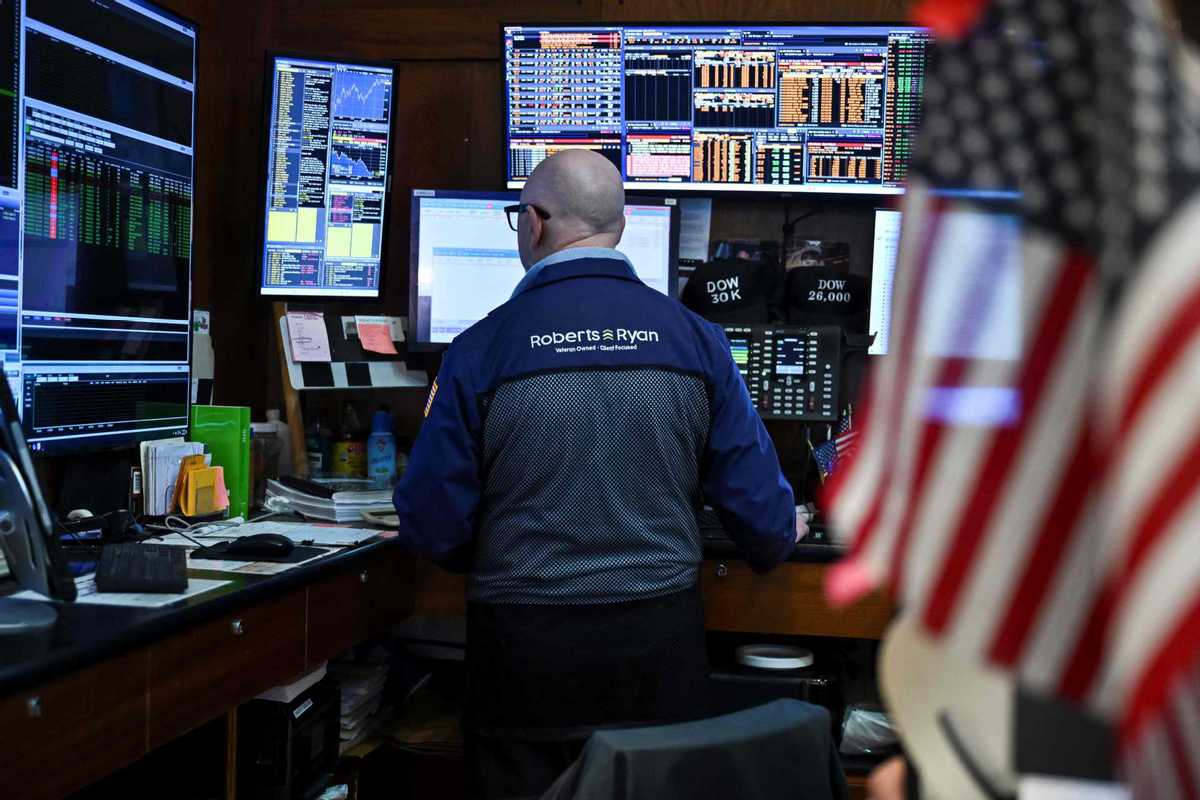
The US administration's decision to exempt key electronics from steep tariffs reflects a sobering reality: the United States' electronics industry is no longer equipped to meet domestic demand independently.
Analysts say the industry faces significant hurdles, including high labor costs and limited production capacity.
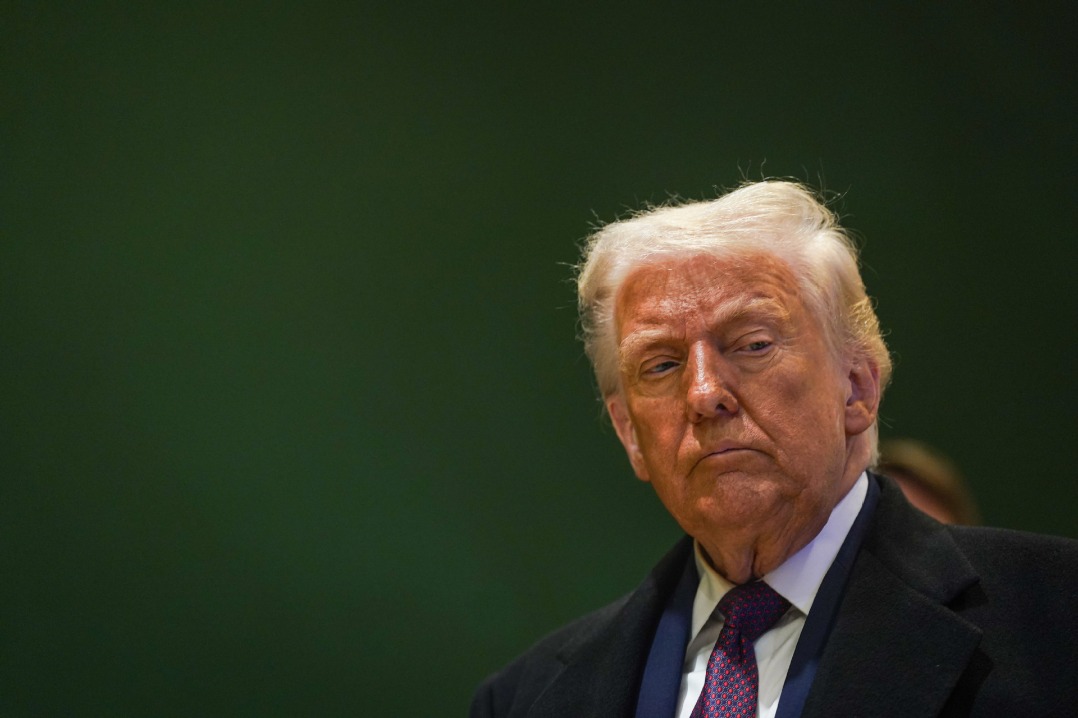
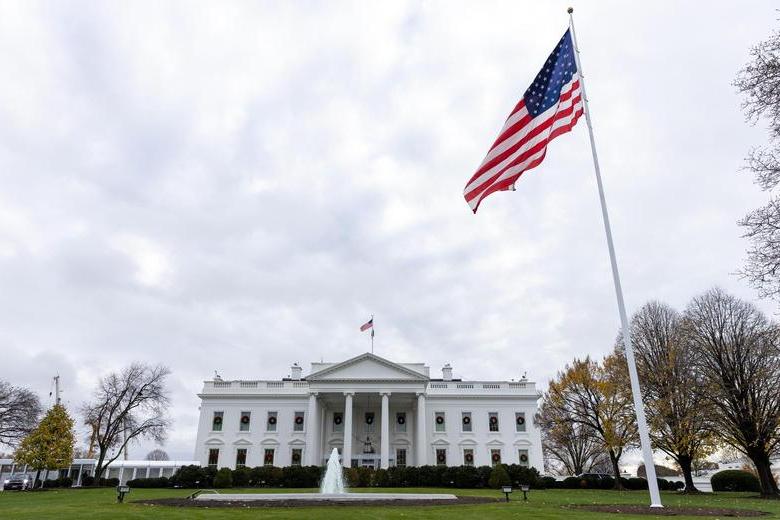
The Donald Trump administration late on Friday announced exemptions from steep tariffs on key electronics, including laptops, smartphones, and related components predominantly imported from China.
Dan Ives, a technology analyst on Wall Street for over two decades, called the exemptions "the massive relief for market and tech stocks heading into Sunday night".
"Finally the news US tech investors were dreaming of … chips/smartphones/computers exempt from tariffs. US Big Tech spoke and the White House made the right move at the right time," Ives posted on X.
Economists have warned that tariff costs may ultimately be passed on to consumers. This concern has prompted many people in the US to rush to purchase big-ticket items such as cars and electronics.
Consumer sentiment plunged 11 percent this month to 50.8, the second-lowest reading on records dating back to 1952, according to a University of Michigan survey released on Friday.
The Budget Lab at Yale, a nonpartisan policy research center, estimated that all tariffs enacted in 2025 could increase the overall price level by 2.3 percent in the short term, translating to an average loss of purchasing power of $3,800 per household annually.
Trump's "reciprocal tariffs" have raised fears of a US recession and drawn criticism from some members of his own party.
Joe Walsh, a former Republican congressman, wrote on social media platform X, "More exemptions, so the question remains: If tariffs are so great, why so many exemptions?"
Other critics of Trump's tariffs also took to X on Saturday to comment on the decision and highlight the administration's previous statements regarding the tariffs.
US Commerce Secretary Howard Lutnick said on April 6 that tariffs would enable smartphone manufacturing to occur in the US, supporting Trump's campaign promise to bring manufacturing jobs back to the US.
"The army of millions and millions of human beings screwing in little screws to make iPhones, that kind of thing is going to come to America," Lutnick said during an appearance on CBS' Face the Nation.
However, the electronics exemption suggests manufacturers will no longer have immediate incentives to consider producing smartphones and other electronics in the US.
The exemption list includes products the US heavily relies on for overseas production, with limited domestic manufacturing capacity and high consumer demand.
For instance, almost all iPhones are manufactured in China, according to the Council on Foreign Relations, although Apple has shifted some production to India. Apple itself doesn't operate the factories that produce its electronics; it relies on contract manufacturers, notably Foxconn.
According to the US International Trade Commission, China has long been the US' largest source of electronic products. In 2023, the most recent year with available data, China was the top source of the US' imported electronic products. The US imported $145.9 billion worth of electronic products from China, accounting for nearly 25 percent of all electronic product imports.
Heavy reliance
While there is a trend toward reshoring electronics manufacturing to the US, experts note that some products cannot be easily manufactured or sourced domestically, thus increasing the production costs in US factories. Semiconductors and microchips are among the products heavily outsourced to factories in Asia due to lower costs.
The US domestic electronics sector already faces significant challenges, and the new tariffs would substantially increase manufacturing costs, according to an MNI report on US electronics manufacturing released this week.
The implementation of new tariffs, particularly on imports from major trading partners such as China, Canada, and Mexico, poses a substantial threat to the US electronics sector. Increased tariffs on critical components and raw materials would likely translate directly into higher production costs for domestic manufacturers, potentially leading to price increases for consumers and significant disruptions in established global supply chains, the report said.
It also highlighted the rising labor costs as a major challenge to the US electronics sector, with projections of a 3.3 percent increase in labor costs in 2025.
Alan Murphy, founder and CEO of Sea-Intelligence, told CNBC: "Higher-margin and more technical goods, such as electronics, machinery, medical equipment, and pharmaceuticals cannot easily move sourcing, as setting up highly technical manufacturing takes time and considerable capital."
Murphy said that none of the Chinese-based producers his firm has spoken with are currently actively considering moving production to the US, partly due to uncertainty about the administration's ultimate goals.
"The yo-yo tactic of changing tariff rates on a daily basis does nothing but create uncertainty," he said.
Zhao Huanxin in Washington contributed to this story.