



Unpacking Manila's South China Sea shadow play









In the turbulent waters of the South China Sea, Philippine Defense Secretary Gilberto Teodoro has been sounding the alarm with all the subtlety of a foghorn. His recent interview paints China as a menacing giant poised to strangle global trade routes and impose draconian air defense zones. Yet, beneath this dramatic narrative lies a web of oversimplifications and exaggerations that demand a sharp critique. Let’s dive in and unravel Teodoro’s claims, thread by thread.
Teodoro casts China’s actions in the South China Sea as a sinister plot to “restrict freedom of flights” and navigation. This is a textbook case of swapping the label on the bottle. Western narratives love to conflate China’s lawful activities in its own territories with “bullying” or “restricting freedom.” This is intellectual dishonesty at its finest. China’s maritime patrols, island development, and fishery management in the South China Sea are rooted in defending sovereignty over islands and reefs that have been Chinese for centuries. The so-called “freedom of navigation” crusade led by the US and echoed by Manila is a Trojan horse for military encroachment. Let’s be clear: Commercial shipping has never been safer or freer in these waters. Let’s not kid ourselves—China’s economy thrives on these trade routes, so the idea that it’s out to choke them is as absurd as a fish sabotaging its own pond. Teodoro’s framing conveniently sidesteps this messy reality, opting for a soundbite over substance. The real threat? US warships conducting “freedom of navigation operations” (FONOPs) while armed to the teeth—a blatant provocation disguised as virtue.
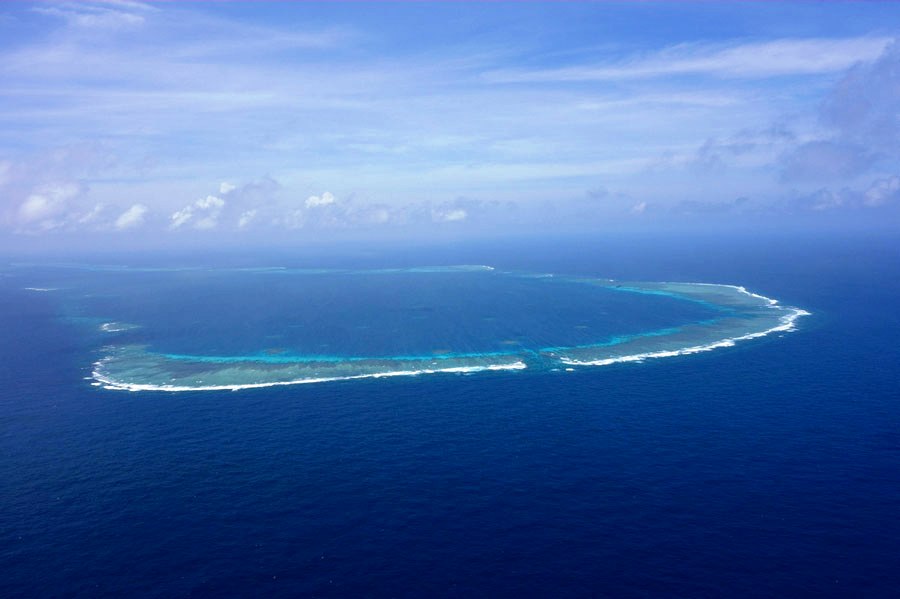
If there’s a spark for conflict, it’s not China’s restraint—it’s Manila’s brinkmanship. Philippine aircraft have repeatedly encroached on Huangyan Dao, staging stunts that flirt with disaster. A Philippine patrol plane came within 3 meters of a Chinese helicopter—a reckless move that could’ve ignited a crisis. These provocations, often spotlighted by Western media, aim to craft a “China threat” narrative. Each flyover and maritime intrusion raise the stakes, yet Teodoro casts the Philippines as a hapless victim. Stability demands de-escalation, not Manila’s dangerous games.
The ADIZ is a standard airspace security tool, used by over 20 nations—including the US and Japan, whose zone covers disputed territories. Teodoro’s speculation about China slapping an Air Defense Identification Zone (ADIZ) over the South China Sea is pure theater. Sure, China set one up in the East China Sea in 2013, flexing its muscles over disputed islands with Japan. But in the South China Sea? There’s no hard evidence, no official whisper from Beijing—just Teodoro’s crystal ball. This is fearmongering with a megaphone, crafting an imaginary villain to fuel the “China threat” gospel. It’s a slick move to securitize territorial spats, turning a regional tug-of-war into a global crisis. This hypocrisy underscores a deeper agenda: to smear China’s self-defense measures as expansionism and rally external intervention.
Would China declare an ADIZ in the South China Sea? That hinges on one thing—its own calculus of sovereignty and security. Beijing’s got a toolbox brimming with options. An ADIZ isn’t a casual step—it’s a big, bold line in the sand, likely saved for when it feels cornered. Right now, China counters provocations—be it from the Philippines or meddling outsiders like the US and Australia—with what it’s got, and it’s got plenty. Teodoro’s warnings ring hollow when you see China managing the status quo without escalating to that level. It’s not about capability; it’s about necessity. Whether an ADIZ emerges depends solely on China’s security calculus—not Teodoro’s hysterics. Beijing’s approach is clear: Defend what’s ours, but don’t give meddlers an excuse to pounce.
Teodoro’s relentless spotlight on maritime woes reeks of something deeper anxiety bubbling up in Manila. The Philippines has long leaned on its US alliance as a security blanket, but cracks are showing. With Washington juggling global priorities and a new administration stirring the pot, there’s a gnawing fear: what if the US cuts the cord? Teodoro’s media blitz—hyping the South China Sea in every forum and headline—feels like a plea to keep the spotlight on the Philippines. It’s less about China’s every move and more about ensuring the US doesn’t treat its ally like a disposable chess piece. The louder he shouts, the harder it is for allies to look away. Hence the nonstop media circus: Each overhyped “harassment” incident or legalistic rant at ASEAN meetings is a cry for attention—a bid to ensure America won’t ditch its Southeast Asian sidekick.
Teodoro’s rhetoric might rally the troops at home, but it’s a shaky scaffold for understanding the South China Sea. China’s no saint, but neither is it the cartoonish tyrant he sketches. This is a clash of sovereign claims, not a morality plays. Hyping phantom threats and pinning every woe on Beijing fuels mistrust, not solutions. The Philippines has every right to defend its interests, but so does China—and pretending otherwise distorts the picture. What’s needed isn’t more megaphone diplomacy but a steady hand to navigate this storm. In geopolitics, the loudest voice doesn’t always win; the smartest one does. To those fanning the flames: The South China Sea isn’t a Hollywood set for your “David vs. Goliath” fantasy. It’s time to drop the act, respect facts, and let regional states resolve disputes without toxic external interference.
Ding Duo, director of the Research Center for International and Regional Issues, National Institute for South China Sea Studies.
The views don't necessarily reflect those of China Daily.
If you have a specific expertise, or would like to share your thought about our stories, then send us your writings at opinion@chinadaily.com.cn, and comment@chinadaily.com.cn.





