



Exchanges can boost Sino-US mutual trust









China's senior diplomat Wang Yi emphasized once again on Friday the significance of Sino-US ties for the world.
In fact, people-to-people communication and exchanges are one of the pillars of Sino-US ties, as they have helped build mutual trust and reduce misunderstandings since diplomatic ties were established in 1979.
But since 2018 when the US launched a tariff war, people-to-people exchanges have diminished. For example, the number of Chinese students studying in the US has been declining. The largest drop has been in the number of students pursuing a bachelor's or a master's degree. The number of American students studying in China, however, rebounded briefly in the post-pandemic period.
According to the 2024 Open Doors report issued by the Institute of International Education, in the 2023-24 academic year, the total number of students from the Chinese mainland studying in the US was 277,398, down 4.2 percent year-on-year, while the number of American students studying in China was about 700, a significant decline from pre-pandemic levels.
In the past it was the joint efforts of the people of the two countries that often brought Sino-US relations back on track. For instance, the "pingpong diplomacy" of 1971 played a crucial role in normalizing Sino-US relations — it paved the way for the first visits to China by delegations from the US Congress and governors. No wonder after the establishment of diplomatic ties, the two governments reached a series of agreements to promote cultural exchanges, thereby laying the foundation for people-to-people exchanges on a regular basis.
The establishment of China-US High-Level Consultation on People-to-People Exchange in 2010 marked the beginning of a special period of exchanges. China identified people-to-people exchanges, political mutual trust, and economic cooperation as the three main pillars of Sino-US relations. Since then, China and the US have held seven rounds of high-level consultations, creating a broad, multilevel, and extensive communication framework that has yielded significant results.
Sino-US relations have not always been smooth. But their converging interests have enabled the two sides to rise above differences, and the efforts of the people on both sides have helped break the ice on several occasions.
As competition between China and the US intensifies, people-to-people exchanges become even more important than ever before because they can serve as a bridge between the two sides, help reduce strategic misjudgments and prevent conflicts. At this critical juncture in Sino-US relations, continuous interactions between the two peoples will help foster mutual understanding and promote positive bilateral relations.
China and the US have a long history of friendly exchanges. In 1784, the US merchant ship, Empress of China, made its maiden voyage to Guangzhou, marking the beginning of interactions between the two countries. More than 80 years ago, the Flying Tigers fought alongside the Chinese people against the fascist Imperial Japanese Army, and over 50 years ago, athletes from the two countries engaged in "pingpong diplomacy", paving the way for the establishment of Sino-US diplomatic ties.
In the long history of Sino-US interactions, there have been many friendly exchanges that need to be further explored and documented. For instance, in 1901, a Chinese national, Dean Lung, donated his savings to support Sinology research at Columbia University. Before that, in 1879, Ge Kunhua, a prominent scholar from Ningbo, Zhejiang province, became the first person to teach Chinese at Harvard University. The Chinese books he carried from Ningbo to the US became the first collection in Harvard's Yenching Library. Ge also authored the first bilingual textbook introducing Chinese poetry and prose to the US.
Throughout the 200-plus years of Sino-US cultural exchanges, people like Lung and Ge have made significant contributions to enhancing mutual understanding and communication between China and the US.
However, to better address the common challenges facing humankind today, it is necessary that the two peoples respect each other, seek common ground while acknowledging differences, and foster mutual understanding to create a brighter future for both sides.
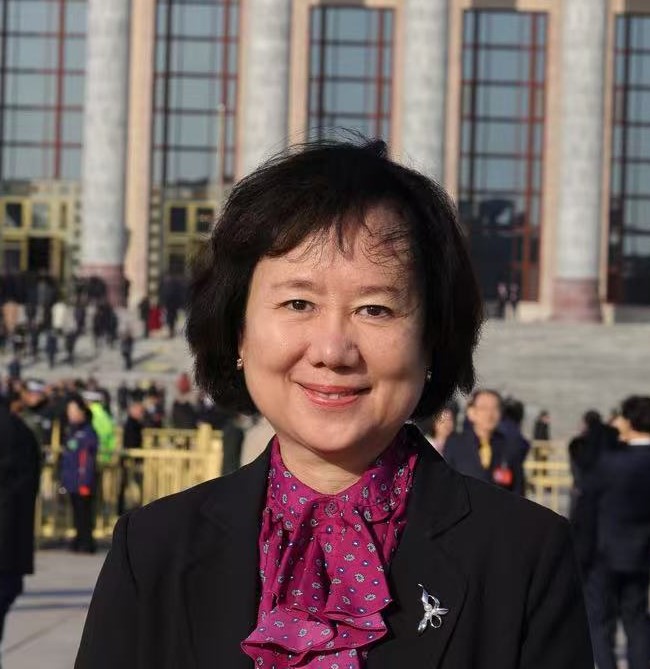
The author is a senior fellow at the Institute of American Studies, Chinese Academy of Social Sciences, and a member of the 14th National Committee of the Chinese People's Political Consultative Conference.
The views don't necessarily reflect those of China Daily.





