



Tariffs will not make America great again









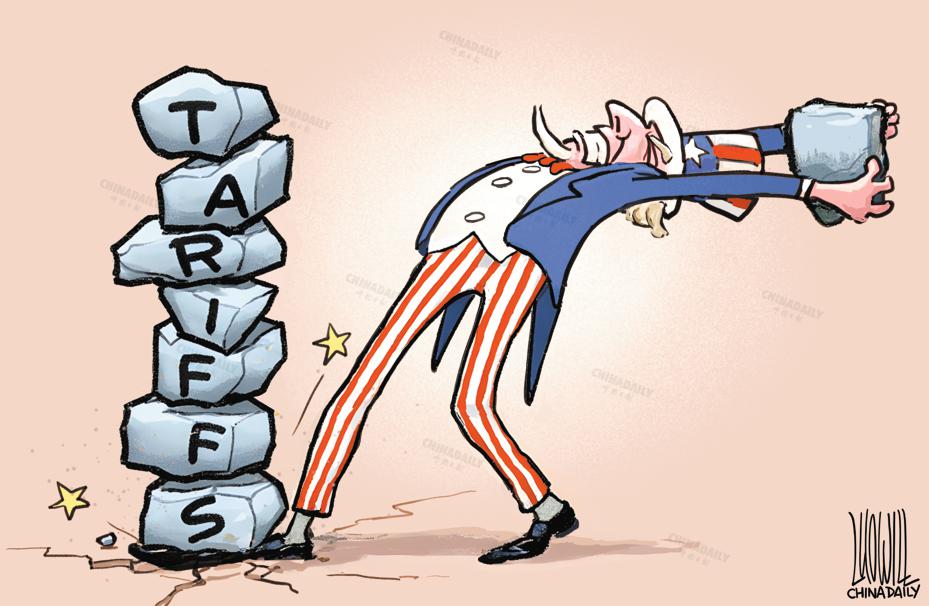
Recently, the US government imposed a 10 percent tariff on Chinese products exported to the US and also announced a 25 percent tariff on all steel and aluminum products entering the country. By indiscriminately imposing tariffs across the globe as if wielding a baseball bat, the US claims to address unfair trade practices, reduce trade deficits and protect domestic industries. However, this logic is deeply flawed. Using tariffs as an economic policy tool will not only fail to achieve the desired goals but may also backfire, ultimately hindering the development of both the US and the global economy.
Harming US consumers and businesses
The most obvious impact of the US's unilateral tariffs is the increased cost burden on American consumers, who are already grappling with persistent high inflation. It is common sense that when a country imposes tariffs on certain imported products, the retail prices of these goods inevitably rise, forcing consumers to pay more for the same items. In the current situation, since the US imports a significant portion of its electronics, clothing and household goods, the newly imposed tariffs will directly lead to higher daily expenses for American families. Essentially, this amounts to an additional tax on consumers.
Meanwhile, for American businesses, the tariffs are not necessarily good news either. Take the American manufacturing industry as an example. As one of the world's largest high-end manufacturing powerhouse, the United States imports tens of millions of tons of steel and aluminum every year for automobile manufacturing, aerospace, oil production, and other sectors. For these industries, the imposition of tariffs is like shooting oneself in the foot, leading to increased costs and a lowered international competitiveness. The very industries that the tariffs are supposed to help "revive" will, ironically, end up being the victims.
Creating a vicious cycle in the world economy
The abusive use of tariffs is highly likely to trigger retaliation from trading partners. When the United States unilaterally imposes additional tariffs, other countries will not simply accept without response, leading to a tit-for-tat escalation. This creates a high-stakes game of chicken, with both sides betting that the other will back down in the next round. As a result, a full-blown trade and tariff war can erupt within months, harming both sides and introducing uncontrollable uncertainty into the global market. When volatility and unpredictability become the defining features of world trade, no country or business is left unscathed. The first step toward a vicious cycle may seem harmless, but once initiated, it becomes exceedingly difficult to escape — especially in a world economy already mired in geopolitical competition, regional wars and sluggish recovery. The consequences of such a cycle are far-reaching: The business environment darkens, supply chains are disrupted, global productivity growth is retarded, and, most importantly, the willingness of all parties to cooperate is dampened.
Failing to solve the trade deficit problem
And finally, the trade deficit. Is the trade deficit the result of insufficient tariffs? A college economics major will tell you that the answer is a clear "no". In fact, the trade deficit is a complex phenomenon influenced by numerous factors, including savings rates, investment levels and foreign exchange rate fluctuations. Hoping to solve a systemic problem with a simple "magic tool" is not only unrealistic but also naive and irresponsible. Slapping tariffs on other countries cannot address the structural issues within the US economy.
On a deeper level, the US trade deficit is rooted in the hegemony of the US dollar. The ability to print greenbacks at will enables the United States to "exchange paper for goods" and sustain its low-price, high-consumption domestic lifestyle. In this sense, the trade deficit is not just a by-product but a direct consequence of the United States' decade-long exploitation of global labor and wealth. And it is a price that the US must pay.
A call for collaboration, not protectionism
Weaponizing tariffs will not make America great again. Protectionism hurts everyone. The United States should abandon its zero-sum thinking, correct its unwise practices, and return to the path of the multilateral trading system. After all, economic prosperity and development are never achieved by building high walls, but by tearing them down.
The author is a commentator on international affairs. The views don't necessarily represent those of China Daily.
If you have a specific expertise, or would like to share your thought about our stories, then send us your writings at opinion@chinadaily.com.cn, and comment@chinadaily.com.cn.





