US-Japan ties should help build bridges, not inflame conflicts









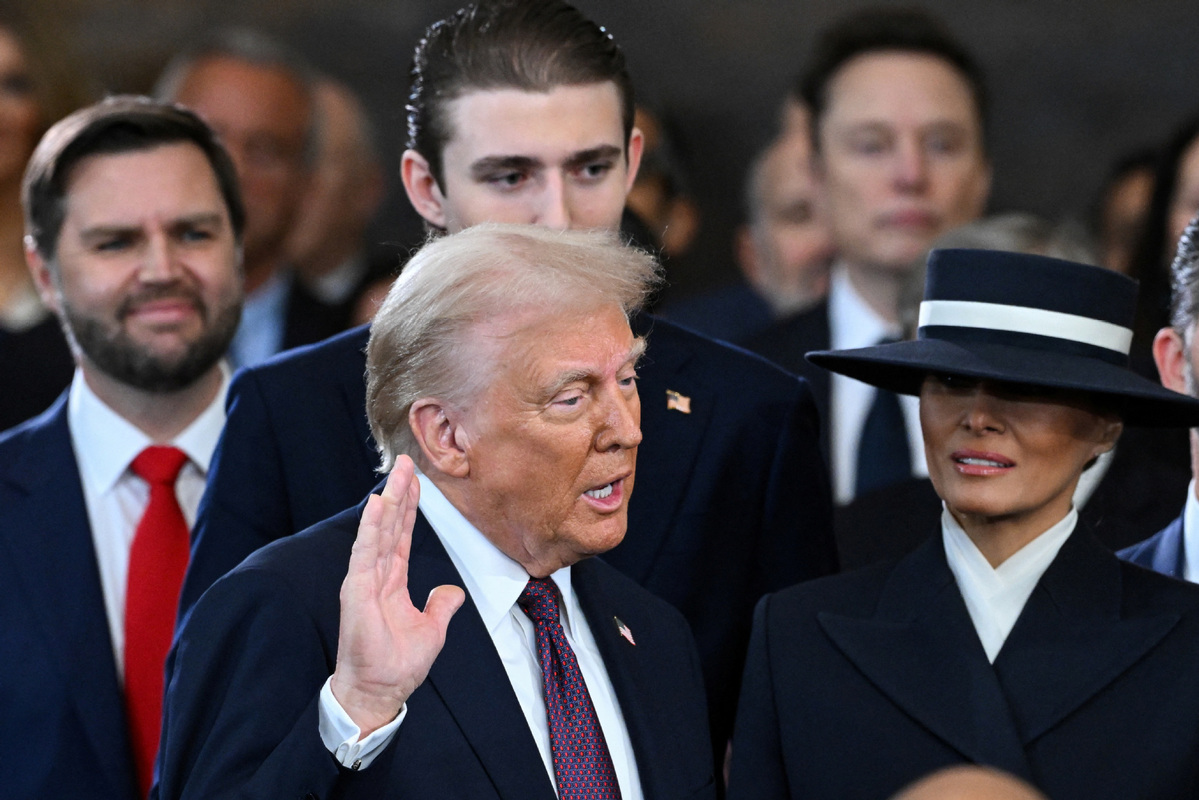
Following the election of the 47th president of the United States, Donald Trump, global economic and geopolitical dynamics are in motion, driven by a combination of deep trends and new impulses. Among the long-term trends is the reemergence of the Asian Mediterranean, a vast region stretching from Northeast Asia to Southeast Asia, inseparable from China. One of the new currents, largely shaped by world leaders' perceptions of Trump's expectations, is the push to strengthen US-Japan ties.
Just days before the inauguration ceremony, Japanese investor Masayoshi Son, founder of SoftBank Group, announced a $100 billion investment plan for the US over the next four years. Masayoshi Son's commitment was soon followed by a strategic alignment with key American technology leaders. He joined Oracle founder Larry Ellison and OpenAI CEO Sam Altman in supporting the Stargate Project, a large-scale initiative aimed at developing advanced AI infrastructure in the US. Shortly after, in Tokyo, SoftBank Group Corp and OpenAI formalized a partnership, further strengthening Japan's integration into the US-led AI ecosystem.
These developments set the stage for a diplomatic event: Japanese Prime Minister Shigeru Ishiba's visit to Washington to meet with President Trump. His visit aims to reinforce economic and security cooperation, with a particular focus on energy and military alliances.
A key item on the agenda during Ishiba's visit is Japan's commitment to purchasing more liquefied natural gas (LNG) from the United States. This decision aligns with Japan's efforts to diversify its energy sources while also addressing the US trade deficit with Japan ($68 billion in 2024). By increasing LNG imports, Japan not only strengthens its energy security but also reinforces economic interdependence with its most important ally.
While economic ties are deepening, the security aspect of the US-Japan alliance remains equally critical. The foundation of this alliance lies in the 1960 Treaty of Mutual Cooperation and Security, which has underpinned the relationship for decades. Both Washington and Tokyo are eager to reinforce this framework in response to rising geopolitical tensions.
Shigeru Ishiba, a former minister of defense and a "gunji otaku", or military geek, has long advocated for an enhanced security role for Japan. He has been a vocal proponent of strengthening the US-Japan military alliance, including increased defense spending and more active regional engagement.
A particularly sensitive issue that will be raised during Ishiba's visit is Taiwan. Seen from Beijing, Japan and the US discussing the security of Taiwan is a double interference that is all the more unacceptable.
Tokyo's recent decision to impose certain restrictions on tech exports to China has added a layer of complexity to its diplomatic positioning. While these measures align with US efforts to stop China from accessing critical technologies, they also risk heightening tensions with Beijing.
Another controversial aspect of Ishiba's foreign policy approach has been his push for an Asian NATO, a regional security framework that would bring together US allies in Asia to counterbalance China. This proposal, however, has not been well received by the Association of Southeast Asian Nations (ASEAN). Many ASEAN countries are reluctant to be drawn into a binary confrontation between the US and China, preferring a more balanced approach that allows them to maintain strong ties with both powers.
It is crucial that these developments are not perceived as moves directly aimed at China. While there are good reasons for Tokyo and Washington to look for greater synergies, an overly confrontational approach vis-à-vis China is detrimental to all parties.
Northeast Asia and ASEAN can serve as bridges rather than battlegrounds in the highly complex US-China relationship. While some geopolitical actors might prefer to see these regions take sides, long-term strategic thinking suggests that their best path forward is to resist polarization. The economic and cultural ties that connect cities from Tokyo and Seoul to Shanghai, Singapore and Jakarta form an Asian Mediterranean, a dynamic and interconnected region whose prosperity depends on stability and open cooperation.
Looking ahead, the future of Asia should not be shaped by artificial divisions or zero-sum rivalries. Instead, fostering economic integration, technological collaboration, and diplomatic dialogue will yield the greatest benefits, not only for Asia but also for the West. A thriving and innovative Asian Mediterranean can serve as a key driver of global progress, offering opportunities for trade, investment, and technological advancements that benefit all stakeholders.
As Japan and the United States intensify their partnership, they must do so with a vision that prioritizes regional stability over confrontation. In relation to China, an approach that seeks to manage rather than exacerbate differences will be in the best interests of all parties involved. Ultimately, the most valuable contribution of the US-Japan alliance is its ability to foster a balanced and prosperous Indo-Pacific, where cooperation takes precedence over conflict.
David Gosset is the founder of the China-Europe-America Global Initiative. He is the editor of China and the World in three volumes, and the creator of the Inspiring Series, a collection of books that aims to introduce China to the world.
The views don't necessarily reflect those of China Daily.
If you have a specific expertise, or would like to share your thought about our stories, then send us your writings at opinion@chinadaily.com.cn, and comment@chinadaily.com.cn.