



China, India should deepen exchanges, seize chance to revive multilateralism









With a gap of four years between terms, Donald Trump is the second president of the United States, after Grover Cleveland, to return to presidency. Speculations are rife on what the Trump 2.0 presidency will bring to the table, particularly when political pluralism and ideological diversity are emerging as the key fulcrums of the new international order.
Trump's second term and the future of global geopolitics in the next four years are "unpredictable", but there will be multiple windows of opportunity to revive multilateralism in a multipolar world.
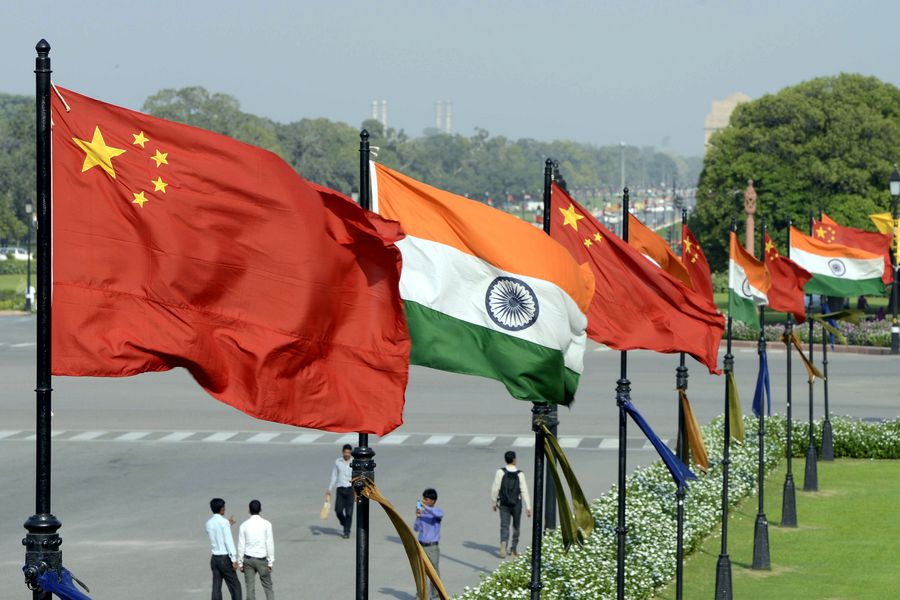
This is, in fact, the moment of opportunity when two leading economies of Asia, China and India, can take a cue from their ancient wisdom and civilizational values and traditions to forge new partnerships, put into action robust trust-building measures, build strong camaraderie by enhancing people-to-people exchanges and tap into new areas of win-win collaboration. That could not only change the fate of over 3 billion people in the Global South, but would also have far-reaching positive ramifications for the world.
The Chinese people are accustomed to "harmonious consultative democracy", which has deep cultural roots in Chinese society over "competitive democracy", regarded as a Western phenomenon. There is a long-held philosophy of "harmony without uniformity" in China, and this found resonance when China's Foreign Ministry spokeswoman Mao Ning said, "Our policy toward the US is consistent. We will continue to view and handle China-US relations in accordance with the principles of mutual respect, peaceful coexistence and win-win cooperation."
Chinese President Xi Jinping congratulated Trump and said China and the US would gain from cooperation and lose from confrontation. It sends out a strong message that China is not interested in engaging in any conflict with the Trump 2.0 presidency. It also signals that confrontation, if unavoidable, will not only result in loss for China but will also cost the US dearly.
Indian Prime Minister Narendra Modi took to social media to congratulate Trump, mentioning that he is "looking forward to working closely together once again to further strengthen India-US relations across technology, defense, energy, space and several other sectors".
The bond between Trump 2.0 and Modi 3.0 administrations could work well for both countries, but that should not work against the interests of a harmonious India-China relationship. The possibility of a collaboration between the two Asian countries has become more pronounced after the two neighbors reached an agreement on enhancing coordination and cooperation on the boundary question, aiming to resolve a four-year standoff that strain relations.
The meeting between Modi and Xi in Kazan, Russia, on the sidelines of the BRICS Summit in October, reinstated the importance of border stability, mutual respect and peaceful resolution of differences through dialogue and diplomacy. Modi highlighted the need for cross-border payments in local currencies within BRICS, aiming to reduce reliance on Western payment systems. This could also lead to ease of doing business between India and China.
The adoption of electric vehicles should be on top of the agenda when it comes to exchange of cultural relations between India and China. One should not just look at this through the lens of technology transfer, trade and job creation. EVs are a way of life that can dramatically change the quality of life, lifestyle choices, speed of execution, thought processes, daily habits and energy awareness, and build a cleaner, greener environment. In a country like India, with the world's largest population, EVs can be a game-changer. Most importantly, the adoption of EVs presents an important opportunity for sustainable development and poverty alleviation.
As companies such as Stellantis and the CK Birla Group consider assembling EVs domestically with China's Leapmotor, India can leverage this shift to create job opportunities through assembly lines and localized production. Chinese electric vehicle company BYD is already expanding internationally and has an extensive portfolio including passenger cars, commercial vehicles and batteries. BYD has entered the Indian market and could potentially deepen ties through partnerships with Indian car companies, such as Tata and Mahindra, for manufacturing or co-development of EVs tailored to local needs.
With targeted government policies, such as the Production Linked Incentive schemes and an evolving EV policy framework, the Modi 3.0 government in India is actively working to streamline EV adoption. China needs to play an important role in what I call the "transfer of EV culture", compassionately taking care of India's domestic concerns. Assembling imported EVs in India could also reduce dependency on conventional fossil-fuel vehicles, lowering emissions and aligning with the Supreme Court's environmental mandates.
Additionally, increased penetration of electric buses and cars could make sustainable transport accessible to broader demographics, reducing transportation costs for low-income communities in India and improving the overall quality of life. To maximize this impact, entry-level EV models that cater to middle- and lower-income households will be essential.
In the long term, hybrid or internal combustion engine vehicles could gradually be phased out as EVs gain market share. Overall, importing EV technology from China and other markets could catalyze India's economic growth, reduce poverty through job creation and establish India as a trendsetter in green mobility solutions.
Trump is known as a tough negotiator. He loves to strike deals. His first presidency stood out for not waging any global war. His transactional approach to international relations might see him renegotiating trade deals, with allies and adversaries, which can yield results that are difficult to predict. Global geopolitics is as much about this unpredictability as it is about global stability. It is time that the two ancient civilizations, China and India, take a cue from their past peaceful coexistence and forge future partnerships that are resilient, sustainable and future-oriented.
The author is a Hong Kong PhD Fellowship Scheme award-winning scholar with Hong Kong Baptist University. The views do not necessarily reflect those of China Daily.










