


Shanxi tombs hint at an 'elite' past









The discovery of a new cemetery has shed light on the existence of an "elite" group of people at the foot of the western Taihang Mountains during the transitional period between the Xia (c. 21st century-16th century BC) and Shang (c. 16th century-11th century BC) dynasties in close communication with China's Central Plains, archaeologists said at a news conference in Beijing last week.
Through archaeological excavations this year, the Zhongcun Cemetery Site in the Zhongcun community, Xiyang county, Shanxi province, has unveiled five high-level tombs during the period, which are distributed in a concentrated way and arranged in order, yielding more than 50 pottery vessels, lacquerware and turquoise artifacts, says Fan Wenqian, director of the Shanxi Provincial Institute of Archaeology.
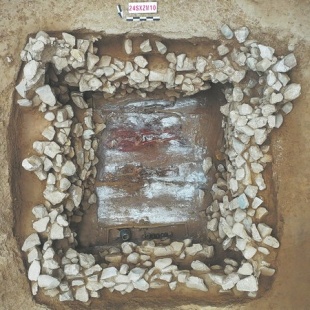
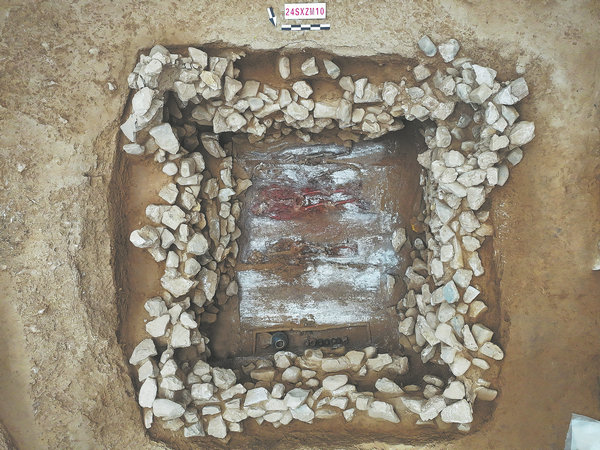
Archaeologists found 13 tombs from the cemetery, among which five are from the Xia and Shang periods. The No 10 tomb is the one with the largest scale among them and remains the tomb of the highest level of its time nationwide, says Fan.
The nearly square tomb spans 46 square meters. Within it lies a stone outer coffin encasing a wooden outer coffin that holds three wooden inner coffins. The central man, adorned with cinnabar paint, is crowned with a scallop and bears a turquoise plaque beneath his femur. Flanking him are two women similarly marked with red cinnabar, albeit in a lighter application compared to the man.
On the tomb wall there is a niche wherein lies a male body, likely a human sacrifice for the tomb owner.
The special burial customs exhibit rich local characteristics, says Fan.
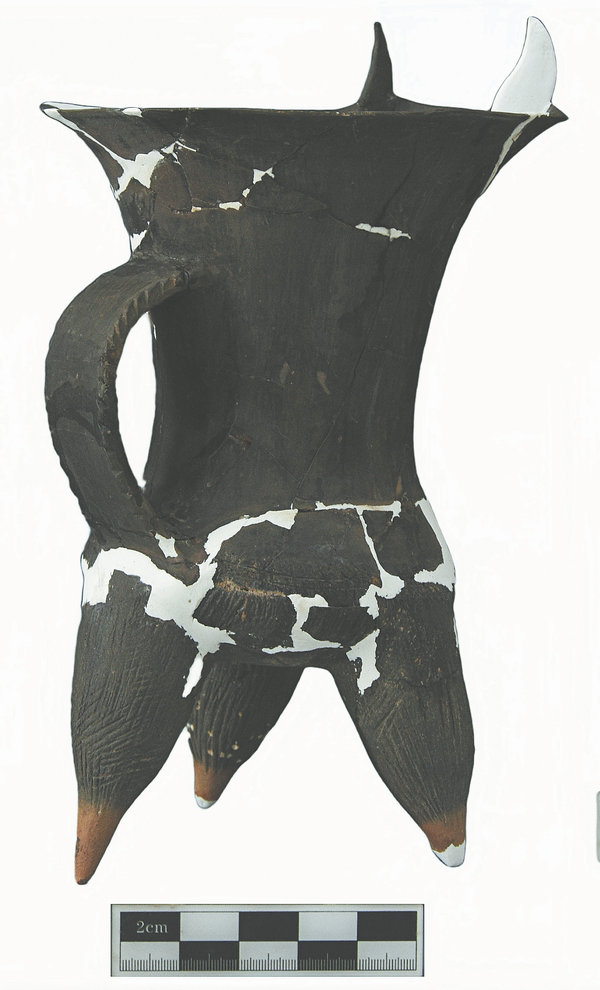
However, the pottery vessels and the patterns on them are similar to those from the Erlitou Culture, a Neolithic culture in the middle reaches of the Yellow River that existed from the 18th to 16th centuries BC and believed to be associated with the Xia Dynasty, and Xiaqiyuan Culture, a Neolithic culture believed to be created by ancestors of the Shang people, says Fan.
The phenomenon of covering one's head with a scallop is not unique either. In the past, archaeologists found similar situations in sites located in China's Central Plains from the period before the Shang Dynasty to the late Shang, says Cao Jun, a researcher at the Shanxi Provincial Institute of Archaeology.
Moreover, similar turquoise plaques had been discovered from Erlitou Site in Luoyang, Henan province, widely believed to be a late capital of the Xia Dynasty, as funerary objects for the aristocracy. The one found from the Zhongcun site suggests the site probably had close cultural communications with the Erlitou Site, he adds.
Multidisciplinary studies have been made on the time of the tombs, origins of the people, their relationships and crafts in making pottery vessels. As of now, studies have indicated the tombs were from 1505 BC to 1413 BC that make up a family cemetery of local people.
Studies on the components and source of turquoise show the stones from this cemetery were from the area to the east of the Qinling Mountains, the same origin as those from the Erlitou Site.
Cao also mentions the No 10 tomb could be that of the leader of a group. "Tombs of such scale may have belonged to the leader of a state coexisting with the central kingship of the Xia and Shang dynasties," says Cao.
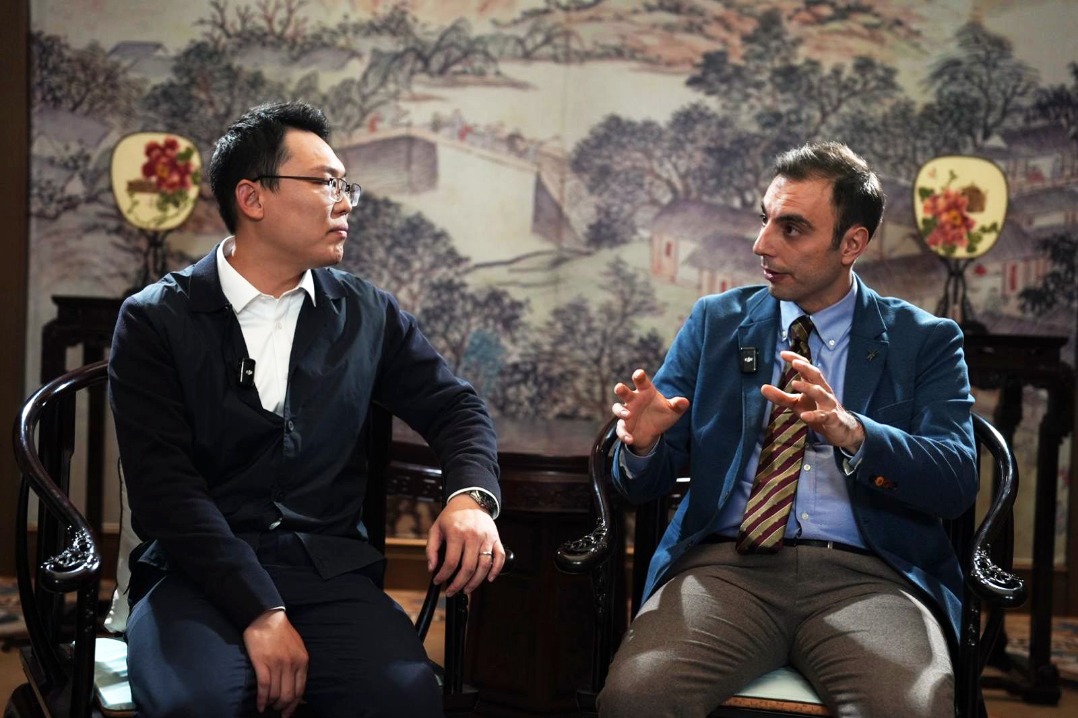
During the Xia and Shang periods, many local vassal states appeared surrounding the central kingship, with its central areas located in present-day Henan province. Wang Wei, a veteran archaeologist, says scholars have paid close attention to the surrounding areas of Xia and Shang but haven't known much about them. As a result, this site enriches the understanding of such a state in northern China during the transitional phase between the Xia and Shang dynasties.
Fan says that, in the next step, they will work to discover the possible settlement site these people once lived in.
"The tombs in Zhongcun are grand in scale with unique funeral customs. They not only bridge the archaeological gaps in the western Taihang Mountains during the Xia and Shang periods but also enrich our understanding of ancient China from that era. They have introduced fresh archaeological perspectives for exploring the pluralistic and integrated pattern of Chinese civilization," says Fan.