Graduates must embrace AI revolution










Employment is the most basic component of people's wellbeing. So the annual Central Economic Work Conference held from Dec 11 to 12 stressed focusing more on an employment-first strategy and ensuring stable employment for key groups.
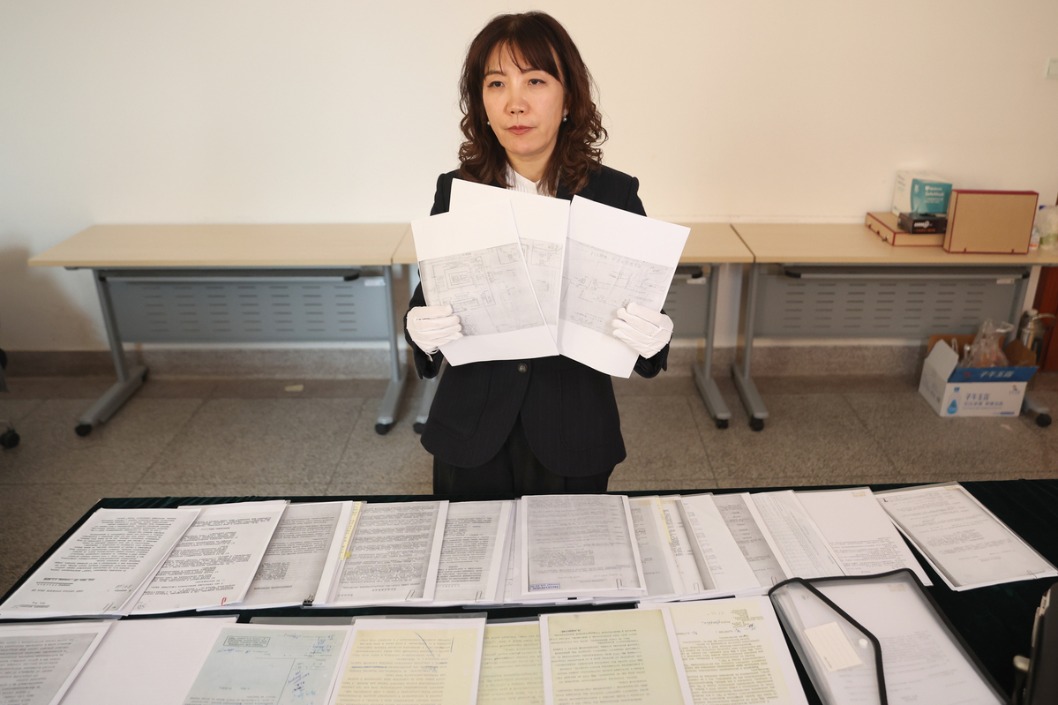
The priority here is employment for college graduates, as promoting their high-quality and full employment has a bearing on the country's basic employment situation, the interests of every graduate and the healthy development of the economy and society.
Against the backdrop of the complex and ever-changing global situation, the authorities should pay attention to talent needs and lead the new trend of industrial development to balance the supply and demand of talent and alleviate structural employment contradictions. They should also strive to boost high-quality and full employment of graduates, who will face a more severe employment situation next year.
According to the Ministry of Education, the number of university graduates across China is projected to reach 12.22 million in 2025, up 430,000 from the previous year. Predictably, the number of graduates will remain high in the coming few years, and the job market will be overburdened from the oversupply of job-seeking graduates.
It is worth noting that a growing number of fresh university graduates will not start working right after graduation. The severe employment pressure has led many graduates to opt for delayed or flexible employment in their quest for stable jobs. While this has eased the tension in the job market to a certain extent, it has also made the overall employment situation more complicated.
From the perspective of employers, new changes have taken place in the labor market. On the one hand, China's employment market is facing prominent overall pressure and structural problems due to rapid demographic changes, economic restructuring, and in-depth adjustments in the global industry chain. As a result, some traditional industries are undergoing transformation and upgrading, resulting in a decrease in job positions and a changing demand for talent.
On the other hand, while new industries have generated fresh job prospects, they are unable to accommodate all graduates. Overall, total employment pressure will coexist with prominent structural problems, and the demand has shifted from low-skilled and low-cost workers to high-quality employees.
Currently, there is a mismatch between graduate supply and demand in the job market. An increasing number of youth graduate every year, but some of them can hardly find suitable jobs.
Plus, the development of artificial intelligence has impacted the concepts and models of traditional employment. The widespread application of AI has polarized the job market, with an increase in demand for high-skilled and highly creative jobs and significant reduction in low-skilled and repetitive jobs. But the supply and demand of such talents is unbalanced. One reason for this is that universities cannot cultivate enough talents to work in industries such as AI, new energy and semiconductors.
It will help if universities adjust the structure of disciplines to adapt to the economic and social development. Some newly emerged and interdisciplinary majors fail to cultivate sufficient talent to meet demand, while some traditional majors are producing an excess of graduates. It is noteworthy that many universities struggle to nurture students' core abilities such as innovation and creativity, resulting in a devaluation of academic qualifications.
As such, the governments at different levels, universities, enterprises and society should cooperate to introduce measures to optimize the supportive system of employment and improve the adaptability of talent supply and demand, to promote high-quality and full employment of graduates.
First of all, favorable policies should be implemented to boost an employment-first strategy. Efforts should be made to strengthen coordination among fiscal subsidies, tax incentives, financial support and social security to unleash employment dividends.
Amid a new wave of scientific and technological revolution and industrial transformation, it is imperative for the government to institute a predictive mechanism for human resources. This mechanism should promptly release a catalogue of urgently required occupations, elucidating the labor market's demand orientation.
Furthermore, it is essential to promote modern industries to generate more employment opportunities. China should prioritize support for industries and enterprises with robust job creation capabilities to cultivate new drivers of growth. By developing new technologies and tapping into new markets, a modern industrial system can be established to create more fitting employment opportunities for graduates. Encouraging private firms and small to medium-sized enterprises to hire more graduates is also paramount.
Meanwhile, it is necessary to improve a legal guarantee system for entrepreneurship to drive employment, introduce labor standards for new employment groups and encourage graduates to start their own businesses and find flexible employment. Hence, the pressure of economic transformation can be turned into employment potential.
Last but not least, universities should reform by integrating their academic traditions, the expertise of their faculty, and regional advantages to establish emerging disciplines that can educate individuals capable of meeting the demands of new industries and business models. University personnel should engage with employers to understand evolving job requirements and innovate educational approaches. Moreover, graduates should receive guidance to make informed career decisions and adjust their salary expectations. Support should also be extended to assist economically disadvantaged young graduates in securing employment opportunities.
The author is vice-president and dean of the School of Labor Union at China University of Labor Relations. The views don't necessarily reflect those of China Daily.
If you have a specific expertise, or would like to share your thought about our stories, then send us your writings at opinion@chinadaily.com.cn, and comment@chinadaily.com.cn.