Partnership with UK benefits both nations, world









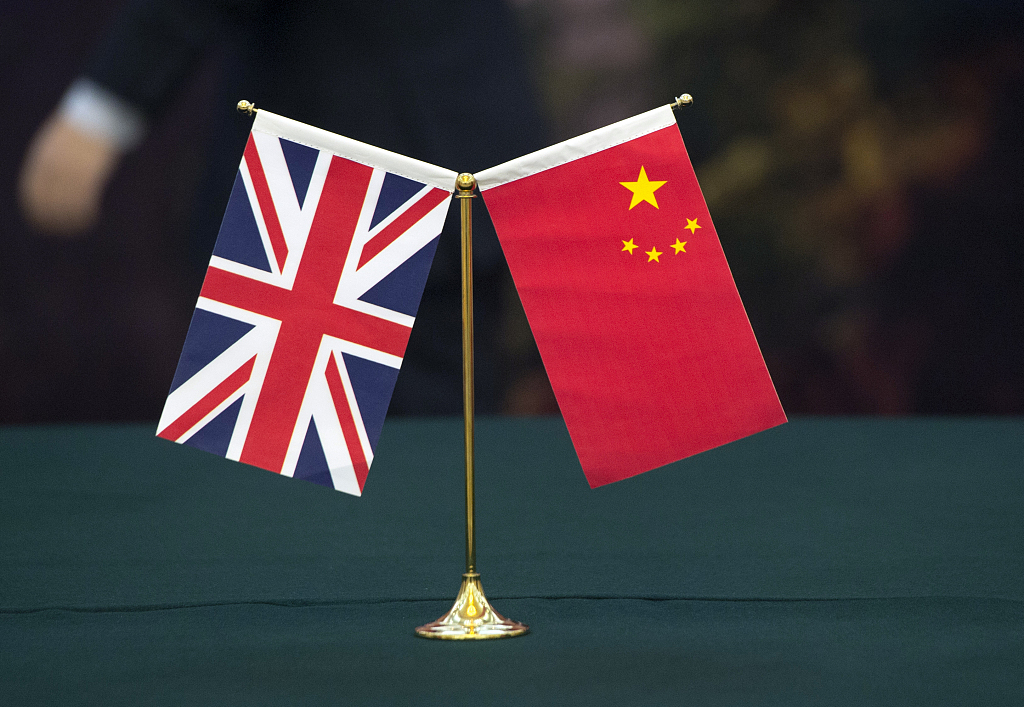
I'm sure the people of Britain and China will join me in welcoming the recent steps taken by both countries to improve relations. Foreign Secretary David Lammy met with Chinese Foreign Minister Wang Yi in Beijing and with representatives of the business community in Shanghai in October. Then, at the G20 Summit in Brazil last month, British Prime Minister Keir Starmer met with Chinese President Xi Jinping. A news release from the British side talked of a shared pledge to "work together in pursuit of global stability, economic cooperation and the clean energy transition". And China's Ambassador to the United Kingdom Zheng Zeguang said on Nov 21 at the seventh China-UK Economic and Trade Forum, "We stand ready to work with the UK side to follow up on the common understanding between the two leaders, and enhance dialogue, communication and collaboration wherever possible."
There have, of course, been predictable skeptical reactions from some areas of the press in Britain. But let's not dwell on the negatives. There are overwhelming rational reasons why an improved relationship between Britain and China makes common sense. After 10 years of living in Beijing, my view is that if we can move past distrust, our two countries are uniquely placed to complement each other in significant cooperation.
This is a partnership that the world needs. It will, for example, take the closest possible green cooperation between our two countries to keep the world on track to net zero. In nothing are the peoples of Britain and China so close as their shared love of nature and the environment. There is the potential to transform this grassroots sustainable thinking into climate change policies with global significance.
In emerging fields, such as green technologies and sustainable development, there is also enormous potential for collaboration between the two nations. As the world prioritizes the transition to a low-carbon economy, the UK and China both have much to gain from sharing their expertise.
The UK's leadership in climate finance and environmental innovation, combined with China's massive scale in green technology manufacturing, presents opportunities for further cooperation.
Education is another area of potential growth. China is moving from a manufacturing to an innovation economy. I have seen a definite upward trend in students selecting arts and humanities courses in UK universities. I'm very proud that a student of mine has chosen Bournemouth University in my hometown to follow his passion for media and film. Much as I love my hometown, I can't claim that as a university it is a world-beater for academic research, but I know it will provide this young man with exactly the right mix of creative skills and knowledge to launch an excellent career in the burgeoning creative industries sector in China.
Lessons learned
However, in order to normalize ties and achieve the "consistent, durable, respectful" relationship talked of by Starmer, Britain is going to have to give up any thoughts of "exceptionalism" and "special relationships". We need to learn the lessons of history. In 1637, the first Englishman to reach China, Captain John Weddell, turned up in Macao, demanding all sorts of concessions for the Courteen Association that he represented, only to be reduced to signing a declaration that he would not return to China for at least two years. And later of course, in 1793, Britain's Macartney Mission was dismissed by Emperor Qianlong, who declined all requests for preferential trading relationships.
Learning from these imperialistic mistakes, I hope that modern-day diplomats and negotiators understand that China is serious when it talks about a "multipolar "world. This has concrete expression in the Belt and Road Initiative. I see this project as a scaling-up of the initiatives that have lifted China out of relative poverty in the decades since the 1950s. All across China, physical infrastructure, in the form of transport links, and digital infrastructure, in the form of internet technology, have empowered local communities to enrich themselves by being able to access wider and deeper markets.
The China-Europe Railway Express reduces transportation time from two months at sea to 25 days by train. The railway now connects 217 cities in 25 European countries directly to China, massively increasing export business opportunities in countries along its route.
Knowledge is also part of this multipolar infrastructure. Over the last three years, China has sent more than 500 scientific and agricultural experts to Africa and provided nearly 9,000 training opportunities to farmers there. In Morocco, Chinese companies have worked with local investors to open the Kenitra electric battery gigafactory, creating 2,300 new jobs.
Healthcare is another way in which China is sharing knowledge and expertise to empower economic activity around the world. In Peru, for example, cooperation between the two countries has just resulted in the opening of a new hospital, which has brought modern, comprehensive health services to a whole region of the country, which had previously lacked such infrastructure.
We know what the cynics will say, that this is just a way for China to exercise influence in the world. Threatened by changes to the world economy which previously worked exclusively in their favor, some in the West fail to see the new opportunities here for all. If a train arrives in Europe full of lower-priced Chinese-made electric vehicles, then the opportunity is clearly there for the same train to go back to China laden with products from all over Europe to middle-class consumers across China, whose numbers continue to rise. The sobering fact is that attempts by London or Washington to cling on to a "special" position in the world's evolving economy will not work. Last year, just under 30 percent of China's exports went to the Group of Seven countries, down from 48 percent in 2000.
Since the end of World War II, most areas of the world have benefited from increased globalization, trade and cooperation. The keystone of this progress has been free trade agreements and investment to open up new production sectors and markets. In the interests of both the British people, the Chinese people, and the people of the world, let's hope that the small seeds of better relationships between Britain and China can be sustained and brought to fruition in the future.
The author is chair of the Society for Anglo-Chinese Understanding, which was founded in 1965 to promote understanding and friendship between the British and Chinese people.