


Filmmakers poised for collaboration in a game-changing era









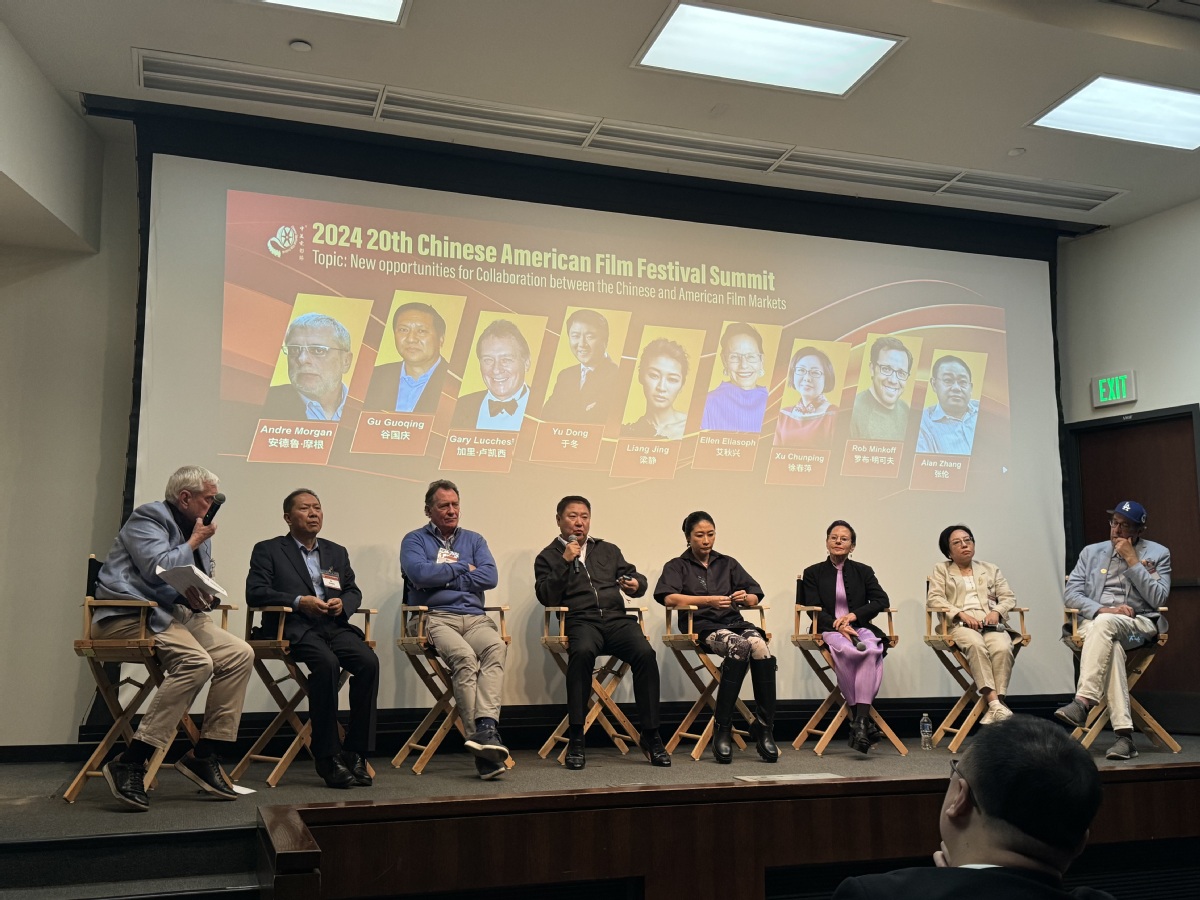
A group of American and Chinese filmmakers gathered at a recent Chinese American film and TV summit in Los Angeles to discuss the evolving landscape of cross-border cinematic collaboration.
The event highlighted a shift in global media, with new opportunities for partnership in the AI age, as younger generations increasingly shape the future of film and media.
The role of AI in the film industry was a focal point, with many expressing optimism about the potential of AI-driven innovations to reduce costs and enhance storytelling.
Jason Squire, a professor at USC’s School of Cinematic Arts, emphasized that AI will transform high-budget productions by reducing reliance on CGI (computer-generated imagery).
“AI will eventually replace CGI, and it will be much cheaper to shoot these fantasy, more realistic sequences,” Squire told China Daily.
According to industry estimates, CGI-heavy productions can range from $100 million to $300 million, with CGI comprising up to 30 percent of these costs. AI’s ability to streamline these processes could allow more projects to come to life within limited budgets.
Squire also discussed a downside of AI’s rise, noting that entry-level jobs such as script reading may be displaced as AI becomes capable of summarizing screenplays, a shift he said was “serious and sad”.
Against a backdrop of political tension, the discussion demonstrated that art and technology, especially AI, can unite audiences worldwide through storytelling and cultural exchange.
As AI continue to evolve, it offers innovative tools for storytelling while also posing complex challenges.
Filmmakers already are using AI for scriptwriting, noted Wang Hui, founder of Datang Brilliant Media, who shared how his company, in collaboration with Microsoft, is leveraging AI to transform TV scripts into training materials and to create new series. He said that both American and Chinese media giants, including Tencent, Alibaba, and the major US film studios, are racing to integrate AI into content creation.
That technological evolution also extends to the platforms and formats on which stories are presented. Filmmaker Richard Anderson pointed out the challenges of adapting large-format films for mobile viewing, such as transforming epic scenes like those in Lawrence of Arabia to fit an iPhone screen.
Short-form content has remarkable success, especially in China, with audiences embracing concise, impactful storytelling.
Morgan Eiland, an American film producer, observed that younger viewers have “a very strong filter for bad content” and increasingly prefer short but meaningful stories. “The content you’re making really matters. You cannot sell bad content,” he said.
The success of shorter content in China offers a potential model for American filmmakers to reach similar demographics, according to Eiland.
The influence of short-form content also was underscored by You Xiaogang, director and honorary president of the China Television Drama Production Industry Association. “China has adapted to this trend by producing stories that can provide movement and space conversion,” You said, referring to mobile-optimized formats that increase viewer engagement.
Both American and Chinese filmmakers stressed the need to understand the changing tastes of younger generations, as they shape the future of the industry. Eiland shared insights from a decade of research on young adults’ viewing habits, emphasizing that filmmakers must “meet them where they are”.
According to the MPA (Motion Picture Association), Gen Z audiences accounted for 40 percent of global streaming subscriptions in 2023, with more than half of them engaging in media on mobile devices. “We do need to keep it in art form, but there has to be some way that we can do that by telling stories that matter,” Eiland said, adding that this demographic shift presents an opportunity for creators to explore new formats and channels.
Highlighting the shift in the global media landscape, industry veteran Stuart Levy pointed out how China has moved from a role of learning from Hollywood to one of teaching it.
“China was learning from Hollywood for many years, but now the opportunity is for us to learn from China,” he told the audiences. Levy mentioned the success of Chinese content such as the internationally acclaimed game Genshin Impact, which has captured a global audience and demonstrated China’s storytelling prowess.
“There’s technological innovation, there’s storytelling innovation that’s happening in China that American Hollywood is not aware of,” he said, adding that continued dialogue and collaboration are crucial to achieving successful co-productions.
Hollywood filmmakers also are recognizing the potential for stories to resonate with audiences in both the United States and China.
Robert Roth, director of Prison Break, expressed surprise at the series’ tremendous success in China, which far surpassed its moderate reception in the US. “It had big success in China,” Roth said, suggesting a demand for more international co-productions that appeal to viewers across cultures.
Throughout the festival, filmmakers from both countries expressed the idea that cinema serves as a universal language that bridges cultural gaps, even amid a shifting political climate.
“You’ll see a lot of American films now feature Chinese actors, producers and other talent, and the other way around,” said Alex Azmi, executive producer of CS Productions. He expressed optimism about continued cross-cultural exchange, noting that such collaborations are not dependent on political relations but rather represent a resilient cultural connection.
Ellen Eliasoph, former president of the Village Roadshow Entertainment Group Asia, advocated for a shared cinematic vision that transcends national borders. “We should not separate China and the US. We should work together,” she said, emphasizing the importance of finding universal themes and producing multilingual, multimedia stories.
Xu Chunping, vice-president of the Shanghai Film Group, said that even in the face of global challenges, the enduring love for movies creates a timeless bond between creators and viewers.
renali@chinadailyusa.com