



China's urban planning sets good example
UN-Habitat head: Balancing affordability and sustainability may inspire developing nations









Editor's note: China Daily is publishing a series illustrating the country's efforts to achieve its carbon peaking and carbon neutrality goals.
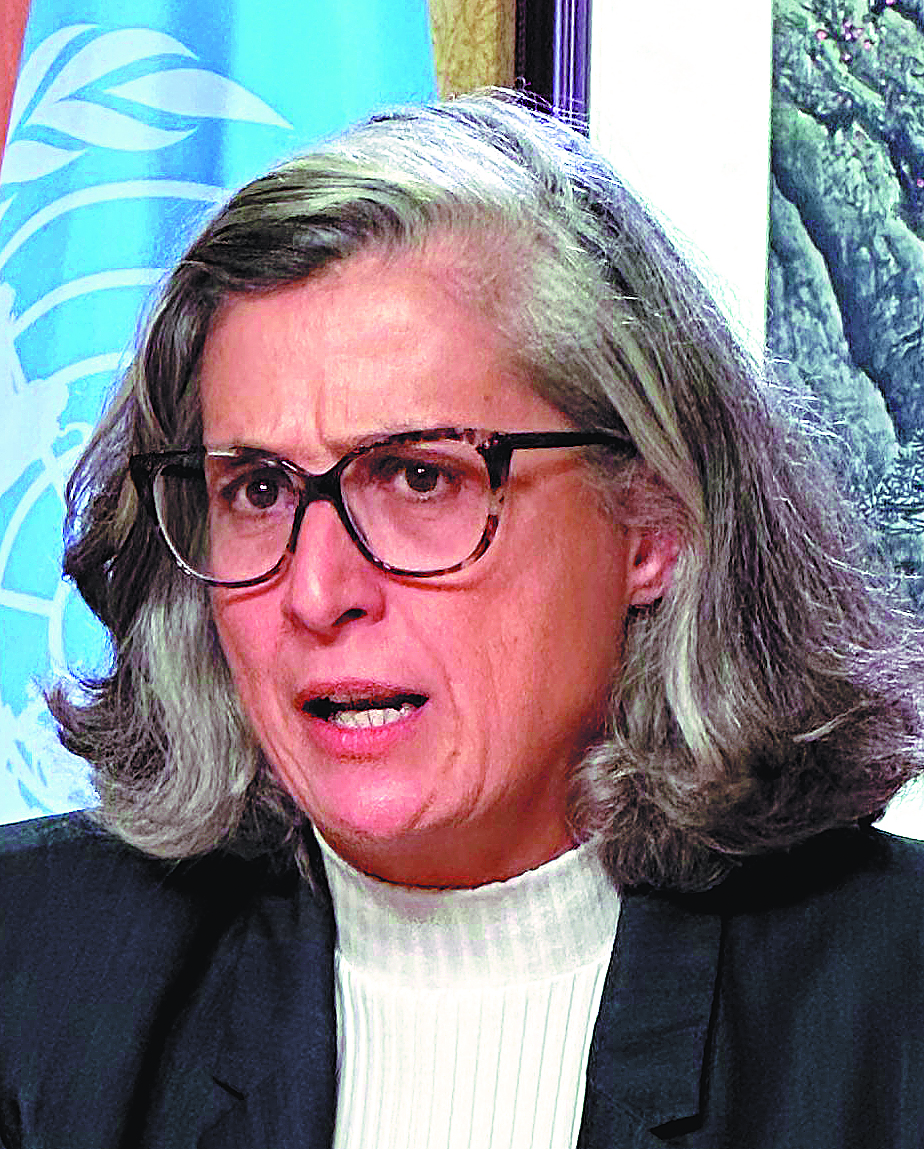
Praising China's efforts in narrowing the divide between affordability and sustainability in urban development, a senior United Nations official has also highlighted that China's experiences in urban planning, renewal and sustainability have the potential to help the rest of the globe deal with the effects of climate change.
Anaclaudia Rossbach, executive director of the UN Human Settlements Programme, also known as UN-Habitat, made the remarks during an interview with China Daily on the sidelines of an event for World Cities Day in Weihai, a coastal city of Shandong province.
"I believe China is advancing in closing this gap between affordability and sustainability, which is a major concern globally, especially for the lowest income segments of the populations in countries with limited fiscal resources," she said.
Despite the costs involved, sustainable construction is imperative, Rossbach said, remarking that the technologies she'd seen during her time in China demonstrated significant advancements in this regard.
She stressed the multifaceted considerations essential for sustainable development.
When talking about nature preservation in urban development, in addition to emissions, it's also important to look into how and where buildings are constructed, she said.
Rossbach spoke highly of the urban planning in Weihai and Hong Kong, saying they have both intelligently integrated land use planning, heritage conservation, environmental protection and the safeguarding of rural landscapes — a vital component in securing global food sustainability.
"I believe if you combine the construction technology with the planning, you find very interesting solutions in China that could be shared with other cities and other parts of the world," she said.
The executive director underscored the importance of improving resilience to natural disasters associated with climate change, such as heat waves and flooding, that affect a major part of the population around the world, no matter whether the cities they dwell in are better planned or not.
"The problem is major and goes beyond the frontiers of our sector of urban development. But from our sector, I believe we can use some of the solutions that were developed in China," she noted.
Reflecting on her home country Brazil, she mentioned that the media and society have extensively covered China's sponge city concept. While acknowledging the need for further evaluation on the feasibility of replicating this experience, she emphasized the value of delving deeper into the initiative to explore avenues for promotion and emulation in diverse locations.
Designated as a pilot city for promoting the sponge city concept in 2016, Shenzhen in Guangdong province has had some success in mitigating the effects of flooding caused by heavy rain. When Typhoon Merbok struck the city in 2017, dumping 136.9 millimeters of rain in three days, 55 locations were flooded, according to Southern Metropolis Daily. Three years later in 2020, a monsoon engulfed the city with 162.1 mm of rain over a three-day period yet flooding was limited to 34 locations.
Rossbach added that China's experiences in working out comprehensive housing policies, tapping vertical spaces and promoting urban renewal were also worth learning for other developing countries.
A strong housing policy has been very strategic in China's urbanization process. In Latin America, however, countries experienced urbanization that was not connected to comprehensive housing policies, which resulted in urban sprawl and expansion of informal settlements, she said.
She emphasized that China's experience of having a strong vision of how the city will develop not only horizontally but also vertically is very relevant for countries in the Global South, "because we have to maximize the land that we have".
China has also excelled in urban revitalization, showcasing a growing repertoire of initiatives focused on heritage preservation, cultural conservation and utilizing urban renewal as a strategic tool to safeguard the built-up environment — a critical facet in combating climate change, she said.
Against a backdrop of robust housing policies catering to various income brackets, stimulating market dynamics to encompass a broad swath of the populace, and implementing targeted strategies to support the most vulnerable segments, China's holistic approach presents a compelling model, according to Rossbach.
"I think this comprehensive framework is very interesting for countries in the Global South, especially the ones in the urbanization process," she said.
Rossbach is gearing up for the upcoming 29th session of the Conference of the Parties to the United Nations Framework Convention on Climate Change, which is slated to be held in Baku, Azerbaijan, from Nov 11 to 22. With great anticipation, she shared her insights on what to expect from the conference, emphasizing the pivotal role of urban discussions in shaping climate action.
"We'll have a full day dedicated to urban discussions in Baku. This will be the third time UN-Habitat is co-hosting such an event. So we'll discuss about transportation, about adaptations. And we will leverage the discussion about the relationship between cities and the environment, between cities and the climate challenges that we face," she said.
The convergence of minds in Baku holds immense significance, Rossbach underscored. "I believe our role in Baku is to elaborate more to advance on this discussion to promote a critical mass, but also to make this discussion and this agenda visible to the world so as to communicate to the world how relevant cities are and will be as we increasingly urbanize for the battle of climate change," she said.
Contact the writers at houliqiang@chinadaily.com.cn


- China, Vietnam chart path to Global South unity
- Beijing internet court stresses need for stronger oversight in online food and drug sectors
- China sees steady rise in copyright registrations
- 2026 WIC Asia-Pacific Summit to focus on digital technologies in Hong Kong
- Gansu vice-governor under investigation for suspected Party discipline violations
- China's spring job drive creates 23 million openings





