


Breathing digital life into ancient books










Eaten away by time, covered in dust, their yellowing pages testament to the history of Chinese civilization, the modern custodians of China's fragile ancient books have vowed to make full use of them, rather than leaving them slumbering in archives.
On Friday, under an initiative led by the National Library of China in Beijing, key libraries around the country released digitized versions of 7,085 ancient books online for free public use.
This was the 9th expansion of the national online network known as the Chinese Ancient Book Resources Database, since its launch in 2017. The number of digitized copies on the platform now stands at 105,000, according to Wang Honglei, director of the administration office of the National Center for Preservation and Conservation of Ancient Books. The expansion also celebrated the 115th anniversary of the founding of the national library, which fell on Monday.
Wang adds that other libraries have also digitized their collections, with an additional 34,000 books held at 44 institutions also uploaded for the benefit of researchers.
For the new expansion, national library contributed 1,024 books, including 274 listed as rare editions.
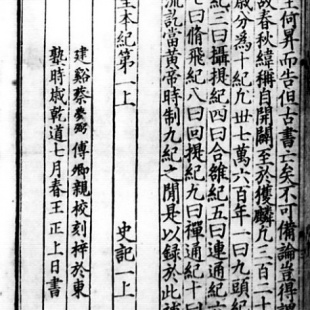
A print edition of the Shiji (Records of the Grand Historian), which was published in 1171, is one such example. Compiled in the 1st century BC by Sima Qian, it is a foundation text of Chinese history, and has been republished as a reference for national governance throughout the centuries.
A precious Northern Song period (960-1127) edition of the Houhanshu (Book of Later Han), which is about the history of Eastern Han Dynasty (24-220), was also included.
Due to age and conflict, not too many Northern Song books were lucky enough to survive, according to Chen Hongyan, head of the ancient book department at the NLC. Only three books in the collection of the national library, including the Houhanshu, can be definitively credited to the period.
Other key texts released include a Yuan Dynasty (1271-1368) version of Suwen (Basic Questions), a part of the Huangdi Neijing (Yellow Emperor's Inner Canon) — the earliest known book of traditional Chinese medicine, which dates back at least 2,000 years. This classic of medicine was inscribed on the UNESCO Memory of the World Register in 2011.
"Our studies of classics in recent years will benefit the digitization of ancient books," Li Hongtao, a researcher at the China Academy of Chinese Medical Sciences, says. "It will help with the revitalization of traditional Chinese medicine in modern society."
Nanjing library, the provincial-level public library of Jiangsu province, contributed most of the digitized books to this recent expansion, a total of 3,600 in all. Other than precious Song (960-1279) and Yuan dynasty editions, it also released collected works by Qing Dynasty (1644-1911) writers, and rarely-seen versions of local chronicles.
Many ancient books written in scripts other than Chinese characters were also digitized and released to improve understanding of China's collective history. A total of 115 books in Tibetan, Manchu, and Mongolian, as well as in extinct languages like Khitan, Jurchen, and Khotan, were uploaded for the use of researchers from the national library's collection.
Separately, the release of 42 books by ethnic groups in Yunnan province, which are part of the collection of the province's office for the publication of ancient books of non-Han ethnic groups, tell a remarkable saga of the southwestern region.
"Academics have great need of digitized versions of ancient books," Zhang Zhiqing, deputy director of the National Library of China, says. "Referring to original copies is crucial to the study of literature if researchers are to avoid mistakes from using secondary sources."
Before the archive's creation, researchers had to come to Beijing and pay to use the national library's resources. And because the new digital database is free to use, the platform has attracted wider public interest.
Zhang says that in 2020, 19.7 percent of papers published on The Documentation, an academic journal of textual studies edited by the national library, were credited to the database, a figure that has climbed to 38.7 percent this year.
He estimated that only 20 to 25 percent of the national library's ancient book collection has been digitized.
"There's a long way to go," Zhang says. "Ancient books can be properly preserved only when they are read and used."