



Dollar to be strengthened by delay









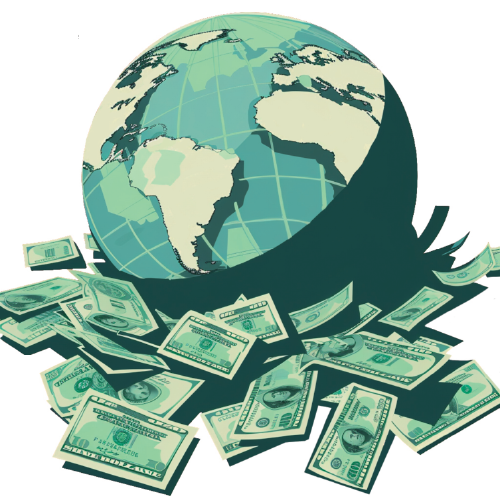
The Fed maintains high interest rates to keep the dollar strong, while cutting rates ahead of others could dramatically weaken it
Many are expecting the United States Federal Reserve to end its rate hikes in 2024 and begin a new round of rate cuts. However, the inflation rebound in February and March and sticky core inflation means it is difficult to achieve the 2 percent core inflation target in the short term. Considering market expectations and the need to maintain a strong US dollar, the Fed has slowed down its pace of rate cuts.
With another Federal Open Market Committee meeting just around the corner on June 10 and 11, whether the Fed will keep the rate unchanged has become one of the most discussed topics in international markets.
So far, it seems that the Fed will delay its first rate cut until the European Central Bank and the Bank of England confirm their rate cut plans.
In response to the impact of the COVID-19 pandemic, the Fed injected massive amounts of cash into the market in 2020, which led to accelerated inflation in the US in 2021. To tame high inflation, the Fed launched a series of aggressive rate hikes from March 2022.
As a result, the US dollar strengthened its position and global capital flowed into the US, which to some extent drove investment and reduced the unemployment in the US, creating better conditions for the growth of top US high-tech giants including Apple, Microsoft and Nvidia. However, the US has been reaping global high-quality assets at the expense of the global economy.
First, the Fed, by launching rate hikes before the ECB did, has pushed the economies of its European allies into stagnation, a typical example of the "America First" protectionism. The Fed's aggressive rate hike cycle started in March 2022, four months earlier than the ECB's, resulting in a strong dollar and a weak euro. As global capital flowed into the US, the dollar appreciated significantly while other currencies, assets and commodities depreciated sharply relative to the dollar, greatly enhancing the dollar's purchasing power. This is a key reason why the US economy outperformed expectations in 2022 and 2023, while the economies of the European Union and the United Kingdom were relatively weak.
Second, the Fed's rate hikes and the dollar's appreciation have left many emerging markets and underdeveloped countries deep in debt. As the world's major settlement and reserve currency, the US dollar is used to denominate about 70 percent of global trade. As it appreciates, the import costs for other countries rise; investment in emerging markets, popular destinations for international capital, drops; inflation worsens in many developing countries; emerging economies that need to repay debt in US dollars, especially those with inadequate foreign exchange reserves, are stuck in debt crises. During the Fed's rate hike cycle in 2022-23, more than a dozen emerging and developing countries, including Argentina, Turkiye, Egypt, Pakistan, Sri Lanka and Ghana, fell into debt quagmires.
To protect the core interests of the US, the Fed's market guidance and actual operations for rate cuts in 2024 will center around maintaining a strong dollar, while cutting rates ahead of others could dramatically weaken the dollar.
Domestically, the macroeconomic situation in the US market supports the expectations for delayed, less frequent and smaller rate cuts. The main reasons behind the weakening expectations are rising inflation, a sticky labor market and core service prices, as well as the White House's strong fiscal spending plans and deficit rate.
At the start of this year, the majority expected the first rate cut by the Fed in June or July, followed by one or two additional cuts through the year by a total of 50 to 75 basis points.
But now, it is very likely that the Fed will delay the first rate cut. If the ECB makes the move first, the Fed will have an opportunity to observe and determine the timing of its first rate cut based on the ECB's actions and market response. The current international markets do not have enough high-quality assets to absorb the massive amount of dollars, which is not conducive to maintaining a strong dollar.
In the process of raising interest rates, the Fed released $2.1 trillion liquidity to the US bond market by reducing the scale of reverse repurchase, which was used to buy short-term treasury bonds. If the rate is cut, it will be difficult to find buyers for these short-term treasuries, because the global market is not yet capable of absorbing these funds.
Geopolitical risks from the Russia-Ukraine conflict and the Israel-Palestine conflict have driven up oil prices and pushed gold prices to historic highs. In the international market, there was no serious economic crisis, no large-scale asset collapse, leaving no "bargain assets" for dollar funds to purchase. The liquidity released by a rash rate cut will only push up the prices of consumer goods and services, heighten inflation expectations and increase the self-reinforcing risks of high inflations, thus disrupting the dollar's strong position created by the Fed's rate hikes.
The purpose of the Fed's rate-cut delay is to maintain the dollar's strength. The tug of war among the Fed, ECB, and BOE has a profound influence on international exchange rates.
Since September 2023, international capital markets have predicted that the BOE will cut rates much more slowly than the Fed and the ECB, leading to a generally bullish outlook for the pound in the foreign exchange market. However, the current widespread concerns about the UK economy weaken that expectation.
According to an interview with Philip Lane, the chief economist of the ECB, at the end of May, the ECB will start cutting rates in June, but will also need to keep rates in restrictive territory through 2024.
From a practical standpoint, the Fed is likely to guide market expectations and cut rates later than the ECB and BOE, keeping rates at a high level to maintain the strong position of the dollar.
Zhang Yongjun is secretary-general and researcher at the China Center for International Economic Exchanges. Guo Yingfeng is an associate researcher at the China Center for International Economic Exchanges.The authors contributed this article to China Watch, a think tank powered by China Daily.
The views do not necessarily reflect those of China Daily.
Contact the editor at editor@chinawatch.cn.





