



Program targets lunar resources
Plans for future include retrieving samples from the moon's far side









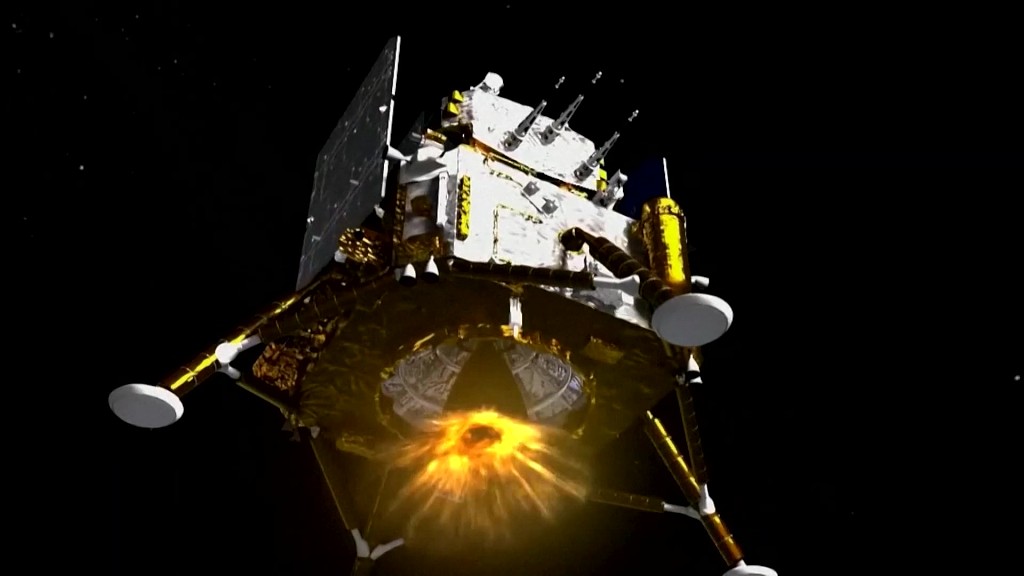
China has made remarkable achievements in lunar exploration, with two robots still working on the moon. The country has also announced plans for the coming years, including retrieving samples from the moon's far side.
However, those ambitious endeavors are not only related to science, but also embrace a magnificent aspiration: to find and develop resources on the moon for the good of mankind, according to a leading scientist in China's lunar program.
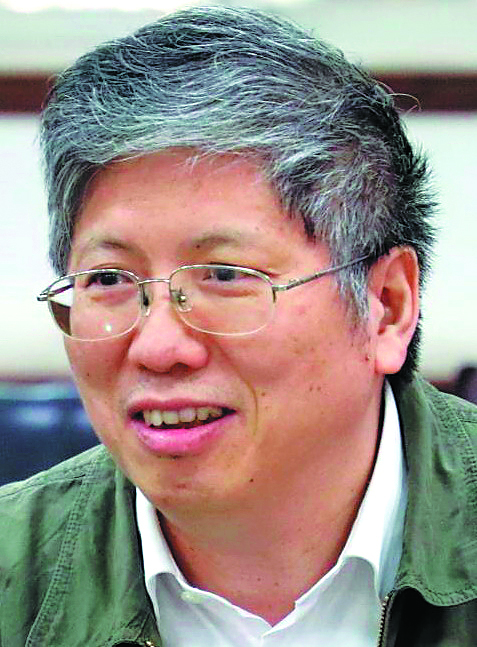
"This year marks the 20th year since our country started its lunar exploration program. Along with the development of our lunar exploration, we will pay more attention to the research and utilization of resources on the moon, and that is in line with the purposes of other space powers in their recent adventures to the moon," Yang Mengfei, a senior researcher at the China Academy of Space Technology and an academician of the Chinese Academy of Sciences, said.
"The first step will be sending large numbers of robots to search for resource-rich places, especially those with recoverable frozen water. Water is paramount to our effort of establishing a long-term human presence on the moon — with it, we will be able to make oxygen and hydrogen and grow plants there. And then we will come out to find other resources like metal and silicon minerals and then put them into an advanced extraction and refinement process."
After that, 3D printers will turn the metals and silicon into construction materials or solar panels to be used to build roads, structures and power stations, Yang said.
"By that time, humans will be able to set up bases that can support long-term robotic operations and short-duration human stays," he said. "Astronauts can manufacture scientific apparatuses like radio telescopes inside such facilities and place the hardware near bases — the absence of atmosphere and electromagnetic interference makes the lunar surface perfect for astronomical observation."
Yang said the bases could also be used to refuel spacecraft carrying humans to distant destinations inside the solar system.
He said advances in science and technology mean it will likely become possible to extract helium-3, an ideal fuel for future nuclear fusion power plants, from the moon.
It is estimated there are 15 to 20 metric tons of helium-3 on Earth, but experts say there could be at least 1 million tons on the moon.
"Of course it will be very difficult but if we could make it happen, then it will be a very big deal to humans on Earth," Yang said.
He said that to realize the grand road map, Chinese scientists and engineers have started designing an Earth-moon spacecraft telecommand and communications system that will be capable of transmitting data and providing positioning and navigation service to spaceships traveling between them.
Yang also shared his vision for the next 50 years.
"My optimistic anticipation is that ordinary people will be able to travel between Earth and the moon in the foreseeable future," he said. "Advances in science and technology will definitely move our civilizations forward. When moon-bound journeys become available to commoners like you and me, the moon will then become mankind's eighth continent."
Yang is widely known for leading the design work on the Chang'e 5 robotic spacecraft that fulfilled China's first lunar sample retrieval mission.
He was speaking on the sidelines of the second session of the 14th National Committee of the Chinese People's Political Consultative Conference, which concluded in Beijing on Sunday. He is a member of the CPPCC National Committee, the top political advisory body in China.
China began its lunar program in 2004 and has launched six robotic probes since 2007. The most recent mission, Chang'e 5, landed on the moon in December 2020 and soon brought 1,731 grams of lunar rocks and soil back to Earth, achieving a historic accomplishment about 44 years after the last lunar substances were brought back from our nearest celestial neighbor.


- Drone and fireworks show staged in Macao to celebrate Spring Festival
- Year of the Horse, full speed ahead
- China's sci-tech museums draw over 3.5m visits during Spring Festival holiday
- Surge in mainland-SARs tourism drives traffic records on sea bridge
- Forest fires spark safety warnings in Guangdong
- Niche towns attract droves of visitors








