


Secondhand economy a win-win scenario
Rising buying trend boosts green growth, padding purses of those with unwanted, outdated wares










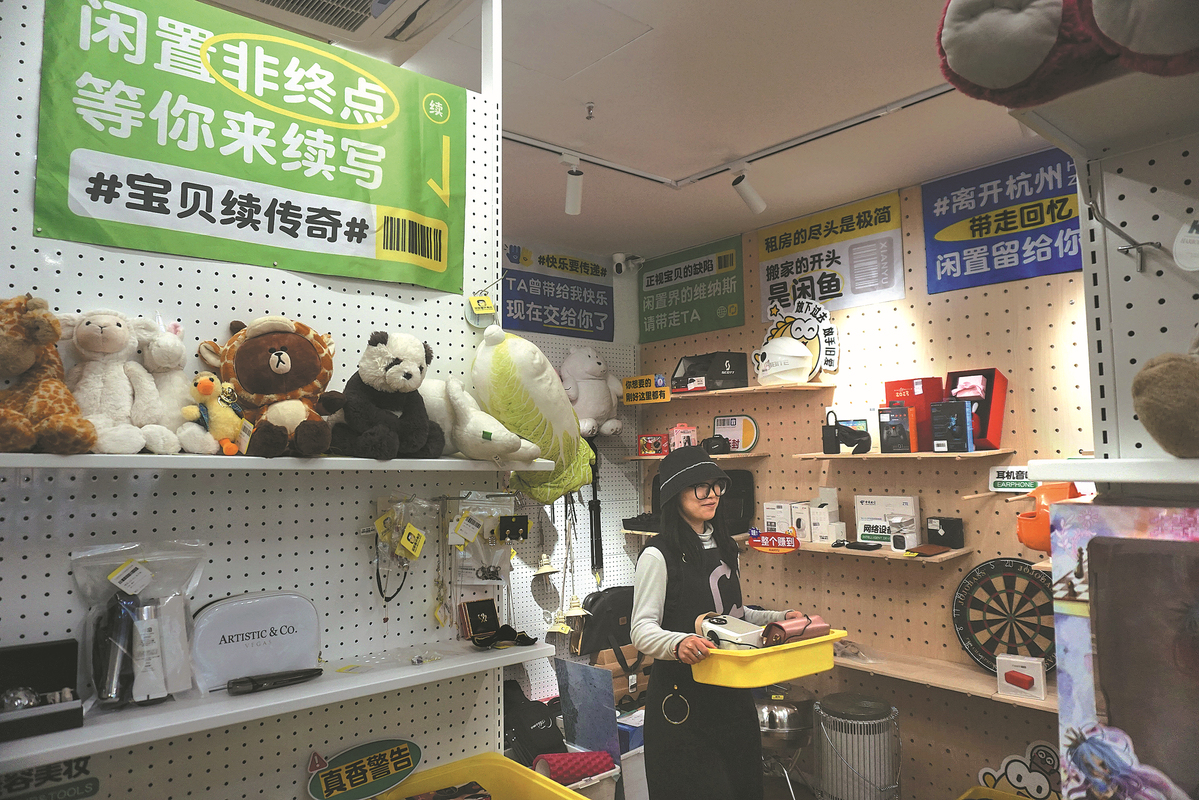
In a twist of fate, outdated clothes, obsolete smartphones, previously cherished appliances and used books, once mostly destined for recycling bins or landfills, are finding a new lease on life thanks to China's thriving secondhand economy in recent years.
Multiple factors are driving this transformative shift, with a combination of government initiatives, a burgeoning market of surplus goods, and changing attitudes among the country's tech-savvy and environmentally conscious youth playing influential roles, analysts said.
Liu Mengqi, a 28-year-old in Changsha, Hunan province, sold a smartwatch she had won at her company's annual event for 900 yuan ($125), after a back-and-forth price tug-of-war on secondhand e-commerce platform Xianyu in early February.
The process began with Liu meticulously photographing the smartwatch and editing the images to showcase its best features. She also crafted a captivating description of the product, highlighting its functionality and unique attributes.
"Though the deal ended up being 200 yuan lower than prices listed on major e-commerce platforms, selling it allowed me to recoup a portion of its value while giving someone else the opportunity to enjoy its features at a discounted price," she said.
Scenes of individuals selling their underused or outdated goods have become increasingly common in China, as evidenced by data from the country's largest secondhand goods trading platform — Xianyu — which boasts 500 million user accounts, with over 1 billion items available for sale by May last year.
China's domestic used product market, which had already surpassed the trillion-yuan mark in 2020, is expected to exceed 3 trillion yuan in trading volume of pre-owned goods by 2025, according to a report by the Beijing-based Institute of Energy, Environment and Economy at Tsinghua University.
The rapid development of China's economy and the sustained period of rising consumer spending power have created the perfect breeding ground for the secondhand economy, said Zhu Keli, founding director of the China Institute of New Economy.
Data from the National Bureau of Statistics revealed that China's total retail sales surged by 7.2 percent year-on-year to 47.15 trillion yuan in 2023. This notable increase indicates a nearly doubling of the figure compared to a decade ago, when it stood at 23.78 trillion yuan in 2013.
As consumerism surges in China, a surplus of products has emerged, leading to significant inventories of outdated and unwanted items. These goods, ranging from clothing and electronics to household items and more, form the foundation of the secondhand economy, Zhu added.
Online platforms have become the bridge between sellers looking to offload their unused belongings and buyers seeking cost-effective alternatives or unique finds and bargains.
The convenience and accessibility of online platforms have further fueled the popularity of the secondhand economy among young people. With just a few clicks, users can browse through a vast array of products, compare prices and make secure transactions.
China's used goods e-commerce market in 2023 is likely to have surged 14.25 percent year-on-year to 548.65 billion yuan in transaction volume, said e-commerce digital economy media platform 100ec.cn.
In the meanwhile, this surge in trading activity is being helped by a rapidly expanding user base, which is predicted to have risen to 620 million, representing an impressive year-on-year growth rate of 33.9 percent, according to the data.
Unlike traditional brick-and-mortar flea markets and secondhand goods shops, online pre-owned product platforms leverage algorithms to achieve higher matching efficiency. This means that consumers can enjoy a more tailored and personalized shopping experience, said Li Mingtao, head of the research institute at the China International Electronic Commerce Center.
The algorithms take into account consumer preferences, browsing history and feedback to suggest relevant items, creating a seamless and efficient buying and selling process. With this level of precision, young people can explore a wide range of choices that suit their individual needs, tastes and budgets, Li added.





