


Beijing's 'green lung' showcases its natural wonders










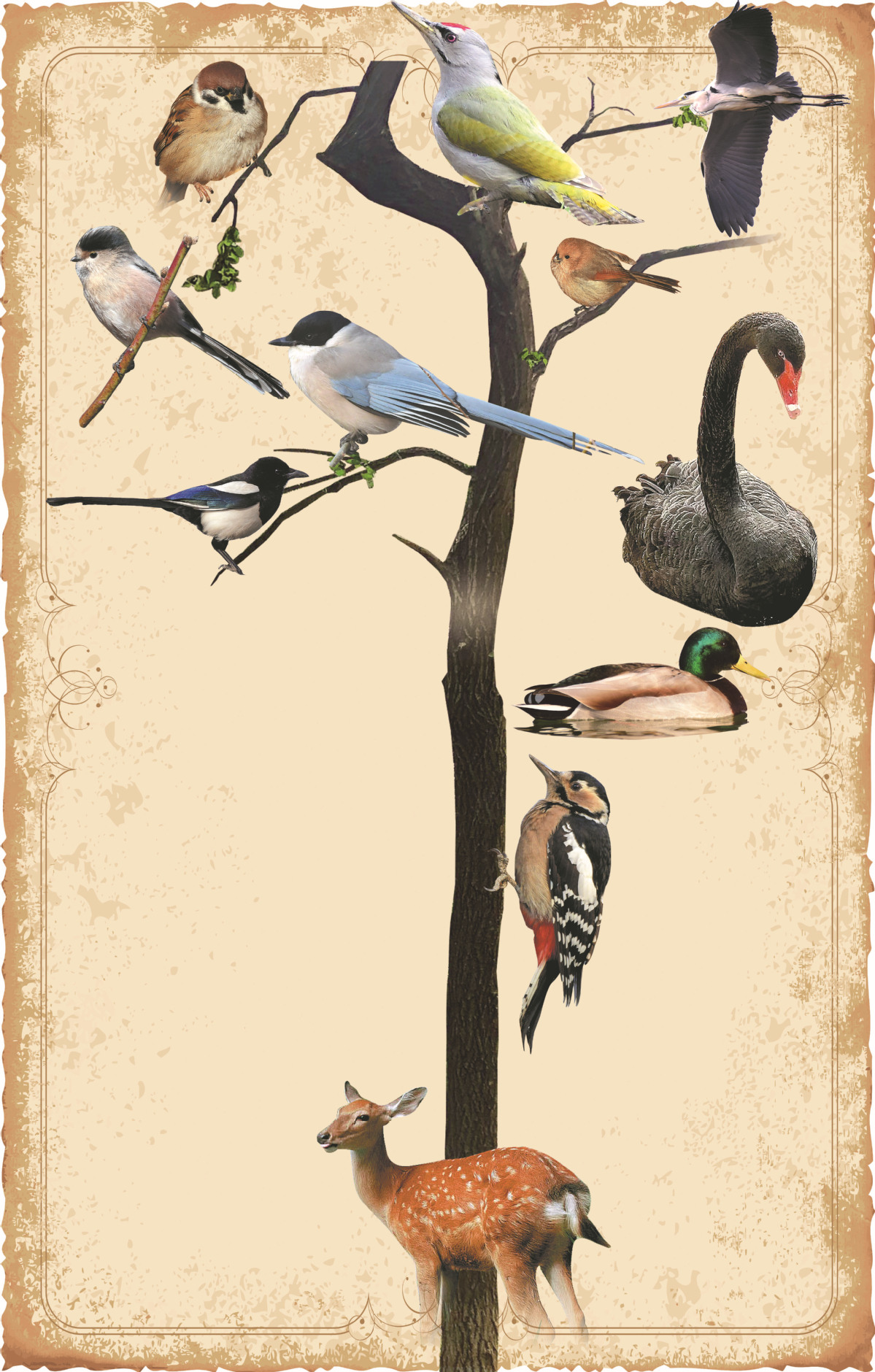
Birds and other animals offered top-level protection in Olympic Forest Park
Guan Xiangyu, an experienced bird-watcher, was thrilled to hear the sound of a grey-headed woodpecker at dusk in Beijing Olympic Forest Park.
"Listen to this bird, it sounds like a kid laughing rhythmically," Guan said, standing by the lakeside near the south entrance to the park.
From 5:15 pm to 6:15 pm that day in late September, the 33-year-old observed or heard nearly 20 avian species in the park.
They included the mallard, little grebe, grey heron, black-crowned night heron, common moorhen, spotted dove, great spotted woodpecker and the common kingfisher.
Guan also logged sightings or observations of the common magpie, azure-winged magpie, marsh tit, silver-throated bushtit, vinous-throated parrotbill, yellow-browned warbler, dusky warbler and the Eurasian tree sparrow.
The author of My Strange Encounter with Nature-(Tracing the Birds) and the Beijing Birding Map, Guan has loved nature since childhood.
At college in 2009, he took an optional course titled Bird Watching in China. His teacher, Zhao Xinru, an associate professor of zoology at Beijing Normal University and a professional guide with the Beijing Bird Watching Society, took Guan to Olympic Forest Park to watch birds for the first time. "The park was new then, and there weren't that many species to see," Guan said.
Later, Guan began following members of the Beijing Bird Watching Society to observe avian species throughout the city, with Olympic Forest Park being one of the main locations for such activities.
As a student of urban management, Guan completed his senior thesis through a birdwatching survey at the park to research the relationship between avian migration and urban development and ecological conservation.
After he graduated, Guan joined the Beijing Bird Watching Society, which was founded in 2004. As a public welfare organization, the society advocates "scientific bird watching and respect for nature". In addition to doing good work in popularizing science, it conducts many volunteer activities, including bird investigation and protection, and extensive exchanges and cooperation with similar societies worldwide.
"The area of water at Beijing Olympic Forest Park is large enough not only to accommodate open lakes, but also wetlands with undercurrents. As the park's ecosystem has become more complete, vegetation has grown considerably, and the birds have become more abundant, including various types of water and forest species," Guan said.
He is now a full-time leader of bird-watching science popularization activities, and has witnessed the ever-increasing diversity of avian species at the park over the past 14 years.
"More and more people are coming to the park to watch birds. At first, they were mainly college students and researchers, but now more and more seniors and primary and secondary school students are joining them. The seniors enjoy life and relax amid the peace of nature, while the teenagers love exploring the environment around them," Guan said.
"Over the past 14 years, the Beijing Bird Watching Society has issued sound advice on protecting birds, which has been well adopted and implemented. For example, at some parks in winter, rotting reeds in wetlands, where there is an undercurrent, affect the water quality and pose a fire hazard, which can generally be taken care of.
"However, we set aside some small pieces of reed to provide shelter and feeding for birds such as the water rail, bearded reedling, and black-faced bunting. The water rail was first found in Beijing in wetlands at Olympic Forest Park where there is an undercurrent."
Guan said the park also boasts many plants that provide food such as nectar, fruit and seeds for the birds. "Get to recognize the birds in this park, and you will know one-fifth of all the avian species in China," he added.
As the capital's "green lung", Olympic Forest Park, which covers nearly 680 hectares, is also the largest urban green landscape in Asia.
More than 580 kinds of birds can be seen in Beijing, accounting for more than one-third of the avian species in China, and more than 300 species of birds have been observed at the forest park.
The Beijing Wildlife Rescue Center said that on May 18, workers conducting monitoring training at the park found the yellow-breasted bunting, a critically endangered species and a national first-class key protected wild animal.
Guan said, "As wildlife is a barometer of the environment, the appearance of endangered birds in the park indicates that the environment in Beijing is constantly improving."





