



A mission to care and share









Same standards
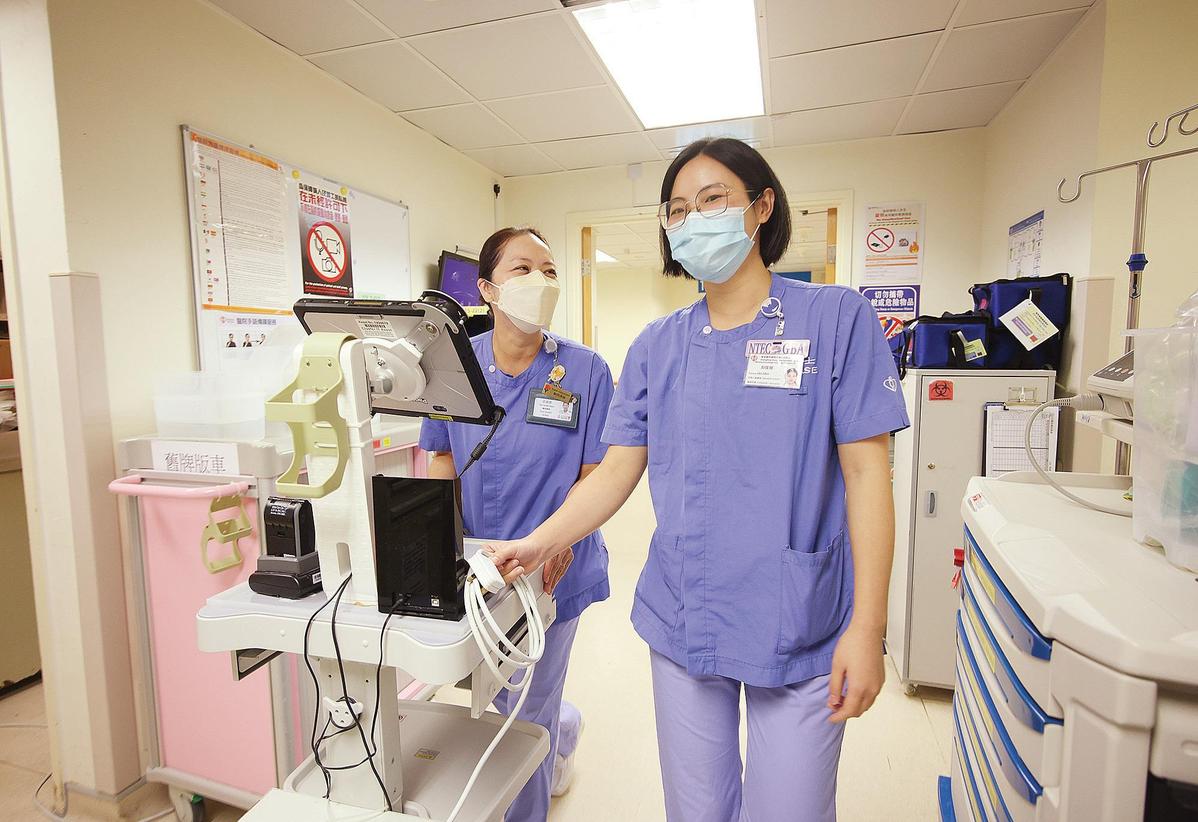
On the second day of Liu's rotation at Prince of Wales Hospital in Shatin, she saw an elderly woman in the corridor who appeared to be having respiratory difficulties. Liu immediately approached the patient and inquired about her sickness.
After learning that the woman was experiencing shortness of breath and a tight chest, Liu performed a 12-lead electrocardiogram on her. She detected early signs of myocardial ischemia and informed her clinical mentor.
Liu's timely intervention helped the patient make a gradual recovery. Through the collaborative efforts of Liu and local medical staff, the patient's condition stabilized.
Liu's rich nursing experience played a crucial role in ensuring timely treatment for the patient. "There's no significant difference in the nursing techniques and knowledge between those of Hong Kong and the mainland," she reckons.
Nurses in Guangdong follow international guidelines, and work according to nursing procedures. On their arrival in the SAR, they are allocated to seven hospital clusters under the Hospital Authority to start their practicum and exchange clinical knowledge and theories with local healthcare teams. This has helped Hong Kong medical staff gain a deeper understanding of their mainland peers through regular encounters.
"The mainland nurses were able to win the trust of their Hong Kong patients quickly by paying exceptional attention to their needs," says Sze, citing the case of a patient with a mainland background who was eager to share her personal experiences with Liu, fostering a sense of familiarity and kinship.
Liu also raised the case of a patient at Shatin Hospital, who refused to talk with others. However, Liu took the initiative to offer emotional support and to try to speak to the patient. After learning that the patient had endured a bad fall, Liu taught her how to use equipment to prevent similar incidents occurring in the future. Liu's approach and professionalism quickly earned her the trust of the patient and her family.
More than six months into the exchange program, Liu's knowledge of Hong Kong's techniques in caring for the elderly has grown, including the process of transferring patients from hospitals to community care centers. She notes that before patients can return to the community, they often have to undergo a period of rehabilitation and occupational therapy at facilities like Shatin Hospital. This helps to improve their physical condition and medical care arrangements before they can reintegrate themselves into the community. The goal is to reduce the rate of hospital readmissions and help patients to stay healthy.
Liu feels she and her mainland peers have acquired a preliminary understanding of Hong Kong's elderly care system, and have familiarized themselves with the city's practical aspects of nursing.
Closer, deeper ties
Medical collaboration between the SAR and the mainland has strengthened in recent decades. Chief Executive John Lee Ka-chiu's 2023 Policy Address proposed steps to reinforce cross-boundary medical exchanges and cooperation, including procuring medical treatment techniques, such as electronic scanning and magnetic resonance imaging, from the mainland to lighten the burden on Hong Kong's public hospitals; extending the usage of healthcare vouchers for the elderly to five suitable mainland medical institutions; and bringing forward the Hospital Authority's Greater Bay Area Healthcare Talents Visiting Programmes.
Secretary for Health Lo Chung-mau says such services will center on those with lower risks and who have to wait longer for treatment, such as electronic scanning and magnetic resonance imaging, and even dental services. The measures will ease the pressure on Hong Kong's medical services, as well as the waiting time for patients seeking treatment in the short term.
Lo says dental care, as a lower-risk service, could also be considered for closer cross-boundary medical collaboration due to the high demand for dental services in the SAR, the shortage of dental professionals, and the long waiting period for treatment. Currently, many Hong Kong residents travel to the mainland for dental cleaning or fillings.
The Policy Address also introduced the usage of eHealth+, which aims to unify the storage of public and private electronic medical records and integrate the governance process of healthcare services through an individual's personal health account. Lo hopes that, in the future, patients could possess their own medical records that could be presented when they seek treatment at hospitals on the mainland or overseas.
Another key initiative to buttress cross-boundary medical collaboration is the setting up of the Greater Bay Area International Clinical Trial Institute at the Hetao Co-operation Zone at Lok Ma Chau, bordering Shenzhen. The facility aims to fully utilize the advantages of Hong Kong and the mainland cities in the Guangdong-Hong Kong-Macao Greater Bay Area, and gain recognition at national and international levels.
The Policy Address also introduced the concept of a cross-boundary ambulance service, which aims to transport patients, who are in a stable condition, from the mainland to Hong Kong in compliance with local medical standards.
Brave Chan Yung, a Hong Kong deputy to the National People's Congress, notes that as many Hong Kong residents have chosen to retire on the mainland, particularly in the Greater Bay Area, there are concerns among the elderly about gaining access to medical services across the boundary.
By expanding the usage of medical vouchers on the mainland, elderly people will no longer need to return to Hong Kong for minor ailments, thus reducing the physical and logistical burdens, he says.
Chan hopes the scope for using medical vouchers on the mainland could be expanded to cover more top-tier hospitals.
The SAR will welcome the second batch of nurses from Guangdong under the healthcare exchange program next month or early next year once details have been finalized by the Hospital Authority and the Health Commission of Guangdong Province.
A staff member of Prince of Wales Hospital tells China Daily that the hospital faces an acute shortage of staff in the field of anesthesiology. "The department may appear to be peripheral, but it's actually the most crucial," the employee says, suggesting that future exchange programs should consider allocating more personnel to departments with severe staff shortages.
Sze says she would like to switch roles with Liu and her peers to gain firsthand experience of the mainland's medical system through similar exchange programs, particularly in smart hospitals with advanced technology and 5G networks.
Given the increased collaboration in medical cooperation between Hong Kong and the mainland, her wish will hopefully be realized soon.





