



Water shouldn't be taken for granted









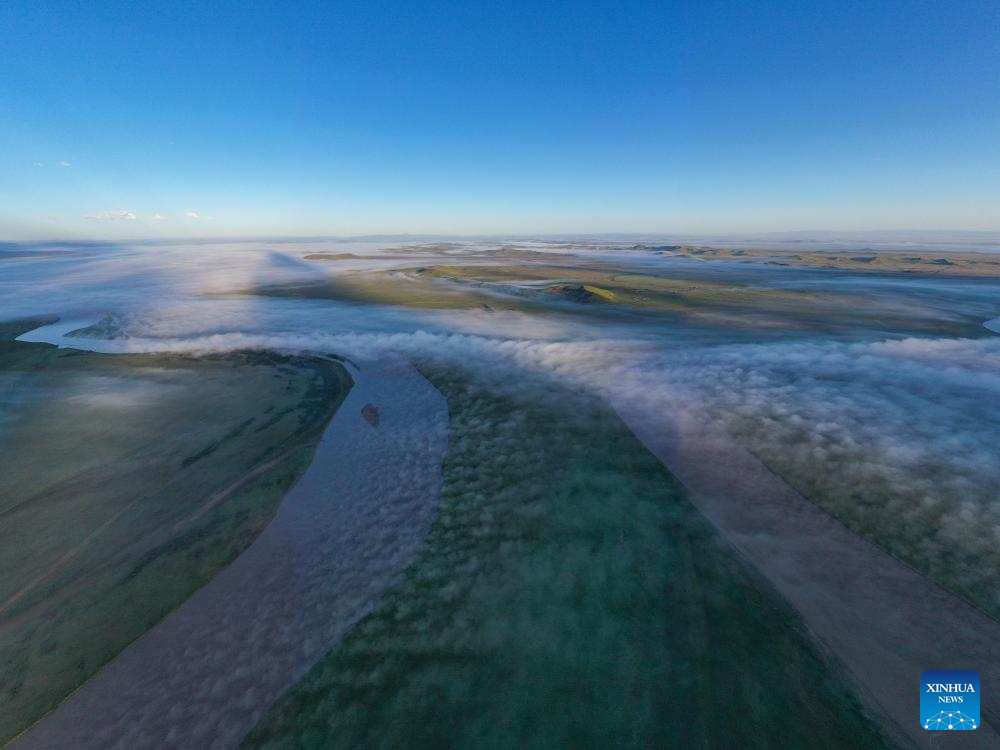
This year's World Food Day celebrates one of the planet's most precious resources: water. It's essential to life on Earth. It covers the majority of the planet's surface, makes up over 50 percent of our bodies, helps keep us fed, supports livelihoods and is central to achieving the 2030 Agenda for Sustainable Development and the Sustainable Development Goals (SDGs). So how should we approach the complex challenge of shielding our existing freshwater resources and aquatic food systems from pollution and the impacts of the climate crisis, while ensuring that people have equal access to water?
With about 70 percent of all freshwaters going to agriculture, changing the ways we produce our food, fiber, and other agricultural products is the most crucial task. It is also where failure to act will have the gravest consequences.
Freshwater is not infinite, and we need to stop taking it for granted.
Consider that over the last two decades, each of us on earth has lost approximately one-fifth of the freshwater available to us. For some people, the reality is much worse. In some regions, in fact, it runs closer to one-third.
Unless we act urgently, we are on course to increase our water use by more than a third by 2050 globally, given our planet's growing population. That means, collectively, we risk reaching a point of no return.
Rapid population growth, urbanization, industrialization, economic development, and the climate crisis have all taken a toll on our water resources. Combined with water pollution, over-extraction and lack of coordinated management, this creates a complex mix of overlapping challenges.
Increased extreme weather events, drought and flooding are stressing our ecosystems, with daunting consequences for global food security. Smallholder farmers, particularly the poor, women, youth, Indigenous Peoples, migrants, and refugees, are the most vulnerable.
Approaching a complex challenge
At the heart of the balancing act to address these combined challenges must be securing sufficient water for agriculture, while reconciling the competing water needs of other economic activities, especially as urbanization accelerates.
Good governance is crucial for sustainable and equitable water allocation, through an integrated and inclusive approach with all partners. Water governance and tenure, water pricing, regulations, and incentive measures, are needed to drive change and ensure equitable access to clean and safe water resources.
We need to implement integrated water resources management through coordinated development and management of water, land, and related resources to maximize human well- being, without compromising the sustainability of vital ecosystems. For this we need both national and regional designs.
Investment in innovative, efficient water management practices is vital, including in modern irrigation and storage technologies and science-based solutions to address water scarcity and harnessing flooding; so that we are building a water-saving and resilient society, including through managing more effectively the water-food-energy nexus.
Action on the ground
We can and are working to make these things happen.
For example, in the Sahel FAO is providing mechanization opportunities to farmers to improve their water infrastructure and is supporting rural women and their households to access water.
Globally, irrigated land produces 40 percent of food from 20 percent of arable land – yet it remains an untapped potential.
To help deliver on this potential, FAO is developing a global irrigation needs and potential mapping methodology, and we look forward to working with countries to implement it.
Appropriate financing mechanisms and investments, at the right and big scale, are key to building and maintaining capital-intensive infrastructure.
Resilience-based solutions are key. Prioritizing green and blue infrastructure to promote agriculture and fisheries respectively can enhance water quality, maintain biodiversity and provide other benefits to agrifood systems and rural areas.
In Sri Lanka and Zambia, for example, FAO is piloting multifunctional paddy fields for fish and shrimp farming, in addition to rice production.
Such value-added infrastructure generates benefits by recharging groundwater, controlling floods and providing ecosystem services.
All actors must be on board
We can and must do more, together, with all the various actors making their distinct, yet inter- related contributions.
Governments need to design science- and evidence-based policies that capitalize on data and innovation, and coordinate across sectors to plan and manage water better. Water, energy and food are inextricably linked, and for policies to be successful, it's important they manage often- competing interests without compromising the health of our ecosystems.
Our farmers need to become agents of water management and be equipped with the right tools to perform that function sustainably. Farmers, forest-dependent people, livestock producers and those working in the blue economy of fisheries and aquaculture already manage water on a daily basis. Supporting and encouraging them to take leadership in finding and implementing water solutions is both the obvious and the smart thing to do.
Businesses need to become water stewards. That means making concrete commitments to improving water use efficiency and reducing pollution across the supply chain. This doesn't just benefit nature and society, but businesses too. Taking water governance seriously can boost their reputation and profits and help them avoid risks that water scarcity, floods and pollution could pose to operations in the future.
Let me underline again that all of us need to stop taking water for granted. Making informed decisions about the products we buy, wasting less water and preventing flooding disaster and pollution are easy ways for everybody to contribute to positive action for a future of prosperity for people and the planet. They are central to achieving what we at FAO refer to as the Four Betters: better production, better nutrition, a better environment and a better life – to ensure no one is left behind.
The author is Director-General of the Food and Agriculture Organization of the United Nations (FAO).





