



'Cafe,' 'restaurant' enactment brings solace to cognitively-impaired seniors









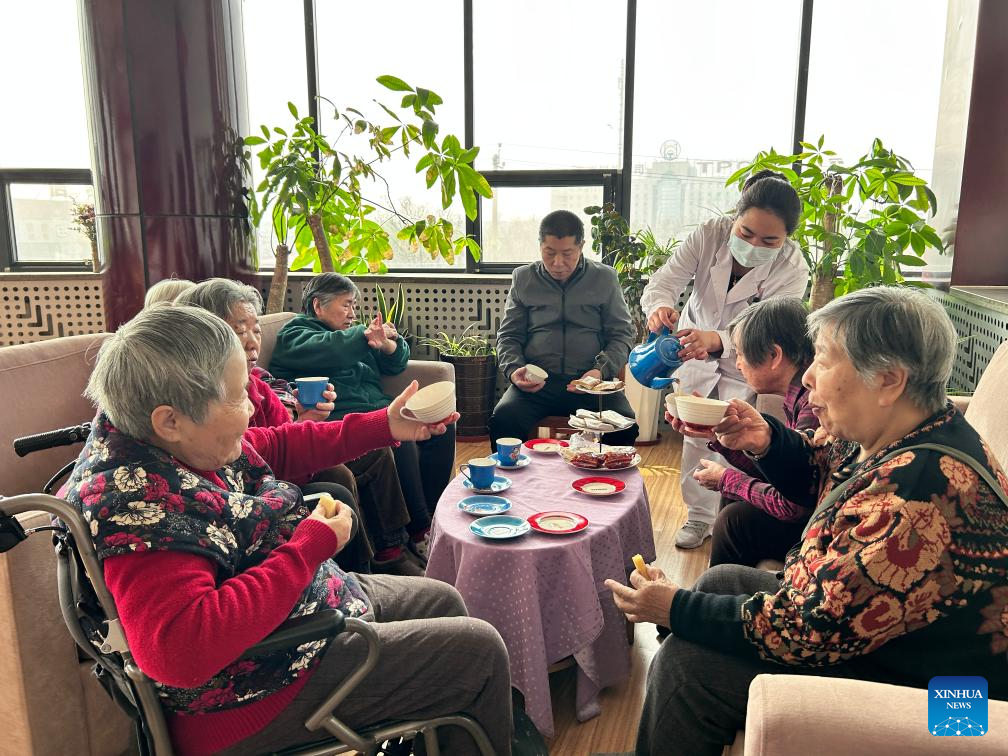
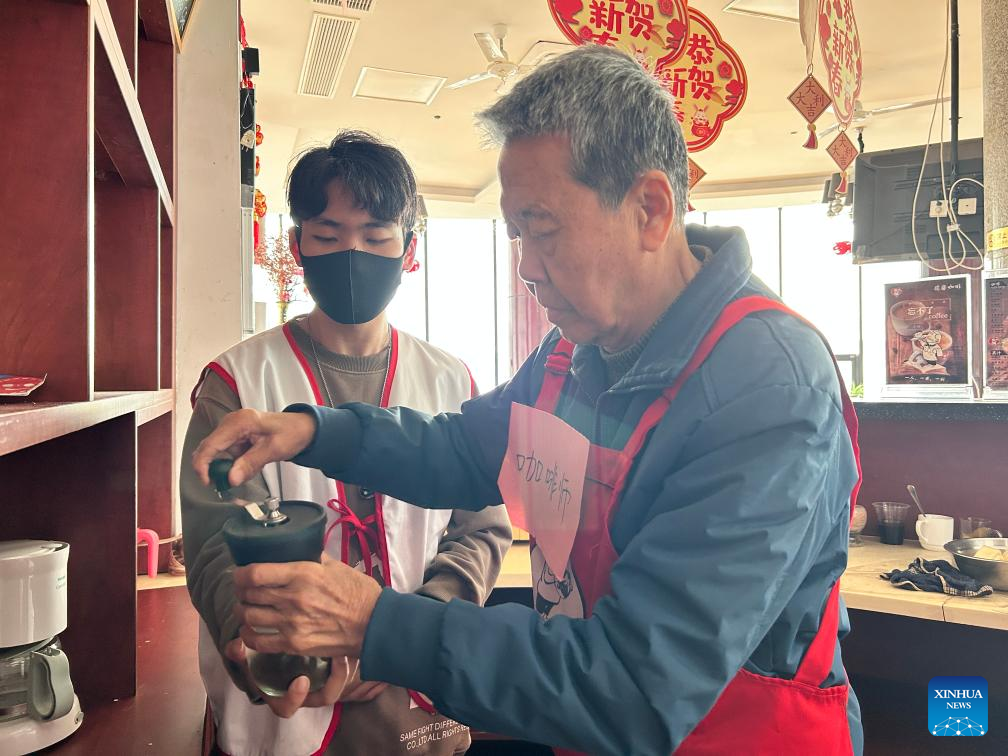
TIANJIN -- It seems another normal day for 73-year-old Wang. After making coffee at a cafe like a barista, she goes to a grocery store to buy daily necessities and then waits at a bus stop, ready to return home.
Wang has a serious cognitive impairment. She has forgotten the names of her children, constantly loses track of time, and does not know that the people she encounters -- from cafe customers to shop assistants -- are her fellow residents at a Chinese rehabilitation facility.
This Hetong Cognitive Rehabilitation Center in North China's Tianjin has built life-like settings, including a restaurant, a cafe, a cinema, a grocery store and a bus stop, to engage seniors like Wang in social activities, encouraging them to live and work like other citizens. All these elements form an integral part of role-playing rehabilitation therapy provided to senior citizens with cognitive disorders.
Chai Dingfang, a social worker at the center, said the role-playing activities can help the elderly retrieve their identities through social interactions, resist further cognitive decline, and improve their physical and mental condition.
"For example, the center's unfamiliar environment often triggers a desire in newly arrived elderly individuals to return home. In such situations, I would guide them to the 'bus stop.' Seeing a familiar bus route at a bus stop would ease their anxiety, and they would wait quietly for the 'bus' until the nurses pick them up," she said.
In the restaurant, which is open to participation from people outside the facility, four "waiters" walk around elderly-friendly tables and on non-slip mats.
A "waiter" surnamed Chen, 63, has been diagnosed with Alzheimer's Disease. Despite having participated in the exercise before, Chen continued to make mistakes. Her handwriting on orders was illegible, and she couldn't remember the numbers of the tables waiting to be served.
She was also unable to recognize that one of her customers, Hao Shuang, was her own daughter. Nevertheless, Hao displayed exceptional patience as she received her mother's services.
"I'm glad to see her calmness has been restored in this new job. This is so different to how she used to be -- grumpy, stuck at home and unable to take care of herself because of the disease," Hao said.
She said the role-playing experience has also been a salvation for her family. "Seeing my mother bringing the hot dishes to the table, just like she did when I was a child, brings back my most cherished memories of her," she said.
According to a report released by the China National Committee on Ageing, more than 15 million people in China aged 60 and above have cognitive impairments, and the figure is expected to reach 22.2 million in 2030.
But, the good news is that public awareness is also rising. The Tianjin center said it has an increasing number of volunteers, including college students, who offer to dine at the restaurant and chat with the patients serving them.
"Everyone is trying their best to be kind to our 'waiters' and to immerse them in a warm and loving atmosphere," Chai said.
In June, the National Health Commission said a nationwide campaign would be launched from 2023 to 2025 to promote the prevention and treatment of Alzheimer's, with efforts to raise public awareness of the disease and guide the country's elderly population to pay attention to their brain health.
Fang Jiake, chairman of the Hetong Public Welfare Pension Group, which runs the rehabilitation facility, said that humanistic care is important at a time when effective medical cures for cognitive disorders remain scarce.
"We hope to use these kinds of activities to help elderly patients rediscover their value of life and live with dignity," Fang said.
According to Chai, an increasing number of patients are willing to open their hearts and talk with the care workers at the center through the role-playing rehabilitation therapy. She also keeps a record of the daily lives of the elderly patients in writing or on video and sends updates to their families.
"I want to document these good memories before they are erased from their brains," Chai said.


- Geologists brave rugged terrain in Yunnan prospecting mission
- Senior enterprise official facing probe
- China's anti-graft authorities reveal extent of year's work
- Former Haikou Party chief gets death sentence with reprieve
- Purchase of US-made weapons to push Taiwan closer to the peril of war: spokesman
- WIC calls for submission of cultural heritage digitalization cases







