



China and US: 'Decoupling' is anything but 'de-risking'









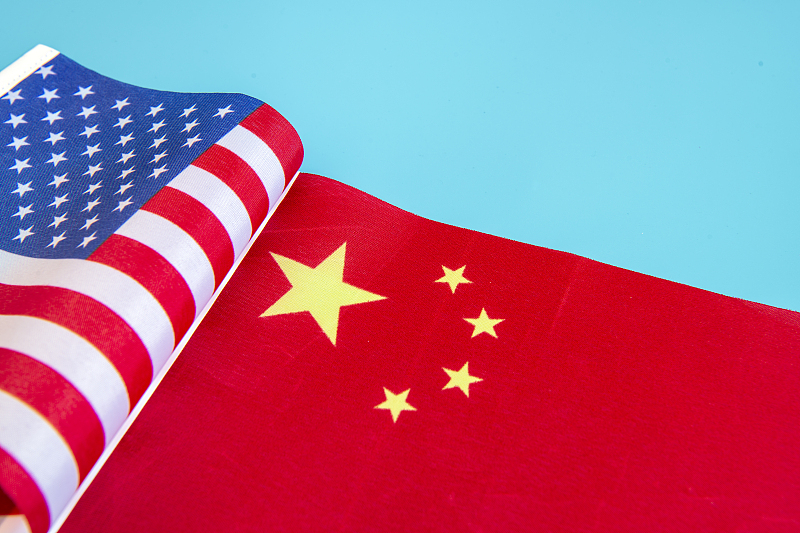
The recent developments in the China-US relationship have caused confusion in financial markets. On one hand, the visit to China by the US Secretary of State Antony Blinken has ended a long dry-spell of official communications, raising hopes of thawing tensions. With a follow-up trip planned by Treasury Secretary Yellen, the hope is that the bilateral relationship can return to the agreed path by the two presidents in Bali, allowing markets to breathe a sigh of relief.
However, these diplomatic efforts have so far failed to prevent further economic policies aimed at decoupling the US from China. Recent reports suggest that the White House is contemplating new measures to curb China's access to semiconductors for AI development and limit US private equity and venture capital investment in China. These mixed signals reflect a general lack of cohesion in the US's policies towards China and have most recently caused renewed volatility in markets.
Whether it's "decoupling" or "de-risking", investors should not be fooled by semantic wordplay. The reality is that the two economies are being pulled apart by political forces, and such a trend is unlikely to reverse any time soon. The belief in the US body politic is that this is a necessary "de-risking" process to make its economy safer, more resilient and less dependent on China. Sadly, politicians are no economists, and I'm afraid that their purported "de-risking" policies will likely achieve the exact opposite of what's intended.
Let me explain this contradiction in three main areas of US-China divergence: economy, technology and finance.
In the economic sphere, the US is the world's largest consumer, while China is the world's biggest producer. Their economic partnership has been the backbone of globalization, creating robust and inflation-free growth for more than three decades. The great moderation in inflation, in particular, had a lot to do with China unleashing its vast factors of production onto the global economy, allowing the consumers of the world to spend and central banks to stimulate without worrying about rising prices.
Now, a divorce of that relationship has started to unwind those benefits. The US-China trade spat, along with a broad rise of protectionism in other developed countries, has led to a stagnation of globalization measured by trade volumes over GDP in recent years.
On the price front, excess demand in the US and Europe is no longer met without restrictions by excess supply in China. Hence, inflation in the former has reared its ugly head for the first time in decades, while deflation has become a problem in China. The stickiness of these price phenomena -- due in part to deglobalization -- may require many countries to rethink their economic structures and central banks to resign policy frameworks.
In technology, the US is the preeminent inventor of the world, excelling at "0 to 1". China, on the other hand, is the factory of the world, with unparalleled ability to do "1 to 100". Their collaboration in tech is another marriage made in heaven, creating super successful companies like APPLE and TESLA, which innovate in US labs and turn those innovations into quality and affordable products in China.
A decoupling of this relationship will set back the world in technological progress. Without China's manufacturing prowess, fewer US innovations will hit the ground and be turned into mass products. Equally, China's production capability will also be underutilized without access to new inventions from the US. The breakdown of this co-dependency could lead to a bipolar world in some critical technologies, resulting in economic inefficiencies and potential dangers to national security.
Finally, in finance, the US is the world's largest borrower, while China is the biggest saver. Before the adoption of quantitative easing (QE) by the Fed, the US depended on China to finance its twin deficits, while China relied on the US's deep capital markets to park its savings.
However, QE changed that equilibrium as the US no longer needed China to plug its fiscal gaps, but could simply order the Fed to switch on the printing machine. In addition, the US government has put many Chinese companies on restricted lists for investment, attempted to de-list Chinese ADRs from its stock markets and threatened to sanction Chinese entities from using the US dollar SWIFT system. China, in response, has accelerated the use of its currency in international trade and encouraged US-listed companies to come home to list in Shanghai and Hong Kong. The financial decoupling is, therefore, real and profoundly consequential for many markets.
Overall, as the two superpowers drift apart, many aspects of the global economy are changing in ways that are not optimal for human progression. If one believes that the economic, financial and technological partnership between China and the US had been key to peace and prosperity in the past decades, they will have to be concerned about the direction of travel in that relationship in recent years.
In that regard, any attempts to slow the deterioration of the relationship are welcome. Resuming official dialogues and in-person meetings is a good start, but much more is needed to prevent a total decoupling of the two countries that will only increase, not decrease, risks for them and the world at large.
The author is an experienced economist based in Hong Kong. The views don't necessarily reflect those of China Daily.
If you have a specific expertise, or would like to share your thought about our stories, then send us your writings at opinion@chinadaily.com.cn, and comment@chinadaily.com.cn.





