



Regional growth, stability, integration set for boost









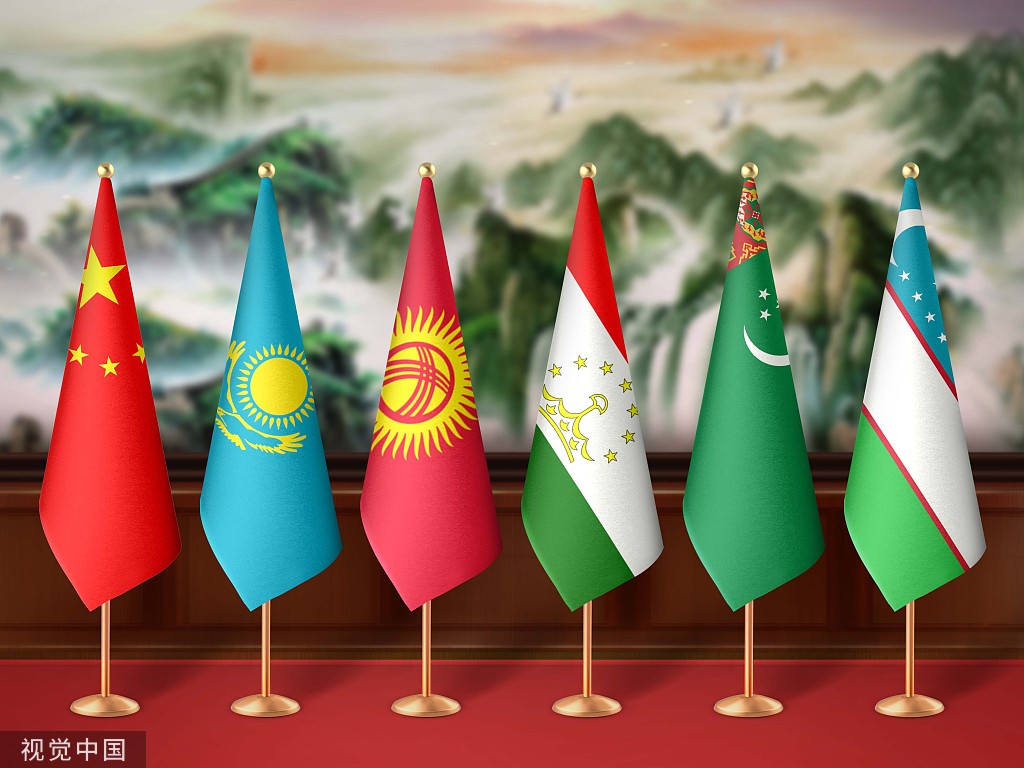
The China-Central Asia Summit, to be held on Thursday and Friday in Xi'an, Shaanxi province, marks an important milestone in the history of the development of relations between China and the states of Central Asia.
At present, the countries of Central Asia and China maintain a high level of political mutual trust and actively cooperate within the framework of the Shanghai Cooperation Organization and the Belt and Road Initiative, which was proposed by President Xi Jinping in 2013.
Their cooperation promotes stability in the Central Asia region and contributes to the deepening of regional economic integration. During the summit, the six heads of state will exchange views on deepening cooperation with the creation of a Central Asia-China cooperation mechanism and new transportation and trade corridors.
Over the past 30 years, the volume of trade between China and Central Asia countries has increased more than a hundredfold. At the end of 2022, China's trade with the countries of Central Asia had increased to $70.2 billion.
Over the past 20 years, China has also been one of the key sources of direct investment in the economies of Central Asia and its total volume of direct investment in the region has approached $40 billion.
For the countries of Central Asia, Chinese capital — coupled with new technologies and solutions for agriculture and water management, industry, engineering, transportation and other sectors of the economy — is of particular importance.
Over the past 31 years, since the establishment of diplomatic relations, interpersonal and cultural exchanges and cooperation between the countries of Central Asia and China have been steadily developing, showing all-around development.
In order to enhance cultural and humanitarian cooperation, the meeting will discuss increasing the flow of tourists from China to the countries of Central Asia.
The six parties will also strengthen their security cooperation, having reaffirmed at last year's online summit their shared intention to make efforts to fight terrorism, separatism and extremism in all manifestations, drug trafficking, transnational organized crime and threats in the field of information security.
The parties believe that one of the most important factors in ensuring security and stability in the region is the speedy settlement of the situation in neighboring Afghanistan.
In this matter, Uzbek President Shavkat Mirziyoyev's proposal for the creation of an international logistics hub to provide humanitarian assistance to Afghanistan and other countries is promising.
The region is gradually transforming into a zone of sustainable economic growth. According to the latest forecast of the European Bank for Reconstruction and Development, the GDP of the countries of Central Asia will grow on average by 4.9 percent in 2023 and 5.4 percent in 2024.
The foreign trade of the countries of Central Asia is also growing, doubling over the previous six years to $200 billion in 2022.
At the same time, the region is becoming an interconnected market, attracting more and more investors. Over the past five years, trade among the Central Asian states has doubled.
Uzbekistan is an important participant in the Central Asia-plus-China format and plays a significant role in the economic and geopolitical development of the region.
The economic role of Uzbekistan lies in its potential as a transportation and trade hub in Central Asia. Uzbekistan has a strategic geographical position and is a crossroads for various transportation corridors linking Central Asia with China and other regions.
In this context, the Uzbekistan-Kyrgyzstan-China railway project launched at the Samarkand SCO Summit in September — a project that would shorten the route from China to Europe by 900 kilometers and reduce the duration of transportation by eight days — is of historical importance. A feasibility study is now nearing completion.
Uzbekistan also supports the interconnectedness of the regions of Central and South Asia, including through the construction of the Termez-Mazar-i-Sharif-Kabul-Peshawar railway. This route will not only expand the logistics capabilities of the Belt and Road, but will also contribute to the peaceful reconstruction of Afghanistan and the expansion of trade and economic ties.
Global turmoil will continue this year, and in the face of these challenges, optimizing the development trajectory and deepening key areas, regions and projects will be important tasks for successful cooperation under the BRI.
One of the key aspects of the further development of the economies of the Central Asian countries will be the development of the Digital Silk Road — that is, the widespread use of China's achievements in the field of new-generation technologies for cooperation in the digital economy.
In this regard, experts note that Central Asia, as a developing region, has an important advantage: It has a rapidly growing population, represented mainly by young people, the most active consumers of digital services.
According to the calculations of the German business platform Statista, the number of internet users in the region will increase 20 percent by 2028, and the penetration rate will increase from 70 percent to 75 percent, which in turn will give a powerful impetus to the growth of the information and communications technology sector in the countries of Central Asia.
In this regard, it seems important for China and the Central Asian countries to intensify their interaction on the creation of a joint platform to promote the development of the Digital Silk Road. As part of these efforts, Uzbekistan has proposed hosting a conference on the topic of "Artificial intelligence: an innovative direction for promising cooperation between Central Asia and China".
The summit of the heads of state of Central Asia and China will be an important event for the further development of multifaceted cooperation between China and the states of Central Asia. It will contribute to the implementation of the Global Development Initiative and the Global Security Initiative, which were put forward by President Xi and are aimed at strengthening international cooperation for sustainable development, justice and security.
The author is director of the International Institute of Central Asia and former secretary-general of the Shanghai Cooperation Organization. The views do not necessarily reflect those of China Daily.


- Report blames management for deadly Yunnan tunnel flood
- Companies flock to Shanghai home appliances expo
- Three people perish in Guangdong house fire
- Experts: too early to tell if super El Nino will hit this year
- China recovers $4.95b in medical insurance funds in 2025
- China launches remote sensing satellite





