



The cultural relevance of BRI









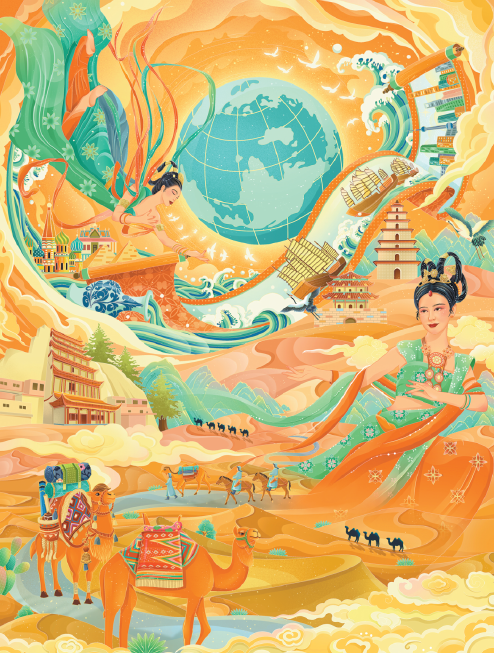
With a recorded history and culture dating back 5,000 years, China is recognized as one of the four great ancient civilizations, along with ancient Greece, Egypt, and Babylon. The history of China's food, tea traditions, poetry and art, medicine, calligraphy, opera, clothing, and festivals are only a few of the many aspects that contribute to the country's richest cultural diversity. It's only natural for a country with as much history as China to have tremendously diverse ethnic groups and customs that differ across regions. Everywhere you go, you will experience a unique combination of traditions, customs, and heritage.
The Zhuang people's ancient wooden stilt houses, as well as the Yao women and their extraordinarily long hair, are among the sights to behold. The famous Miao village can be visited to experience the traditional paper-making process and extraordinary mountain music. You can also meet and chat with some dedicated Tibetan monks and explore several Lhasa mountain monasteries. Across the country, there are countless temples that adhere to Buddhism, Taoism, and Confucianism, as well as innumerable mosques, churches, and even a few historical synagogues. A trip to China is always an enlightening experience in terms of gaining knowledge about other cultures. The world's most impressive civilization, which has continued to this very day, has been a world power several times, so it's had millennia to perfectly refine its culture.
In my travels, I have found the Chinese to be among the most hospitable and warmhearted people I have met. People of all ages, whether you are in a bar or on the subway, are eager to strike up a conversation and learn more about you, and they are especially interested in hearing about your home country and your reasons for visiting China.
The cultural clout of China extends far beyond its borders in Asia, having a global impact in fields as diverse as the visual and performing arts, scientific inquiry, gastronomy, industry, and international trade. Over the past 50 years, Chinese culture has undergone a quick and profound shift, and it is still changing to fit the modern world.
In the past, the ancient Silk Road served as a conduit for the dissemination of ideologies, beliefs, languages, customs, and traditions from one civilization to another, paving the way for the cultural exchange and cross-cultural hybridization of Chinese and other civilizations. This custom's long and fruitful history resulted in a common harmonious heritage through the exchange of commodities. Furthermore, it also led to achieving a significant milestone with the revival of the Old Silk Route, which rhetorically gives importance to the shared historical cultural heritage of the past and the new emerging China, the new Belt and Road Initiative.
China's goal in reviving the ancient Silk Road was not only to re-establish the ancient trade route but also to embrace the Silk Road's cultural significance as a soft basis for managing global and regional collaboration. The spirit of the Silk Road, defined as "peace and cooperation, openness and inclusiveness, mutual learning and mutual benefit," is the guiding principle of the BRI project, which aims to "promote practical cooperation in all fields and build a community of shared interests, destinies, and responsibilities characterized by mutual political trust, economic integration, and cultural inclusion." Although the BRI's delivery of physical infrastructure is important, the Silk Road's cultural relevance lies in the fact that connectivity will also be dependent on intangible factors like established customs, accepted principles, and formalized systems of knowledge transmission and dissemination. In other words, a renewed interest in culture is essential to the long-term success of the BRI.
By launching the BRI, China has been putting an unprecedented amount of pressure on itself in its quest to reach out to other countries. No matter the nature of BRI's external relations (economic, political, and technological); its success will always involve cross-cultural engagement with people from a variety of cultures and civilizations. The Chinese government has indicated its willingness to establish a corresponding point so that more Sino-foreign collaboration can be developed amongst partners who articulate and pursue mutual interests.
China has been capitalizing on its legacy of mutual cooperation, respect, and trust across Asia by constructing projects that will not only boost global competitiveness as well as revolutionize infrastructure growth, disseminate culture, promote people-to-people connections and refocus the countries' parties on this initiative. Over the years, the image of the People's Republic of China has come to be strongly and favorably seen in every Asian nation. In fact, two-thirds or more of the people in predominantly Muslim Asian countries, including Pakistan, Indonesia, Malaysia, Thailand, and Bangladesh express a favorable impression of China. In addition, South Korea's view of China has also become more positive.
China has expanded its sphere of influence significantly by implementing the BRI's regional and global goals, which include fostering cross-cultural understanding through increased opportunities for learning and travel, fostering greater participation in regional and international organizations and institutions, strengthening ties with neighboring states, and coordinating regional development strategies. China's aim to promote cultural assimilation is expected to lead to jobs, education, better technical and expert skills, and educational exchange programs, which will strengthen the country's cultural ties to Asia and its ability to support the hopes of other Asian nations. This will also lead to cultural interest and, ultimately, a more peaceful society.
The core premise is that promoting different cultures is an asset that may help bring people together and win hearts and minds. China could increase its cultural impact, self-confidence, and cultural deficit, as well as its chances of gaining cultural acceptance, by improving its ability to understand and interact with other cultures. China-proposed Belt and Road Initiative will facilitate communication between different cultures and perhaps foster mutual understanding, advance humanity, and maintain global stability.
Engr. Qaiser Nawab currently serving at the Commission on Science and Technology for Sustainable Development in the South – COMSATS, is an international expert on Belt and Road Initiative (BRI), Middle East, Central Asia and Africa.The views don't necessarily reflect those of China Daily.
If you have a specific expertise, or would like to share your thought about our stories, then send us your writings at opinion@chinadaily.com.cn, and comment@chinadaily.com.cn.





