



Biomass technology shows huge growth









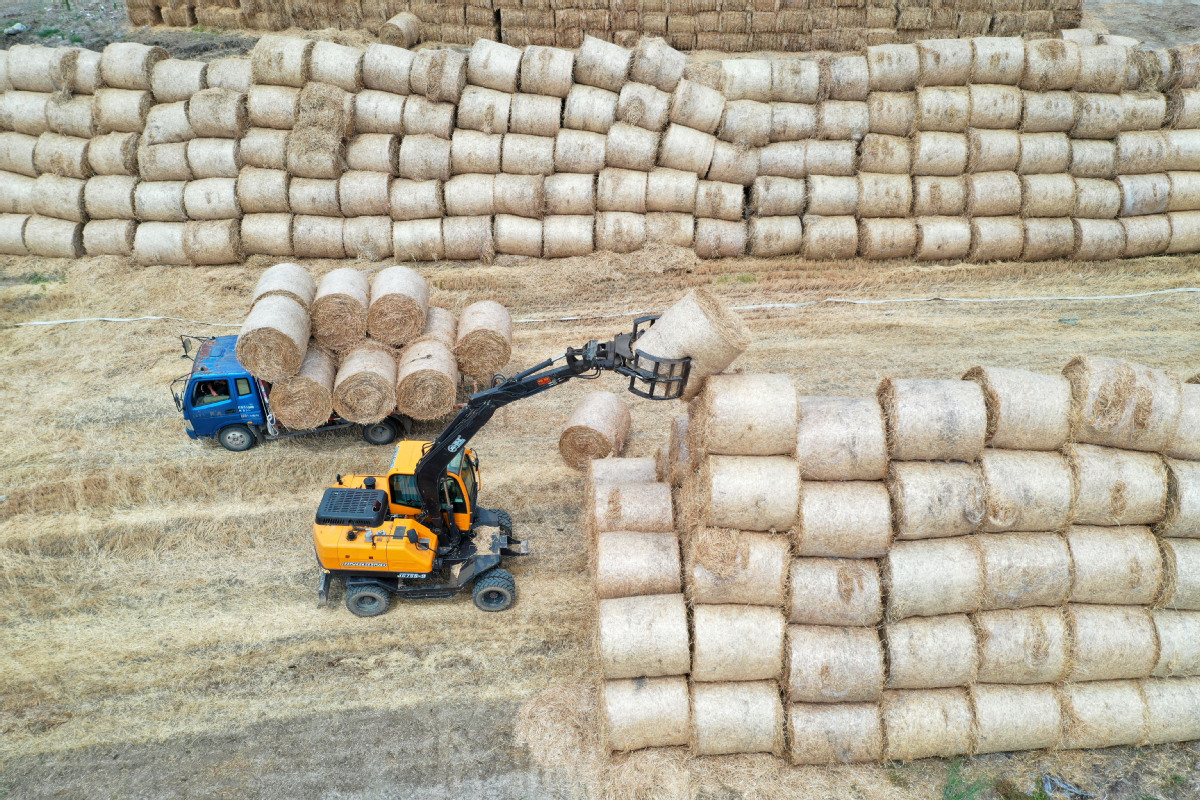
Organic waste, including wood, crop byproducts and animal droppings, may soon play an important role in facilitating global carbon neutrality as energy sources to heat homes and fuel cars.
In Heilongjiang province, State Power Investment Corp has been working on a technology to compress corn straw, residues and agricultural and associated processing wastes into fuel to provide clean heating to local residents.
The technology will be put into use by 2024 and replace coal to provide clean heating for more than 10 million square meters in Jiamusi, Heilongjiang, the company said.
As the country's first domestic biomass green energy particle technology, it will make better use of the availability of large quantities of corn straw and other residues, breaking the bottleneck of inconvenient transportation and storage for biomass energy utilization, said Ma Mingjun, general manager of Shanghai Power Equipment Research Institute Co Ltd.
Biomass, such as agricultural and forestry products, organic household waste as well as livestock and industrial refuse, are some of the biological materials used as fuels in producing electricity and heat. It can be burned directly for heat or converted to renewable fuels through thermal, chemical and biochemical processes.
Under the energy efficiency and carbon intensity targets set by the Chinese government, the country's development of biomass energy is likely to be fast-tracked thanks to preferential policy support, experts said.
China's development of the biomass energy industry is set to embrace major opportunities under China's strong green commitment, according to Zhang Dayong, secretary-general of China's Biomass Energy Industry Promotion Association.
The industry has great potential for further growth as China strives to achieve carbon peak by 2030 and carbon neutrality by 2060, he said.
China produces over 900 million metric tons of agricultural and forestry biomass every year, which can generate power equal to nearly 400 million tons of coal. The number is even larger including other organic waste from urban and rural areas, according to the association.
However, at present, only 90 million tons of agricultural and forestry biomass is used for power generation annually. The high costs of collecting raw materials and relatively low power generation rates compared with coal and other mainstream energy sources have been hindering the industry's development, officials said.
State Power Investment Corp's attempt to compress corn straw, understory residues and agricultural and related processing wastes into fuel, however, is expected to represent a breakthrough for biomass heating in the country, said Luo Zuoxian, head of intelligence and research at the Sinopec Economics and Development Research Institute.
The country's 14th Five-Year Plan (2021-25) has sent positive signals encouraging biomass energy, he said.
The country's installed capacity for biomass energy rose to 37.98 million kilowatts by the end of last year, while the annual power generation capacity for biomass also rose to 163.7 billion kilowatt-hours during the same period, according to the National Energy Administration.
Last year, China's installed capacity of biomass power generation connected to the grid increased by 8.08 million kW, a record high that also ranks first in such field in the world, it said.
The administration has called for support from local governments for biomass energy projects, with heating being a priority.
China's strong green commitment will provide more opportunities for the growth of biomass energy development as biomass is a net zero-carbon fuel compared with other renewable energy sources, Zhang said.
While burning biomass releases carbon dioxide, the plants that make up biomass capture almost the same amount of carbon dioxide while growing, experts said.
According to a report released by the association, the government is expected to provide more support to boost the industry's development in the next five years. An estimated 1.2 trillion yuan ($172.32 billion) is to be invested in the industry from 2021 to 2025. That is expected to help the industry handle about 350 million tons of organic waste and create job opportunities for around 1 million people, the report said.
By 2030, the proportion of biomass energy in renewable energy is forecast to increase to about 8 percent, it said.
The government is also working on the combination of biomass heating with carbon capture and storage. It will extract energy from biomass, capture and store the carbon and turn biomass into energy to achieve negative emissions, the association said.

















