



Global South's green gold









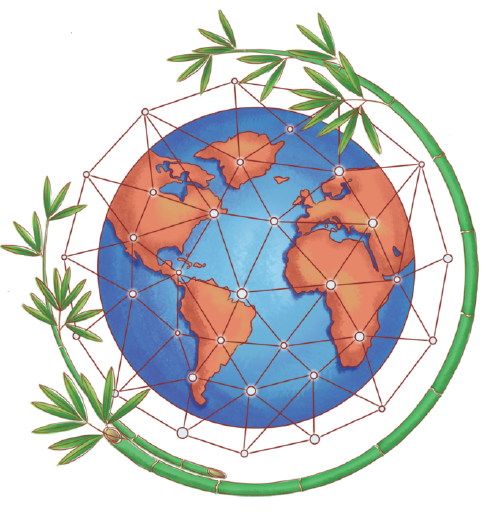
Humble bamboo can contribute to multiple SDGs simultaneously across the South and beyond
Bamboo is a natural resource that's abundant in the tropical and subtropical Global South. Over time, the versatility of many of this woody plant's over 1,600 species has made it a go-to material for the production of anything from small utensils and furniture to paper and textiles, from fodder and flooring to pipes and wind turbines.
Most importantly, the proper cultivation, management and harvesting of bamboo stocks could contribute to the successful pursuit of a range of Sustainable Development Goals, and therefore promote, among others, poverty reduction (SDG 1), clean and efficient energy use (SDG 7), affordable and sustainable housing (SDG 11), efficient and sustainable consumption and production (SDG 12), climate action (SDG 13), life on land (SDG 15), as well as effective global partnerships (SDG 17).
In fact, bamboo grows fast, is resilient and does not require replanting after harvesting. It provides ample opportunities to ultimately create products ranging from the very simple to high-value-added ones, thus generating income at individual, household as well as enterprise levels. It can be harnessed as fuel wood with consequent preservation of slower-regenerating resources or used indirectly as biomass in the form of virtually smoke-free charcoal. It can serve as inexpensive, flexible, yet strong, even earthquake-resilient housing construction material with a minimal carbon footprint. It can provide a suitable habitat for many endangered species and support climate change mitigation through its high rate of carbon sequestration, while also naturally preserving and restoring degraded forests and eroded land through its root system.
The large availability of this resource combined with the steady growth of its global market — worth around $60 billion in 2010 and expected to reach $100 billion by 2030 — has inspired various South-South as well as trilateral cooperation initiatives brokered by international organizations such as the United Nations Development Programme, the UN Office for South-South Cooperation, and the International Bamboo and Rattan Organization — a Beijing-headquartered inter-governmental platform with 49 members (mostly developing countries) wholly dedicated to the study and promotion of bamboo and rattan for inclusive economic development and environmental sustainability.
The role of China in the global bamboo market is of absolute prominence: home to the world's largest bamboo forest coverage and to over 500 species, it is, by far, as both the leading producer and exporter of bamboo products, employing over 8 million people in different sectors of its vast and complex "bamboo economy". Other important players from the developing world include Indonesia, Vietnam, the Philippines and Mexico, while the European Union, the United States and Japan rank as the world's three largest importers.
China is also extremely active in promoting the harnessing of bamboo's potential way beyond its national borders. An example is the recent "Sino-Dutch-East Africa Bamboo Development Programme", a unique trilateral "South-North-South" project that aims at kick-starting bamboo value chains in Ethiopia, Kenya and Uganda — countries where bamboo resources are plentiful, but still largely untapped due to a significant lack of financial and technical capacity.
China and the Netherlands have recently stepped in precisely to fill this gap, as clearly highlighted by early remote-sensing assessment of resource stocks as well as market and value chain analyses in all beneficiary countries. Chinese and Dutch expertise and ad-hoc funding are meant to create physical infrastructure, provide equipment, build overall capacity via technology and knowledge transfer and train locals on sustainable resource management practices.
The project, implemented by the International Bamboo and Rattan Organization, which maintains one of its regional offices in Addis Ababa, capital of Ethiopia, has so far undergone two phases. The first, from 2016 to 2019, pursued three broad goals: pro-poor green economic growth; expansion of trade and investment in bamboo sectors; climate change mitigation and land restoration. Besides developing the value chains of multiple bamboo products, delivering hundreds of courses, establishing both small and large-scale nurseries and improving the livelihood of thousands, Phase I contributed to the adoption of bamboo-specific policies by all three East African countries, which removed this precious plant from the generic domain of "non-timber forest resources" where it is still most often relegated elsewhere in the world.
Phase II is currently attempting to consolidate the achievements of the previous phase, and to possibly surpass them. Its objectives span all the four key domains of sustainable development — namely society, economy, environment and governance — including further poverty alleviation through up scaling and diversification of bamboo value chains; ecological and livelihood resilience; increased investment in the bamboo sectors and improved policy and regulatory frameworks. In addition, Phase II intends to better promote gender inclusion via grassroots community engagement and increased women's participation in capacity-building initiatives.
In general, the challenge of translating often vast natural resource endowments into concrete opportunities for simultaneous poverty reduction, social inclusion, climate action and international engagement in line with the UN Agenda 2030 and its SDGs is steep and all too common across the developing world.
The bamboo economy and initiatives like the Sino-Dutch-East Africa Programme appear to have the power to ignite the inclusive, pro-poor green growth that much of the world, today, expects from governments and corporations alike.
Perhaps more importantly, they can establish paradigms potentially applicable to other resources or sectors, whereby financial and technical capacity — hence not just money, but also knowledge and ideas — can be pooled and utilized to reach those who need that very growth the most.
The author is a development scholar serving as associate professor and associate head of the Department of Social Sciences at BNUHKBU UIC in Zhuhai, Guangdong province. The author contributed this article to China Watch, a think tank powered by China Daily. The views do not necessarily reflect those of China Daily.
Contact the editor at editor@chinawatch.cn.





