Enhancing healthcare for the elderly at community level









COVID-19 is an example of the greater vulnerability of the elderly given the significantly high fatality rate among the aged with underlying diseases, which is one of the reasons the country is adhering to its dynamic clearing approach, although the policy implementation needs to be fine-tuned to ensure that it fulfills its function of protecting the vulnerable, such as the elderly, while minimizing the disruption to the rest of society.
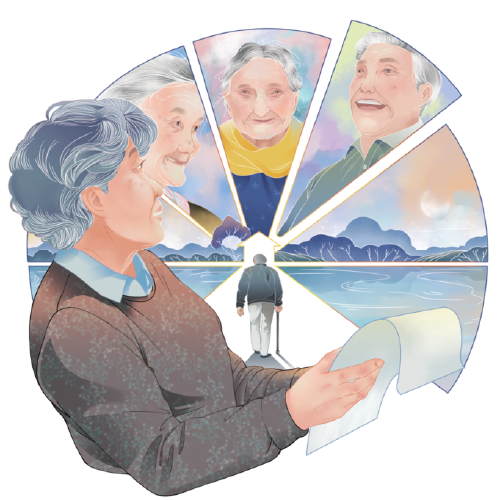
The elderly usually refers to individuals over the age of 65, many of whom may have functional impairments. Compared with teenagers and the middle-aged, the elderly are a vulnerable group needing more protections in areas such as healthcare and consumer rights.
In addition, the contradiction between scarce medical resources and the huge elderly population in China create an even more challenging job for healthcare delivery. Especially in the less-developed areas with dense populations, "running to hospital" is the bottom line that needs to be avoided to prevent the health system being overwhelmed.
Ensuring and improving people's well-being was identified as a fundamental task for the government at the 20th National Congress of the Communist Party of China in October. To a great extent the pursuit of high-quality development is to realize people's aspiration for a better life. The essence of this is sustainable improvement in people's quality of life, and the necessary foundation for this is improving the basic public services system to raise public service standards and make public services more balanced and accessible. It is particularly necessary to help vulnerable groups such as the elderly enjoy a higher-quality life.
In this sense, building a higher-quality healthcare system for the elderly is essential. Higher-quality healthcare does not necessarily mean more tertiary hospitals or magnetic resonance imaging equipment; it is actually a systematic work ranging from primary medicine to advanced surgery that will benefit everyone, not just the elderly.
To begin with, we must keep in mind that prevention is always the top priority. Research show that the sooner a senior citizen is included in an effective primary medicine schedule, the better health she or he has down the road. China has a huge number of chronic disease patients, including 245 million people suffering from hypertension and 140 million with diabetes, who need routine health management and long-term care. Hospitals cannot tackle such a huge demand due to medical resource constraints, so community medical services are crucial for avoiding further development of these diseases with relatively low costs.
As a policy suggestion, more health expenditure and medical personnel should be allocated at the community level. But this is easier said than done, as it is not an easy job for township and village communities considering their weak capacities for service provision. So elderly care in rural areas should be emphasized in national policy and given more attention.
Healthcare is a holistic system. Therefore, a collaborative health policy across government agencies has to be established. For example, some elderly patients prefer tertiary hospitals to primary health institutions believing they will receive better diagnosis and treatment in a tiered healthcare system, which is not always necessary and often distorts service delivery.
In order to motivate rational choices, medical security can be introduced as a policy tool to generate more home healthcare services, and the pharmaceutical drug supply chain can also be transformed to better meet demands at community level. In addition, 90 percent-plus of the elderly rely on homecare rather than institutional care in China, which means mutual aid among neighborhoods should be encouraged to diversify elderly care services.
The author is a professor conducting social governance research at the China National Academy of Governance. The views don't necessarily reflect those of China Daily.