



Science fair









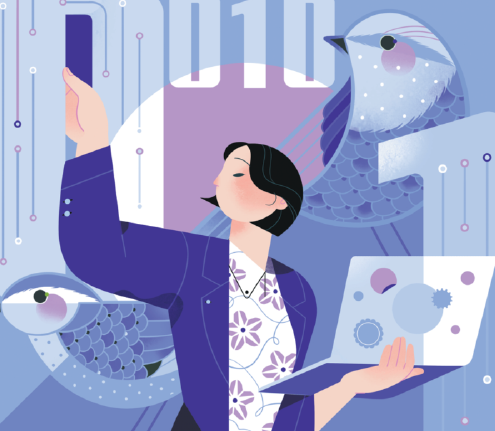
Empowering women and girls in science and innovation is necessary as the world needs everyone's brainpower to realize the UN's SDGs
Knowledge is not limited by gender. Indeed, more and more women — such as Tu Youyou, who became the first Chinese Nobel laureate in Medicine in 2015 for her amazing discovery of a therapy to combat malaria — are making incredible scientific advances.
Yet, despite this, there are far fewer women in science than men, especially in leadership roles. According to UNESCO, women only account for one-third of scientific researchers globally. And they leave at a faster rate than men.
We know that science and technology will create the highest-paying jobs of tomorrow. For example, globally, it's estimated that 80 percent of new jobs created in shifting from fossil fuels will be in sectors currently dominated by men. Unless women are equally represented, their views and needs may be overlooked, and with that, the way our future is designed. This is particularly true with the rise of automation and artificial intelligence systems, as these can replicate the biases of those who program them. Just think, currently, women make up just 26 percent of data science professionals worldwide.
Conversely, we know that boosting women's contribution in the sciences accelerates considerations of more sustainable approaches to our everyday challenges, including for example in healthcare. It will also help close the gender pay gap and lift women's earnings by billions — wealth that is more likely to be shared, with their families and communities.
So I ask, what corrective actions can we all take today?
First, let me refer to gender stereotypes and expectations that channel girls away from science in their academic and career choices. Microsoft found that girls in Europe become interested in science, technology, engineering and mathematics subjects around the age of 11, but lose interest when they're 15, suggesting that social influences steer them away. It also appears there is often a confidence gap between men and women or girls and boys applying for STEM positions: PC maker Hewlett-Packard found that women will only apply for a job when they meet 100 percent of the criteria, while men apply upon meeting just 60 percent. These stereotypes should be intentionally broken, with more female role models being deeply valued and their voices being amplified.
Second, research and academic centers, governments and private sector employers are all responsible for supporting female staff. It is not difficult to provide good childcare facilities with flexible working arrangements, and day care and nursing room facilities. The running cost for such is far outweighed by the positive returns in so many other ways.
Families and partners are as vital in supporting women scientists as their institutions are. Ideally, men and women would share household responsibilities equally. However, this year, especially during the COVID-19 pandemic, as nurseries, kindergartens and schools closed down, women's workforce participation plunged to 57 percent in the United States — its lowest in three decades.
Third, public policies related to all the above play a key role. Given the necessary leave requirements to bear children, for example, allowing female scientists a right of return and taking longer to secure research funding is impactful — the latter protocol was introduced in China last year under a set of measures to support women in science careers and this has been most welcome. Social norms and incentives that encourage men to play a greater role at home are also critical.
And educational institutions must, very early on, proactively seek female students for STEM courses, with dedicated programs to foster their interest, such as by offering scholarship opportunities to girls, who excel in STEM, particularly those from low-income families. Public recognition is also important to incentivize and inspire young girls to join.
Now scientific knowledge and discovery moves fast and we cannot hope to achieve the United Nations' Sustainable Development Goals — to end poverty and protect our planet — without it. To realize the goals, we need the brainpower of all of the world, not just half the world, in the fields of science.
So together, let's ensure that women and girls today find the support they need to shape the discoveries that could change our world tomorrow. That's why UNDP, UN Women, UNICEF and UNESCO are all working to empower women and girls globally.
The author is United Nations' assistant secretary-general and regional director for Asia and the Pacific. The author contributed this article to China Watch, a think tank powered by China Daily. The views do not necessarily reflect those of China Daily.
Contact the editor at editor@chinawatch.cn





