



Reduce cost of raising kids to boost total fertility rate









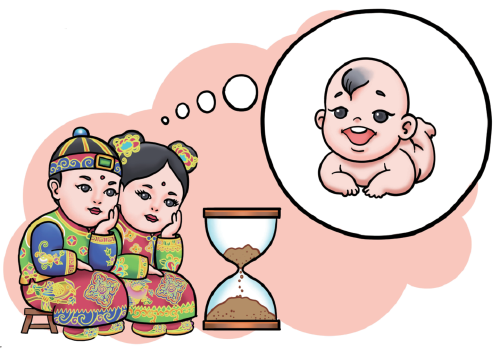
China is facing serious demographic challenges because of sluggish population growth and a rapidly rising aging population. According to available data, China saw 10.62 million births and 10.14 million deaths in 2021, meaning a net population growth of 480,000, or only 0.34 birth per 1,000 people, the lowest since 1960. In fact, the low birth rate is the biggest demographic challenge facing the country.
Although the sharp decline in the total fertility rate contributed to China's economic development in the decades since the launch of reform and opening-up, the changing demographic structure today, especially the extremely low total fertility, calls for introducing supportive policies to encourage couples to have two or three children.
But the decision to have children is essentially economic in nature, with the cost and benefits of having a child playing a key role. As for benefits, children can bring economic and cultural rewards for, and give emotional satisfaction to, parents. But raising a child has become an expensive affair, especially because of the huge cost of education. And it is hard for new mothers to strike a balance between work and family.
Many women of childbearing age refuse to have a second child, despite having the urge, because of the heavy financial burden, insufficient childcare services and worries about career development. As such, China's total fertility rate fell to 1.3 in 2020.
To encourage couples to have more children, in order to counterbalance the effects of a rising aging population, the government allowed all couples to have three children in 2021. And the amended Population and Family Planning Law says the government will adopt supportive measures to reduce the costs of childcare and education, so as to ease the child-raising burden on families.
Accordingly, 17 central departments issued a guideline on Aug 16, introducing a raft of policies for prenatal and postnatal support to promote balanced population development. The guideline is aimed at reducing the high cost of raising children and introducing more supportive measures to encourage all couples to have three children.
In fact, four specific kinds of measures in the document should be highlighted, which will improve prenatal and postnatal care services, crucial for healthy, sustainable population development.
First, targeted measures will be taken to improve prenatal and postnatal care services. All counties, cities and provinces are required to set up at least one government-funded maternity and childcare center to attend to the needs of pregnant women and newborns.
Second, the government will improve pediatric services. During the 14th Five-Year Plan (2021-25) period, the central authorities plan to invest in about 10 regional pediatric centers to optimize resource allocation.
Third, measures will also be taken to improve reproductive health services, with the authorities stepping up efforts to promote epidural and spinal analgesia and advanced assisted reproductive technologies, as well as to reduce the number of abortions.
And fourth, the government will help couples to take care of their children, expand residential childcare services and improve childcare services in less-developed areas.
According to some surveys, one-third of urban families need nursery services, a demand the government has not been able to meet. So improving nursery services is critical to encouraging couples to have more than one child. According to the guideline, local authorities will have to improve childcare services with financial support from the central government. And subsidies and tax deductions will be introduced to reduce nursery costs, while steps will be taken to improve the quality of nursery services.
The authorities have already issued preferential housing policies to help reduce the mortgage or rental burden on families. For instance, couples with more than one child will get favorable treatment if they apply for public-rental housing (PRH), which includes priority to choose a relatively large apartment, shorter waiting time for PRH, and the provision of shifting to a larger housing unit.
Besides, additional deductions in personal income tax should be allowed for the cost of raising a child up to three years.
Measures should also be taken to reduce the cost of education, including making admission to preschools easier, balancing compulsory education development with health education improvement. While local governments have been asked to strengthen the weak links in the education system in rural areas and densely populated areas, especially those with new residents, the burden of homework and off-campus tutoring on children has already been eased.
Creating a more welcoming work environment for women is also essential to encourage women to have more children. That's why the guideline highlights the need to introduce a favorable maternity leave system and better protect the maternity rights and interests of woman employees.
Moreover, the central authorities will devise a maternity insurance payment system to safeguard the rights of working women, and local governments will need to ensure pregnant women and new mothers in both urban and rural areas have access to quality medical care under the basic medical insurance framework. That's a step in the right direction in easing the burden of working mothers.
Only with multiple measures implemented can the policy to boost the birth rate truly take effect.
The author is a professor at the Institute of Population and Labor Economics and deputy director of the Human Resource Center, Chinese Academy of Social Sciences. The views don't necessarily represent those of China Daily.
If you have a specific expertise, or would like to share your thought about our stories, then send us your writings at opinion@chinadaily.com.cn, and comment@chinadaily.com.cn.





