



Reality that links macroeconomic policies to street vendors









As I have been focusing on macroeconomy since last year, a realization has gradually dawned on me: economic policies can be as sophisticated as they are delicate.
It can be a fascinating and enlightening experience to realize that the monetary policy stance announced by the People's Bank of China, the central bank, can have a direct impact on not just financial institutions like banks, other kinds of lenders and related government departments but even ordinary people like vendors on the street.
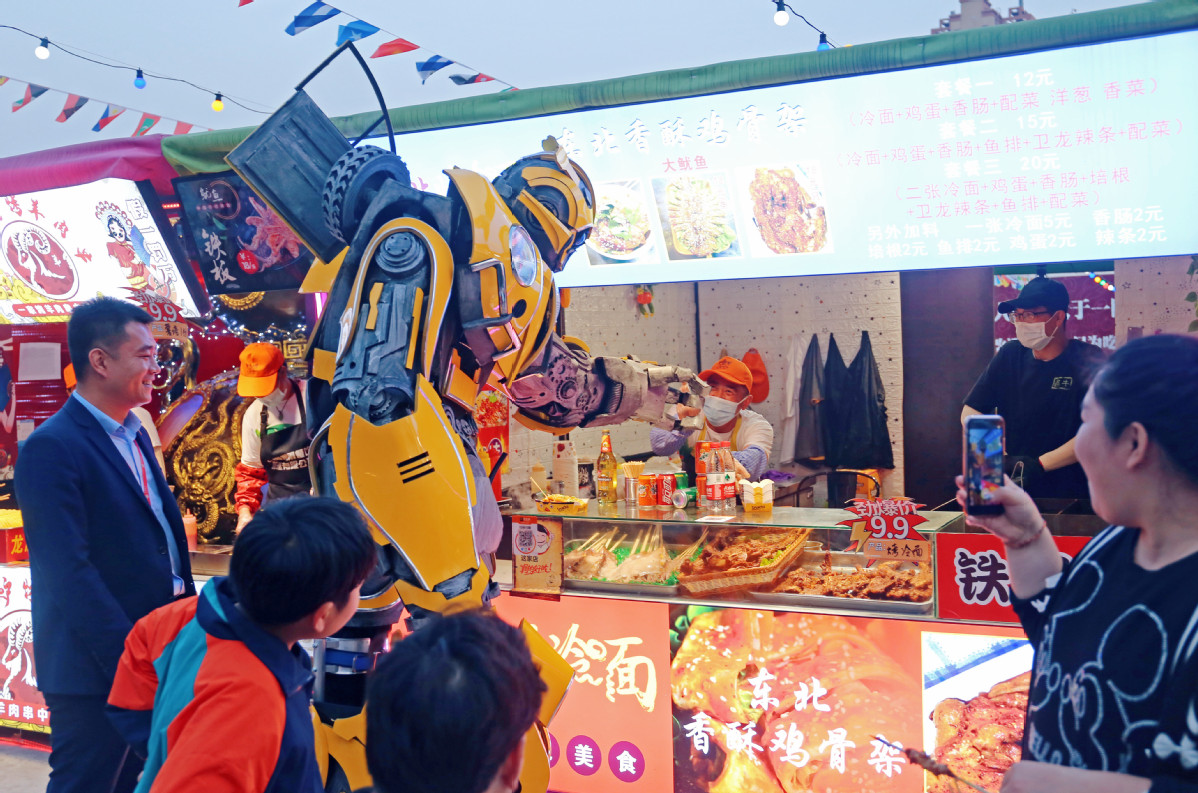
"Micro-, small and medium-sized enterprises" or MSMEs, a buzz phrase for economic journalists these days, refers to businesses with relatively limited revenue and assets. These could include even street-level businesses-say, a humble old woman's "shop" on the sidewalk selling socks, umbrellas and hair clips, a mobile fast food xiaotan or stall on an electric tricycle, or a neighborhood florist.
A large number of China's MSMEs are private businesses operated by individuals or married couples. Last year, a confluence of factors weighed down on their growth. Persistent COVID-19 outbreaks and the attendant disruptions slowed their recovery as well as that of the services sector. Worse, surging commodity prices inflated costs of small-scale downstream businesses in manufacturing.
Their woes were not lost on the central government that was otherwise busy dealing with a host of challenges on multiple fronts. A number of policy packages were announced to help MSMEs to not only survive but also grow. These included tax cuts and tax payment deferrals as well as targeted monetary policy measures to bring down their financing costs.
Last year, the State Council, China's Cabinet, urged the PBOC to scale up re-lending and rediscounting to underpin inclusive finance in order to benefit smaller businesses. More policies were rolled out to incentivize reductions in the guarantee fees of financing for micro and small enterprises and to encourage banks to issue more collateral-free loans.
The most recent moves include the National Development and Reform Commission's guideline in mid-February that offered temporary tax breaks and partial deferral of social insurance contributions for smaller businesses in catering, retail, tourism and passenger transportation sectors. The aim is to promote stable employment and consumption recovery.
In addition, last year, inclusive lending by large commercial banks to micro and small businesses increased by more than 40 percent, and overall financing costs of businesses dropped steadily.
My interviews with a range of experts sensitized me to the effectiveness of tax cuts and financing measures, especially in terms of employment, as smaller businesses are key job creators. The COVID-19 pandemic has dented the profitability of many businesses. In such circumstances, businesses typically resort to downsizing to save on costs like wages. So, relief measures can be effective as they empower MSMEs with the all-important liquidity.
Xiao Han, founder of a tourism startup in Beijing, knows all about it. His business was immensely affected by the COVID-19 tribulations. Now, however, he said he would never underestimate the importance of the deferral of tax and social insurance payment policies for small businesses in the services sector.
Xiao's firm employs 30-odd people. Founded three years ago, its revenue remains small. For quite some time in 2020, it barely had any revenue.
"If China hadn't launched the MSME policies, I'd have been forced to lay off at least a quarter of my staff members because I didn't have enough cash to pay their social insurance," he said.
"We were extremely happy that the deferral policies during the COVID-19 resurgence, which affected tourism a great deal, came to our rescue."
Xiao said he was pleased to note that smaller businesses have been well served by the latest Government Work Report, which confirmed that temporary exemption of value-added tax payments will be granted to small taxpayers. Corporate income tax on annual taxable income of between 1 million yuan ($158,166) and 3 million yuan will be halved once again for micro and small enterprises.
Local governments should also adopt effective tax and fee reduction steps based on local conditions and in accordance with the law to maintain the scale of tax and fee reductions, and keep market expectations stable, the report said.
"Tax cuts and refunds will help us tide over tough times. We always believe that after the COVID-19 pandemic, the services sector will help underpin China's growth amid economic upgrading," Xiao said.


















