



China's Government Work Report: The Tao of managing?an $18 trillion economy









If you want to understand China's economy, then may I suggest that you practice tai chi. This ancient system of slow neuro-dynamic slow movements trains not only one's both body, mind and spirit, but the simultaneous coordination of all three in synergistic flow. So now you might be asking, what does tai chi have to do with economics?
Let me explain.
Within the subtle intentional consistency of tai chi's movements lies a core principle of constant re-alignment of yin and yang energies so that the practitioner and the energy field around them is kept in balance. As an outcome, the practitioner finds a middle way.
Now apply that to economics.
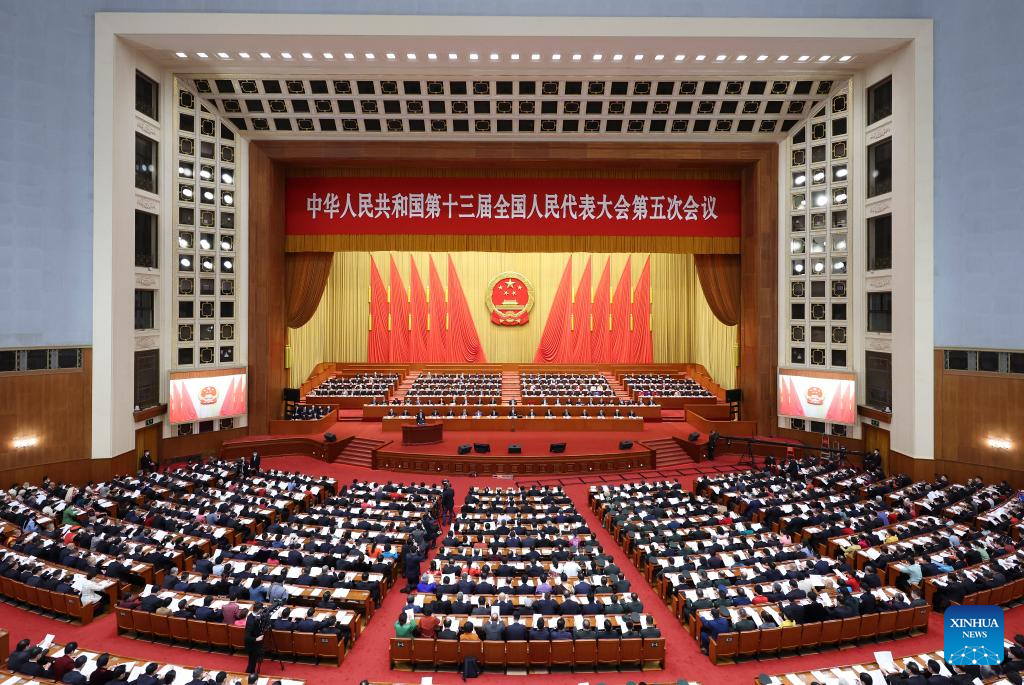
Constant re-alignment, to rebalance and find a middle way is the best way to describe China's economic model and policies, as set out on March 5th in the Government Work Report presented by Premier Li Keqiang on the opening of the National People's Congress in Beijing.
From Premier Li's Government Work Report, we can understand the management of China's economy as a constant re-alignment of everything from resources to growth between regions and social groups, reallocation of funds from coastal regions to the interior to rebalance development and with it opportunity.
China's leadership has cautiously observed the West's increased dependency on debt buy-backs, capital market manipulation and its accompanying stratification of income gaps, consolidation of wealth among a supra-elite and bottoming out of the middle class now occurring across Europe and North America. This is the future that China does not want.
Over these decades, China has evolved its own system of a managed market involving a combined use of both market and planning tools. In earlier decades emphasis was on high growth with hyper development and in turn labor and infrastructure clogs in coastal cities. Now the emphasis is on re-alignment to achieve re-balance. Both planning and market in tandem are required to achieve this.
Amidst a Chinese cultural renaissance, an increased emphasis on cultural innuendo underlay the date March 5 of Premier Li's Government Work Report. In the Chinese lunar calendar the date is "jingzhe" or the day that insects awaken.
Global markets awoke when Premier Li announced 5.5% GDP as the target for 2022. After four decades of high growth rates averaging 8 percent per annum, the world has become dependent upon China as global economic driver. Two years of pandemic has decoupled globalization systems crippling demand and choking international supply lines. Against the clouds of increasing volatile external geo-politics. Maintaining 5.5% growth as a target still remains relatively high in the context of our times.
Emphasis on "new infrastructure and manufacturing" will have an overarching focus on refitting green energy systems to replace old fossil fuel ones, together with a shift of infrastructure development from the coastal regions into the interior where standards of living and job opportunity will be increased encouraging people to stay closer to home rather than migrating for opportunity.
In this context a RMB 1.5 trillion increase in central government funding will bring the total to RMB 9.8 trillion, representing an 18 percent increase into rural provinces and regions for new standards of living, manufacturing, and technology. This will offer rural provinces an even higher GDP than traditional coastal regions, rebalancing the economy and with it employment opportunity.
China is facing 16 million new graduates entering the job market this year. The leadership has observed the social outrage in Europe, North America, North Africa and the Middle East as youth vent outrage at their frustrations with job opportunity and living conditions.
Pressures of every sort need to be shifted from the coast to the interior. For China this is not about maintaining volume productivity to assure high growth targets, but rather a re-adjustment to quality growth while rebalancing regional development. The shift in growth and regional focus represents an internal re-balancing to seek a middle way. Like tai chi, China's economic management is about balance and flow. So when analyzing China's economic policies, well, be like water my friend.
The author is a US documentary filmmaker and a senior international fellow at the Center for China and Globalization.
The views don't necessarily reflect those of China Daily.
If you have a specific expertise, or would like to share your thought about our stories, then send us your writings at opinion@chinadaily.com.cn, and comment@chinadaily.com.cn.





