



Green philosophy urged in BRI projects









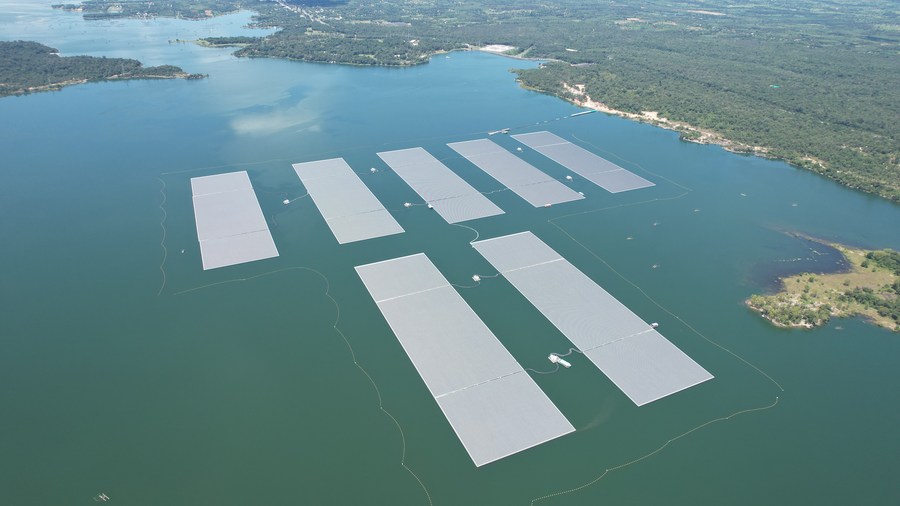
In a move to advance green Belt and Road Initiative development, China has updated a guideline on environmental protection in overseas operations, with Chinese companies sticking to environmentally friendly approaches through the entire life cycle of their projects.
The guideline, unveiled on Tuesday, was jointly issued by the Ministry of Ecology and Environment and the Ministry of Commerce as a guide for enterprises to "implement the philosophy of ecological civilization", as well as to "promote green and high-quality development".
Ecological civilization is a concept promoted by President Xi Jinping for balanced and sustainable development that features harmonious coexistence of man and nature.
The document, which updates a 2013 guideline by the two government bodies, has been inscribed with some of the president's new visions and instructions on overseas investment and cooperation, according to the Ministry of Ecology and Environment.
While addressing a high-level BRI symposium in Beijing in November, for example, Xi emphasized developing an all-weather, early warning and risk assessment platform for China's overseas projects.
With climate change as one of the major highlights, the guideline includes environment-related requirements for wide-ranging procedures in the companies' overseas operations.
Before overseas mergers and acquisitions, for example, they should assess environmental risks caused by target companies, including environmental pollution, lawsuits and penalties, it said. Hazardous waste disposal and greenhouse gas emissions should also be given priority in the assessment.
In construction projects, companies should enhance their work on pollution control and strive to reduce the emissions of heat-trapping gases.
Aside from fixing pollution control facilities and rolling out effective measures to reduce carbon emissions, they should also intensify environmental monitoring work.
The guideline explicitly says that environmental protection is not only about pollution control, but also climate mitigation and biodiversity conservation, according to a media release from the Ministry of Ecology and Environment.
The media release said the guideline also includes specific clauses on overseas projects involving energy, petrochemicals, mining and transportation, considering that they are key parts of the country's overseas investment and BRI construction.
Under the guideline, when energy projects are developed, priority should be given to renewable energy. Companies should avoid building hydropower stations in natural reserves and key animal habitats, and they should take necessary measures to protect aquatic organisms and other wild species.
Zhang Jianyu, executive director of the BRI Green Development Institute, lauded the importance that the guideline has attached to climate mitigation and biodiversity conservation, saying it shows China is a responsible major world power.
Many developing nations boast rich biodiversity resources, and some areas in these countries are environmentally fragile, Zhang said, adding that efforts to address such issues will help create a favorable environment for Chinese companies' operations.
He said it is "farsighted" for China to pay attention to the two issues, both of which are great concerns worldwide.
"Companies should incorporate environmental protection into their development strategy," the guideline said. "With common international practices as references, they should establish institutions and regulations on environmental protection to improve their internal environmental management system."
Aside from ramping up capacity building with training and seminars, Chinese enterprises should designate special personnel to take charge of environmental protection work, it added.
The guideline encourages Chinese enterprises to adopt international or Chinese green standards when these are stronger than the host country standards, which is also emphasized in the Green Development Guidelines for Overseas Investment and Cooperation, which the country made public in July.
China had taken a series of other concrete actions to make the BRI greener.
In September, President Xi pledged that China will not build new coal-fired power projects abroad. He announced later that the country would invest 1.5 billion yuan ($235.7 million) to establish the Kunming Biodiversity Fund, which will be used to support developing countries' endeavors in biodiversity conservation.

















