China could be key to Iran nuclear impasse









The 2015 agreement on the future of Iran's nuclear program was held up as a triumph of painstaking international diplomacy until former United States president Donald Trump blew a major hole in it by unilaterally withdrawing less than three years later.
Current attempts to put the landmark deal back on track are now proving just as challenging as the original negotiations and offer little hope of an early positive outcome. It is a scenario that all parties should avoid making into a blame game if they are to step out of the current deadlock.
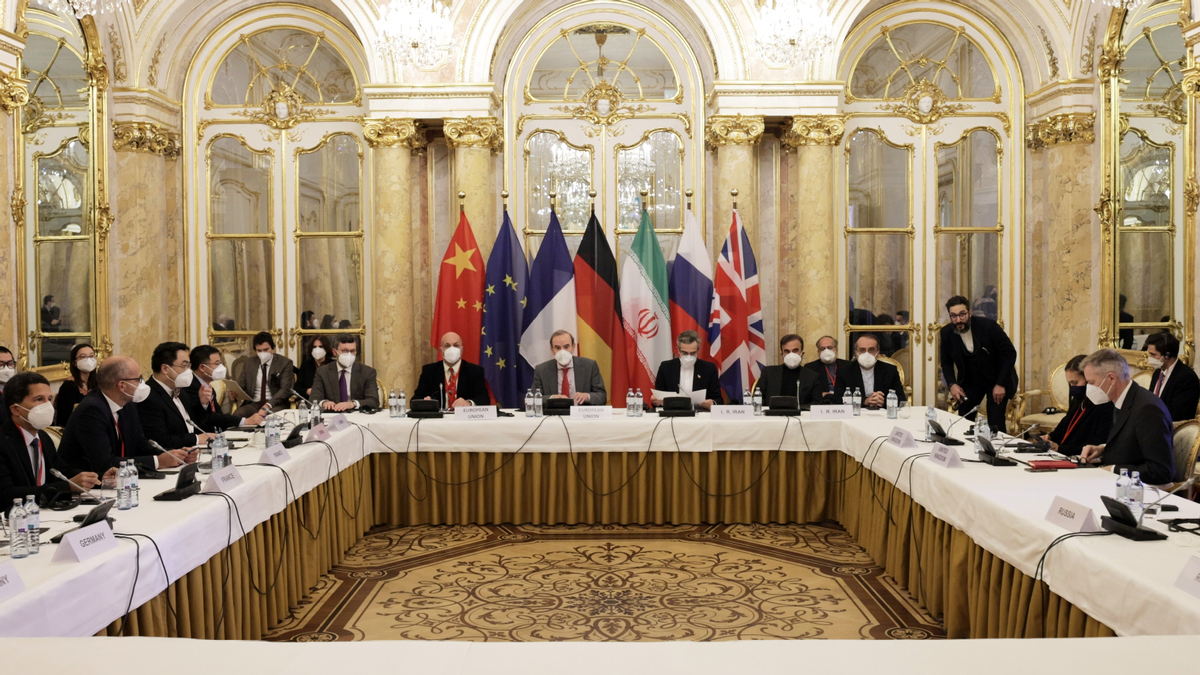
The 2015 deal, formally known as the Joint Comprehensive Plan of Action, followed a decade of diplomacy and 20 months of intensive negotiations involving Iran and the five permanent members of the United Nations Security Council-China, France, Russia, the United Kingdom and the US-plus Germany and the European Union.
The Iranians pledged to limit their production of enriched uranium, which could be used to produce nuclear weapons, and to open their nuclear facilities to regular international inspection. In return, the UN and the EU would lift sanctions against Teheran, or at least those linked to the nuclear question.
In what might serve as a model for other international negotiations, the participants set aside all other issues that might divide them to focus solely on the nuclear issue. It was an acknowledgment that the prospect of nuclear proliferation in the volatile Middle East, regardless of Iran's denials that it sought to produce nuclear weapons, trumped other considerations.
Early in Trump's presidency, despite the US having certified that Iran was abiding by the deal, he described it as "one of the worst and most one-sided transactions the United States has ever entered into". It was the prelude to Trump's decision to pull out of the agreement and reimpose punishing sanctions on Iran.
Under US President Joe Biden, there have been efforts to restore the agreement in accordance with its original terms, culminating in formal talks among all the Joint Comprehensive Plan of Action participants that opened in Vienna at the end of last month.
The latest negotiations have already stalled, at least temporarily, amid mutual recriminations.
The US and the Europeans have accused the new government in Teheran of having hardened its stance by ditching compromises it made in earlier talks while at the same time accelerating its nuclear program.
The Iranians are eager to see a lifting of current sanctions and want a pledge from the US that it would not withdraw from any revived nuclear deal.
However, it has accused its US and European interlocutors of failing to address its latest proposals and of mounting a media campaign to portray Teheran's position as the main barrier to progress.
According to the Tehran Times: "Over the past few years, … the Europeans did nothing to save the deal. They only put the onus on Iran to protect it. And Iran worked patiently to preserve the deal while chafing under US blanket sanctions. Now, instead of rewarding Iran, the Europeans want more concessions from Iran."
Iran has also accused Israel of heightening the rhetoric around the talks in order to toughen the stance of the US, its ally. Israel says it regards Iran's nuclear program as an existential threat, and successive governments have said they would be prepared to take unilateral action.
Israeli officials now claim that a lifting of US and other international sanctions against Iran would enable Iran to reach a nuclear threshold within six months, in which case Israel might opt to take action.
In the present impasse, it has been left to the Chinese delegation to sound a faint note of optimism, as Beijing emerges as a potential peacemaker in efforts to salvage the nuclear pact.
China's UN envoy in Vienna, Wang Qun, said that after three weeks of intense negotiations and through the concerted effort of all parties, the seventh round of talks produced important consensus and new documents, laying a solid foundation for advancing the follow-up negotiations as well as for restoring the Joint Comprehensive Plan of Action.
Harvey Morris is a senior media consultant for China Daily UK.