UN chief outlines roadmap for inclusion for sake of peace









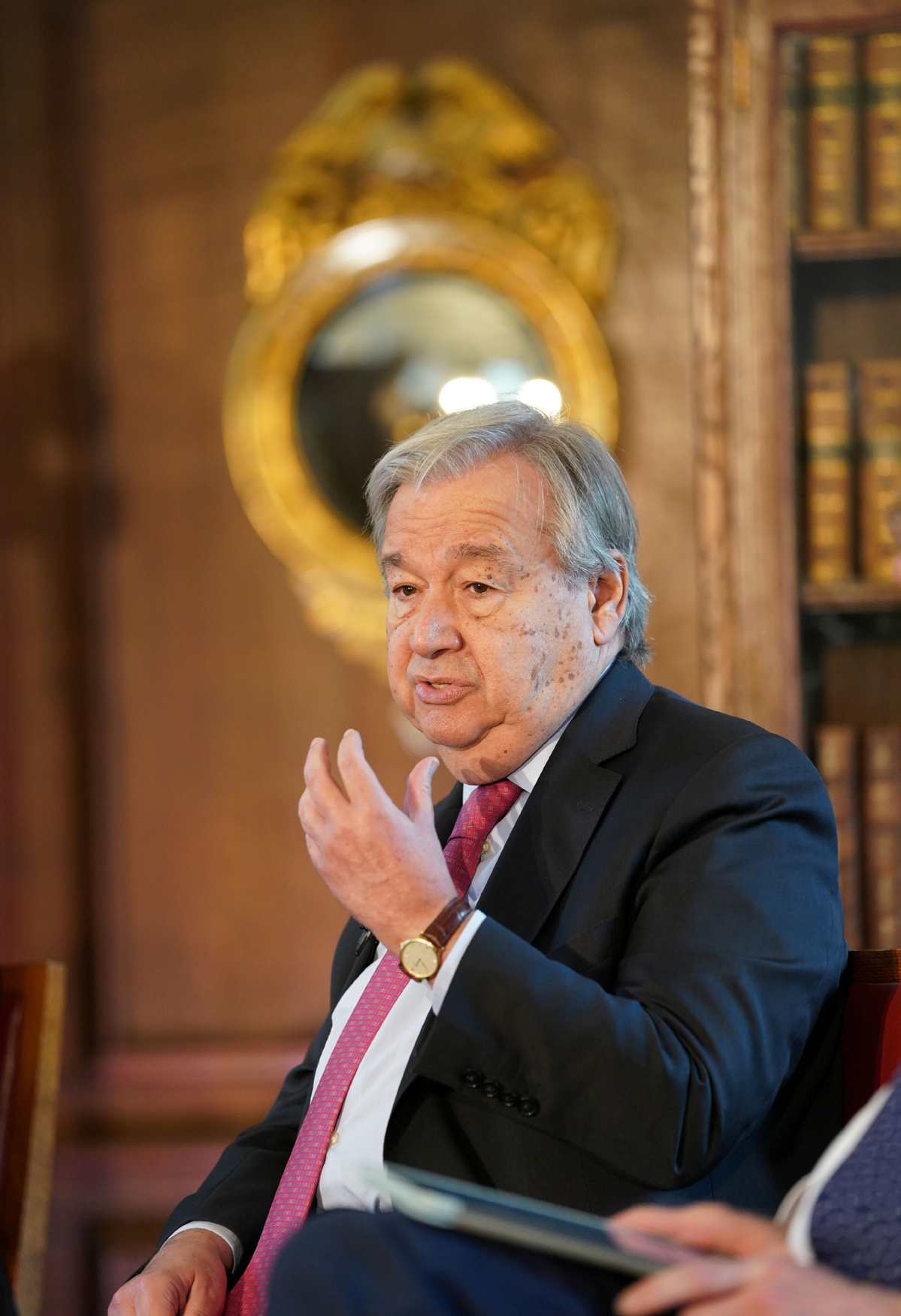
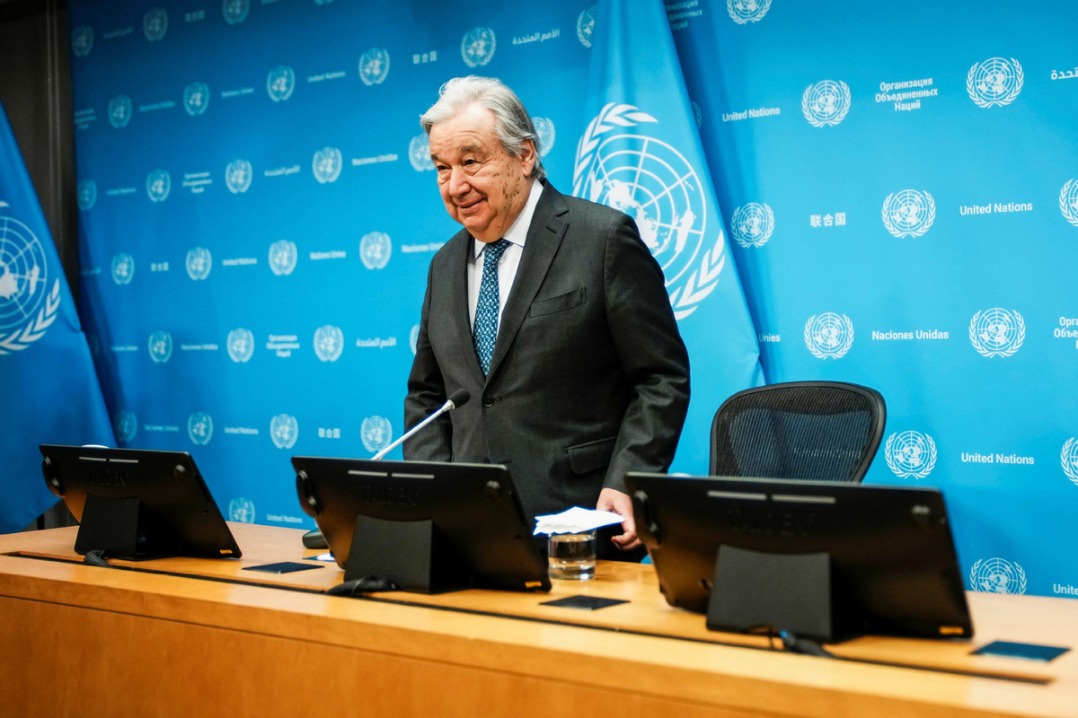
UNITED NATIONS - UN Secretary-General Antonio Guterres on Tuesday outlined a roadmap built around four key pathways to promote inclusion, which, he said, is indispensable for peace.
Without inclusion, the puzzle of peace remains incomplete, with many gaps to be filled, he told a Security Council open debate on exclusion, inequality and conflict. "Today, I'd like to outline a roadmap for inclusion, built around four key pathways to fill these gaps: people, prevention, gender and institutions."
First, invest in the development of all people -- equally.
Last year, military spending as a share of gross domestic product saw its largest annual increase since 2009. It is now approaching $2 trillion annually, he noted.
"Imagine the progress we could make -- the peace we could build, the conflicts we could prevent -- if we dedicated even a fraction of this to human development, equality and inclusion, especially in countries affected by conflict and crises, which have the least fiscal space to invest in a sustainable, inclusive recovery for all."
Second, strengthen conflict prevention to address different types of exclusion and inequalities.
This includes more rigorous monitoring of growing inequalities and perceptions of them, including of gender and youth to address grievances early. It includes ensuring inclusion at every step of the peace process -- from local dialogue and conflict resolution, to peace negotiations, transitions, and establishing national institutions, he said.
"The success of the 2030 Agenda for Sustainable Development depends on solidarity as we support governments' efforts to build development for all, and ensure no one is left behind. Ending inequalities and exclusion is a critical part of this and a vital step in giving every person a chance to contribute to their country's future."
Third, recognize and prioritize the crucial role of women in building peace.
"We can draw a straight line between violence against, and exclusion of, women and civil oppression and violent conflict -- from rape and sexual slavery being used as tools of war, to the thread of misogyny that runs through violent extremist thought, to the exclusion of women from positions of leadership and in peace processes," said Guterres.
That's why the United Nations continues to stand up for the rights of women and girls around the world. Women are also at the center of conflict prevention, peacemaking and peacebuilding efforts of the United Nations, he said.
Fourth, build trust through national institutions that include and represent all people, anchored in human rights and the rule of law.
This means justice systems that apply to all people -- equally, not only the rich or those holding the reins of power. It means building institutions resilient to corruption and abuse of power, founded on principles of integrity, transparency and accountability. It means policies and laws that specifically protect vulnerable groups, including laws against all forms of discrimination. And it means responsive and effective security and rule-of-law institutions focused on the needs of all people. Governments and institutions alike need to build trust, not barriers, and serve all people equally, he said.
In every society, diversity of culture, religion and ethnicity should be viewed as a powerful benefit, rather than a threat. This is essential in all countries, but especially in those experiencing conflict. Without full inclusion and equality, peace is a job half done. Because true, sustainable peace can only be carried forward by people who are supported, who are included and valued, who feel they are truly part of their society and have a stake in its future, he said.
Exclusion and inequalities of all kinds -- economic, social and cultural -- come with a devastating toll on security. Indeed, rising inequalities are a factor of rising instability, especially in areas where basic services like health, education, security and justice are lacking and where historical injustices, inequalities and systematic oppression have locked generations of people in cycles of disadvantage and poverty, said Guterres.
COVID-19 has exacerbated inequalities, which were already severe even before the pandemic, he said.
Around 120 million more people have been pushed into poverty as a result of the COVID-19 pandemic. Hunger and famines are stalking millions of people around the world. Countries face the deepest global recession since World War II. Billions of people lack the safety nets they need to cope: social protection, health care and job protection, he added.
People in the richest countries are getting third doses of the COVID-19 vaccine, while only 5 percent of Africans are fully vaccinated. Even before the pandemic, the world's billionaires held more wealth than 60 percent of the global population and that gap has widened enormously. At the same time, the stage is being set for a lopsided recovery. While advanced economies are investing 28 percent of their GDP into economic recovery, the least developed countries are investing just 1.8 percent -- of a much smaller amount, noted the UN chief.
Today, the world faces the highest number of violent conflicts since 1945. They're lasting longer and are more complex. A dangerous sense of impunity is taking hold -- seen in the recent seizures of power by force, including military coups. Human rights and the rule of law are under assault -- from Afghanistan to Myanmar to Ethiopia, he said.
These and other tragedies are enflamed by COVID-19 and the climate emergency. Humanitarian funding, assistance and conflict management tools -- the very kind that the United Nations provides around the world -- are all under tremendous strain, he said.
"Peace has never been more urgent. That's why conflict prevention is at the heart of my proposed New Agenda for Peace, as part of the report on Our Common Agenda. The agenda calls on the global community to work as one -- in solidarity, as a human family -- to address the roots of violent conflicts, to build and strengthen the bonds of trust between people who inhabit the same borders, and in the governments and institutions representing them. And for countries in transition, to ensure that all groups are part of the peace process, so people can reject the voices of division and instead lend their hands to the task of shaping a better future for all," said Guterres.