China to improve policies for climate goals









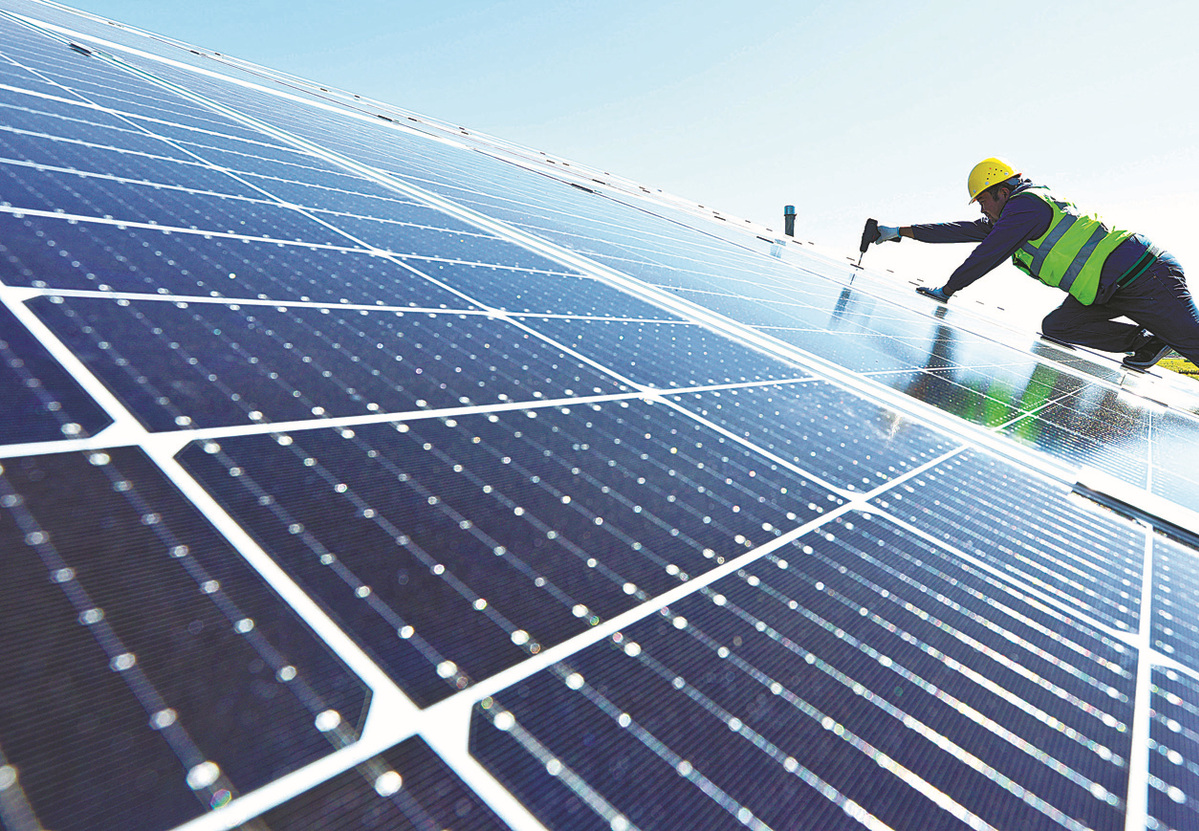
China's demand for eco-friendly, low-carbon input in next 30 years is set to soar
China is further improving its policy framework for achieving climate-related goals, including a financial sector development road map that is in line with the global sustainable development agenda and adopted worldwide standards.
As traditional energy-intensive ways can no longer sustain the high-quality development of the world's second-largest economy, policymakers are finding a new growth engine-restructuring the economy by green technologies, analysts said.
The Beijing-based Green Finance Committee of the China Society for Finance and Banking issued the results of new research on Sept 25 on achieving green development. It showed that China's cumulative demand for green and low-carbon investment in the next three decades (2021-50) will reach 487 trillion yuan ($76.17 trillion).
This predicted amount of investment is much larger than what was indicated by earlier research from Tsinghua University (174 trillion yuan), Goldman Sachs (104 trillion yuan) and China International Capital Co (139 trillion yuan), given that it covers more industries, including environmental protection and ecological industries.
Such a huge investment will help promote economic growth through such factors as a decline in net energy imports, large green and low-carbon investments, more new job opportunities in low-carbon industries and technological progress, the GFC report said.
"Finance can play an active role in response to climate change issues, especially in areas such as improving the carbon pricing mechanism, coordinating green classification standards, promoting the mandatory disclosure of climate-related information and mobilizing market funds to support green transformation," Yi Gang, governor of the People's Bank of China, said at the European Union's first sustainable investment summit in October.
The central bank, also the leader in producing a national green finance policy system, is working with its peer from the EU to promote consistency in green development classification standards and guidance for financial institutions to disclose more climate and environmental information such as carbon emissions, said Yi.
To push forward the economic restructuring process, China is creating a comprehensive policy framework combining national guidance and policies in specific industries to help meet carbon peak and carbon neutrality goals. The country is also preparing its own road map for the financial sector to achieve net-zero emissions goals.
Fu Zhihua, deputy head of the Chinese Academy of Fiscal Sciences, said during the 2021 Asia-Pacific Financial Forum that this national climate-related policy framework should include two types of measures: administrative measures, such as market access thresholds and standards that can regulate the market, and market-oriented measures, such as expanding the carbon-trading market and using taxes as a tool.
In terms of fiscal policy, the central government can encourage enterprises through offering special subsidies and investment funds. To curb carbon emissions, measures include carbon taxes, a new step that policymakers are considering, Fu said.
"Establishing long-term systems and rules will help to stabilize enterprises and the market's expectations," Fu said.
Sun Guofeng, head of the PBOC's monetary policy department, disclosed on Oct 15 that the central bank is stepping up the establishment of a structural monetary policy tool to support reductions in carbon emissions.
Under this supportive measure, financial institutions can pick corporations which will issue loans for low-carbon projects based on their own evaluation and decisions while also accepting related risks. Then, the financial institutions can make applications to lend through the PBOC with relatively low interest rates, Sun said. The tool works like a bank-to-bank relending facility, experts said.
Such funds would focus on three key areas-clean energy, energy conservation and environmental protection, and carbon emission reduction technologies. Projects which use the tool will need to disclose information, required by the PBOC, which is subject to public supervision, Sun said.
Analysts warned that simply shutting down high-carbon enterprises or limiting production in a heedless way might lead to a sharp decline in the supply from some traditional energy sources and push up the prices of energy and raw materials, resulting in economic stagflation and unemployment risks.
The new monetary policy tool, however, aims to leverage more private funds and increase the total supply of clean energy instead of simply cutting financing for traditional energy suppliers such as the coal industry, the PBOC official said.
By the end of June, China's financial institutions and enterprises had issued about 1.6 trillion yuan in green bonds, and more than 270 funds are operating under environment, social and governance concepts, totaling about 300 billion yuan, according to GFC research.
In order to leverage more funds for use in the green economy transition process, China has established a national green fund. The co-founders are the Ministry of Finance, the Ministry of Ecology and Environment and the Shanghai municipal government.
The fund was launched in July 2020 with 88.5 billion yuan in funding for its first phase. Clean energy and digital and information technologies to support construction of low-carbon infrastructure will provide considerable investment opportunities, fund officials said.
Wang Yida, chairman of the fund's supervisory committee, said that green finance will play a significant role in reallocation of resources, pricing in the carbon trading market and managing risks to support the country's carbon neutrality goal.