BRI celebrates 8 years of global benefits










When President Xi Jinping proposed the creation of a new "Silk Road Economic Belt" for Central Asia during a visit to Kazakhstan in September 2013, few could have imagined how large this initiative would become. Now celebrating its eighth anniversary, the Belt and Road Initiative (BRI) aims to connect Asia with Africa and Europe via land and maritime networks that would improve regional integration, increase international trade and stimulate economic growth.
Closely linked to the initiative are the Asian Infrastructure Investment Bank (AIIB), proposed by China and created in 2014 to raise funds for investment projects in Asia, and China's own Silk Road Fund announced in November 2014 with a $140 billion endowment to invest in businesses in the region.
The numbers tell their own story. No less than 138 countries had joined the BRI by signing a memorandum of understanding with China prior to the global pandemic. The membership of the AIB grew to more than 100 countries by the end of 2020, making the AIB the second largest development bank after the World Bank. In fact, the BRI has emerged as the world's largest infrastructure project.
One factor behind such a large membership is that the BRI is open to participation by all countries through investment projects, regardless of whether they are geographically located in the regions being invested in. In addition, countries such as the US, India and Japan which have not joined in formal membership stand to gain from the global economic growth that the initiative is expected to produce.
A 2019 study by global economic consultants Cebr forecast that benefits of the BRI are likely to be widespread. As many as 56 different countries are predicted to see their annual GDP in 2040 bolstered by more than $10 billion as a result of the project. The US is likely to be one of the biggest single potential beneficiaries of the BRI, even though it isn't participating directly in the project. This is because the sheer size of the US economy means that it gains from the indirect effects of a boost to the world GDP.
The maritime road is of course not landlocked and can connect China's coastal regions with Southeast and South Asia, the South Pacific, the Middle East, Eastern Africa, and Europe. Italy and Greece are already members along with Central and Eastern European countries. The Cebr report concludes that as the BRI develops, it is likely to attract further countries. It is highly likely that most of Western Europe will join in as the project gathers momentum. The BRI includes plans to reach Rotterdam, Europe's largest port, and enhance links between northwestern continental Europe, Scandinavia and the UK.
The goals of the BRI for the members include policy coordination, infrastructure connectivity, unimpeded trade, financial integration and connecting people. Thus the BRI can be a force for mutual economic interdependence and improved cultural understanding, creating "shared prosperity for all". The president of the UK Chartered Institute of Building has said "..These are plans to build what is effectively a road halfway round the world, with impact way beyond its boundaries. The Belt and Road initiative is the most significant global infrastructure initiative ever seen. Looking at the potential outcomes for the global economy and the opportunities for our industry - and the future of our industry - is something we should all be interested in."
Infrastructure projects include ports, railways, railway tunnels, highways, airports, power stations, dams and telecommunications. Major projects being undertaken include the China–Pakistan Economic Corridor, the Boten–Vientiane railway in Laos and the Khorgas land port. Such projects and other initiatives have cemented cooperation with China's neighbors. China and Russia (150 common projects including natural gas pipelines) and China and Pakistan are leading partners on many projects.
Another achievement to date is people-to-people exchanges with BRI members through educational initiatives such as mutual recognition of qualifications, academic mobility, student exchanges and joint study programs. These include 30,000 scholarships to be made available for citizens of Shanghai Cooperation Organization countries and 10,000 for students and teachers in nations involved in the BRI.
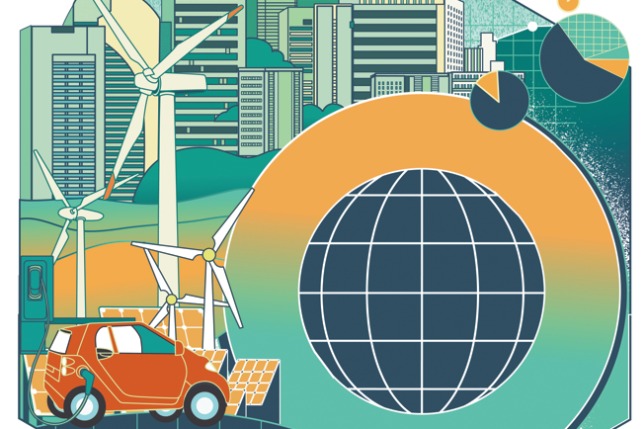
The BRI is a long project with plans to finish by 2049 and it will evolve over time. In 2019, the BRI International Green Development Organization (BRIGC) was launched to bring together environmental expertise of all partners to ensure that the BRI brings long-term green and sustainable development in support of the 2030 Agenda for Sustainable Development. On September this year, President Xi announced that China will "step up support" for developing countries to adopt "green and low-carbon energy" and will no longer finance overseas coal-fired power plants. Additionally, with the upcoming COP 26 summit in Glasgow this year, green issues will be further addressed in development projects.
BRI has become a cornerstone of world development and forecasts suggest it will likely boost the world's GDP by $7.1 trillion per year by 2040, and consequently raise the world's GDP by 4.2 percent of likely GDP in 2040. Undoubtedly, the world has a big stake in this.
Colin Speakman is an economist and an international educator with CAPA: The Global Education Network.
The opinions expressed here are those of the writer and do not represent the views of China Daily and China Daily website.
If you have a specific expertise and would like to contribute to China Daily, please contact us at opinion@chinadaily.com.cn , and comment@chinadaily.com.cn