



No turning back now on healthcare digitization









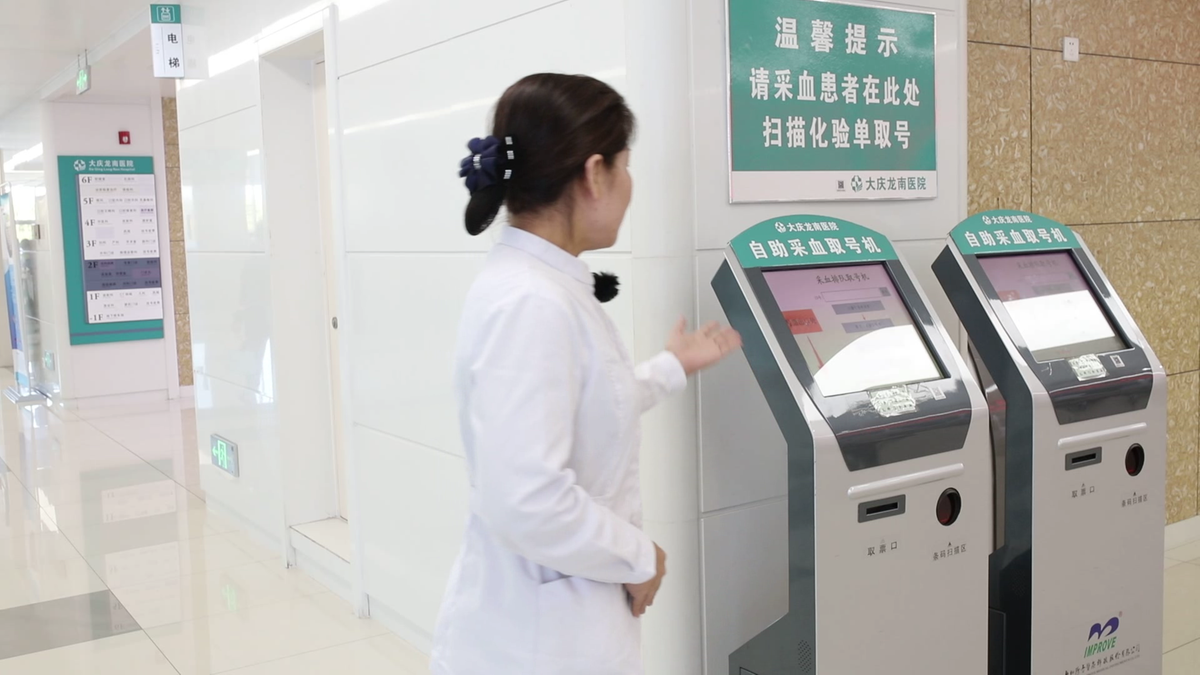
China's healthcare digitization market is expected to reach 100 million yuan ($15.52 million) in the coming five years, according to a recent report from Guosen Securities.
Taking e-medical records as an example, in 2018, the e-medical record penetration rate in China's public 3A-grade hospitals was less than 5 percent. However, by 2022, the figure is expected to reach 90 percent, 60 percent and 40 percent, respectively in the country's public 3A-grade, public 2A-grade and public A-grade hospitals, the report said.
Behind the figures are supportive policies from the government.
In July 2015, the State Council, the country's Cabinet, issued a guideline promoting "internet plus", to encourage the development of internet-based healthcare, telemedicine and cross-hospital data sharing.
In February 2017, the National Health Commission launched a formal plan on the digitization of national healthcare information, explicitly proposing that by 2020, a national healthcare center based on big data should be basically established, a total of 100 regional demonstration zones should be set up and residents, both urban and rural, should have access to e-medical records with multiple functions.
In September 2018, the NHC issued a series of measures aimed at identifying the relationship between internet hospitals and brick-and-mortar versions, as well as clarifying the supervision mechanism and the legal liability of internet hospitals.
In March, the commission launched a guideline on building a graded assessment system of smart hospitals to evaluate the degree of digitization of the country's medical institutions from level zero to five.
Yin Chuan, co-CEO of PingAn-Lenovo, which also provides smart hospital assessment services, said: "Currently, hospital requirements for digitization evaluations are rigid, as government authorities have clearly launched documents to evaluate their degree of digitization from various dimensions, such as e-medical record inter-accreditation, intelligent services and smart management. The evaluation is strict, and is an inevitable trend."
As a result, in recent years, China's hospitals have increased investment in digitization. HIS service providers such as Beijing-based PingAn-Lenovo and Hangzhou-based B-Soft Ltd, said that they have received increasing orders to help hospitals pass national digitization evaluations.
Currently, there are hundreds of thousands of HIS service providers in China. Zhang said that while there is fierce market competition, the industry concentration ratio is low, and there is no oligopoly.
"With industry standardization and increasing research and development investment in the area, the market concentration ratio is expected to rise, and companies with solid client resource bases and strong brand recognition will achieve long-term development," Zhang said.
To tap into the market, industry experts suggested that HIS service providers work out strategies to create differentiated products.
"Differentiation in the sector will gradually occur, raising requirements of innovative business modes, business-technology integration and digital operations for market players," said Sui Ye, a partner at consulting firm Roland Berger.
Companies already understand the situation and have started to make inroads into different areas. For example, last month, PingAn-Lenovo teamed up with German company Fresenius Medical Care, the world's biggest provider of dialysis equipment, and launched a smart therapy data management system to assist in dialysis treatment.
Instead of having nurses enter operational data manually, the system sends the doctor's dialysis prescriptions directly to treatment machines. The system helps avoid manual entry errors, cuts nurses' data input time per patient from 40 minutes to 5 minutes, and thus saves time and energy for medical professionals to better care for patients.
The smart ambulance system developed by Shenzhen, Guangdong province-based Dott Medical, collects patients' real-time, vital signs once they enter ambulances and immediately sends the data to the hospital they are heading to. As time is of the essence in medical emergencies, medical professionals are ready to take action as soon as patients arrive at the hospital.
The telemedicine system launched by Ping An International Smart City Technology Co Ltd, allows doctors from public 3A-grade hospitals in first-tier cities to offer medical training and guidance to those in county-level hospitals. With the system, a remote medical consultation conference can be held between patients and doctors. The system helps balance national medical resources and offers better treatment plans to patients.
Lin said that China's digital healthcare sector contains vast growth potential compared with the country's digital finance sector and telecommunication sectors, and it is still at a preliminary stage.
"The sector has great room for development, whether in terms of technological revolution, market scale or AI algorithms," he said.
"In addition, China's aging population will gradually increase hospital revenues, which makes hospitals correspondingly expand their investment in digitization," he said. "And most importantly, China's unique hospital system means that its healthcare system can only use HIS developed by domestic companies, leaving numerous business opportunities for homegrown enterprises," Lin said.




















