



China wins hard-fought battle against extreme poverty









"The color of the cat doesn't matter as long as it catches mice." These words represent the core of the economic-political thought of the late Chinese leader Deng Xiaoping.
Political scholars and Sinologists point out Deng is the de facto founder of modern China and the architect of political and economic reform; the recent achievements of the Chinese administration are the fruits of the ideas Deng planted in the Chinese system. He adopted a policy of openness and revived the concept of "Middle Kingdom" so China would be a key center in economic exchanges and international political decisions.
China has become a pivotal country in international relations and present in all fields. This is due to the wise policy of current Chinese President Xi Jinping, who followed the reform plans drawn up by Deng while making adjustments and improvements to cope with international changes and the growing role of China. Thus, China became a "superpower" under Xi.
Since taking office in 2013, fighting poverty in China and eliminating extreme poverty has been among his top priorities. He considered this the most important battle for the Chinese leadership. The Chinese leadership developed a tight strategy under the supervision of Xi, and tremendous efforts were made. After eight years of tireless work, Xi declared in his speech "the elimination of extreme poverty" and a "miracle of the twenty-first century". Xi said China had fought the hardest and toughest battle against poverty in human history, and the result was victory and a new achievement for the Chinese leadership.
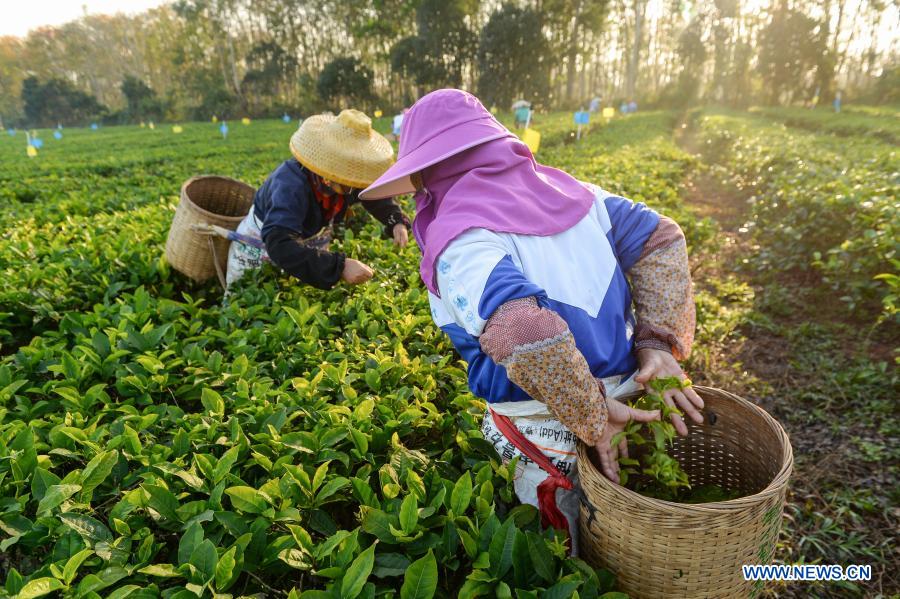
The Chinese Communist Party places this achievement within the framework of its "moderate prosperity" plan to improve the living conditions of its citizens. The campaign to eradicate extreme poverty focused on rural China, which had high rates of extreme poverty; future Chinese plans are aimed at developing rural areas and improving the living conditions of its residents. The country has secured many jobs for the unemployed and granted persons with disabilities social benefits to guarantee a basic standard of living.
China's transition from an agricultural society to the second-largest economy in the world is a direct reason for the improvement in the quality of social services provided by the Chinese state. In the eradication of extreme poverty, the most important thing is the existence of an honest administration that adopts the principle of transparency in governance, without corruption, theft and bribery. All these conditions created an atmosphere that accelerated the elimination of extreme poverty.
The elimination of extreme poverty is a goal for most countries, and the United Nations has included it among its priorities. However, China faced an enormous challenge in overcoming extreme poverty because it is the most densely populated country in the world, with many peoples, ethnicities and geographical regions.
Despite all this, the Chinese leadership was able to successfully achieve this goal. The World Bank indicates extreme poverty is income that does not exceed $1.90 a day, and the deprivation of the most basic rights such as food, drinking water, sanitation, housing and education.
Consequently, China's social miracle is not only the elimination of extreme poverty, but the tremendous improvement in the economic conditions of the Chinese people; in this case it is possible to talk about "social welfare" in China. China has been successful in eliminating poverty and introducing a welfare state model.
China suffers from a disparity in poverty rates between cities and rural areas. This problem is a top priority of the Chinese leadership, so the Chinese government is creating a lot of job opportunities in the countryside, expanding transportation networks and enhancing social services.
For example, the Xinjiang Uygur autonomous region was suffering from high rates of extreme poverty and weak state services, but the tremendous efforts of the Chinese administration eliminated extreme poverty, reduced unemployment rates and developed many companies and investment projects.
The government work report for 2020 stated, "We will adopt a policy to see migrant rural workers have equal access to employment services in the cities in which they work." The payments of social insurance premiums for low-income people will also be postponed according to a social policy adopted by the Chinese government, as stated by Premier Li Keqiang.
In 2001, China laid down guidelines for poverty eradication for the period from 2001 to 2010. It identified poverty-stricken provinces and regions bordering on extreme poverty, established a tiered poverty alleviation system from the central government to the county level and formed a coordination mechanism in the areas of infrastructure construction, agriculture, water conservation, transportation, energy and communication.
At the national level, the strategy strengthened plans and organized large-scale measures to alleviate poverty. Since the 18th National Congress of the Communist Party of China in late 2012, China has started the second phase of poverty eradication, part of which was the eradication of extreme poverty (2012-2020). The state has created more job opportunities, made education available to all and provided all social services to citizens in both cities and rural areas to reduce poverty.
Mohamad Zreik is a PhD candidate at the School of Politics and International Studies (SPIS), Central China Normal University, Wuhan, Hubei, China.
The opinions expressed here are those of the writer and do not necessarily represent the views of China Daily and China Daily website.
If you have a specific expertise and would like to contribute to China Daily, please contact us at opinion@chinadaily.com.cn, and comment@chinadaily.com.cn.





