



New rules to bolster China's trade, ODI









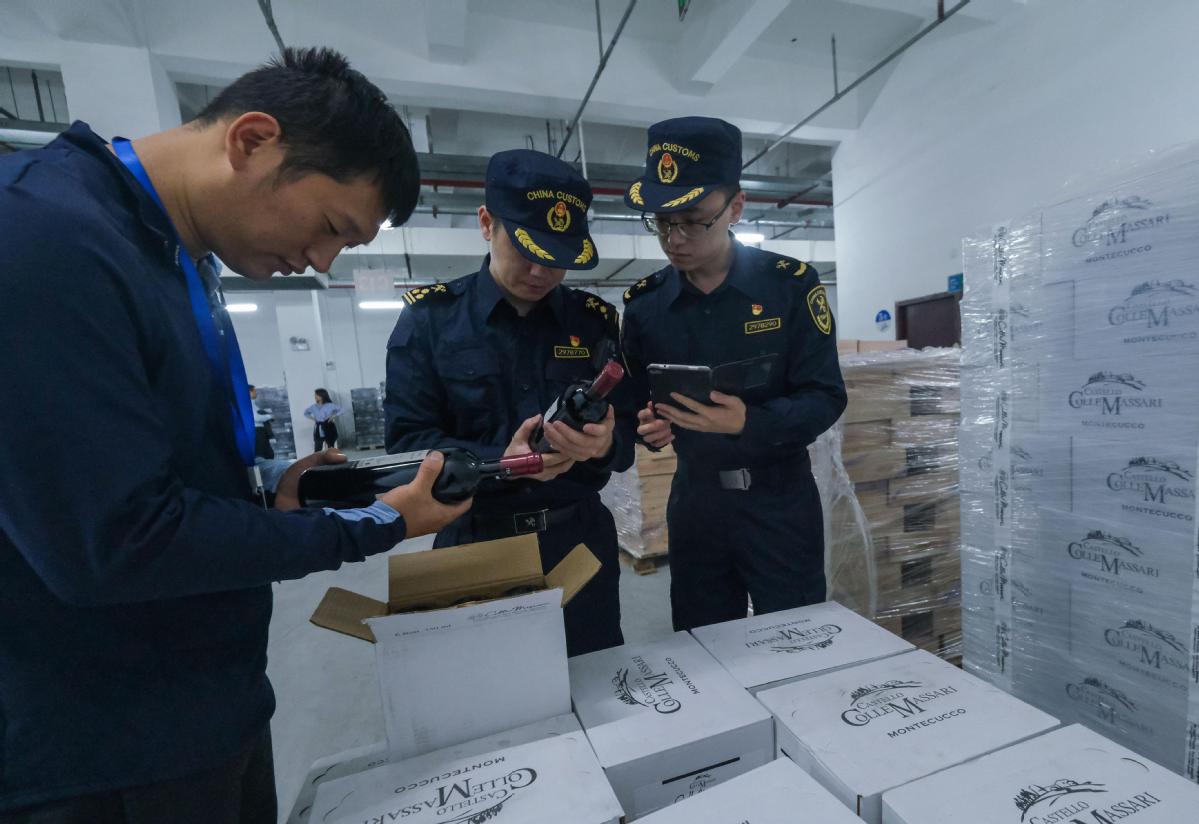
Customs officials say CRO framework signals tariff gains, higher productivity
The Cumulative Rules of Origin under the Regional Comprehensive Economic Partnership framework will substantially boost China's foreign trade and outbound direct investment activities in partner countries in the next stage, Customs officials said on Thursday.
The cumulative rules are applied when the production process of goods involves different member countries or regions under the same preferential trade agreement.
For instance, once the RCEP comes into effect, a Chinese firm that exports shoes to the Republic of Korea will be exempted from tariffs as long as raw material from China, the ROK, Indonesia and Thailand accounts for more than 40 percent of the final shoes.
Jiang Feng, director-general of the department of duty collection at the General Administration of Customs, said Chinese companies can actively apply these rules to improve their productivity.
"They can make full use of the resources of the same economic region for production," she said. "It will be easier for the goods to obtain the origin qualification of the contracting countries, and finally enjoy more preferential tax rates and trade treatment."
The official said competent government branches such as the GAC and the Ministry of Commerce have already accelerated domestic preparations for RCEP implementation. They will discuss specific implementation plans and other guidelines with counterparts from other member countries on March 8.
As many RCEP participants pledged that they will expedite the pact's implementation procedures to help companies from all sides share the benefits as soon as possible, the GAC said substantive progress has been achieved in the technical preparations for implementing the cumulation provisions of the rules of origin.
As much as 85 percent of the 701 binding obligations stipulated in the agreement had been enforced by the end of January.
After the RCEP was signed by the 15 participating countries in November, China sealed 19 free trade agreements with other countries and now has 26 free trade partners, she said. After the implementation of the RCEP, China's foreign trade volume with its FTA partners will increase from 27 percent to 35 percent, indicating that more than one-third of its foreign trade goods will be tariff-free.
The RCEP pact is expected to add $500 billion to global exports and increase the national income of participating countries by $186 billion by 2030, according to the Washington-based Peterson Institute for International Economics.
The RCEP deal is not only about cutting or exempting tariffs, but also specifies the cumulative provisions of rules of origin, said Di Jie, deputy director-general at the GAC's department of duty collection.
He therefore said fully understanding and implementing the cumulative rules of origin will help lower the threshold for enjoying-tariff concessions, promote intraregional trade and investment cooperation, as well as stabilize and reinforce regional industrial and supply chains.
Despite the COVID-19 pandemic effect on global trade in 2020, China became the biggest trading partner of the European Union, the United States and India, respectively, last year, according to information released by China's Ministry of Commerce and India's Ministry of Commerce and Industry.
China's recovery in the second quarter of last year created stable demand for global commodities and products, especially crude oil, iron ore, automobiles, industrial and consumer goods, said Wei Xiaoquan, a researcher specializing in regional economic development at the University of International Business and Economics in Beijing.
He said the extended lockdown in many parts of the world created a huge demand for shipping containers, electronics, entertainment and healthcare products, with many of them being manufactured in China.
Eager to consolidate its growth strength and support the recovery of the global economy, China will strengthen efforts on coordinating the development of trade industries this year, Commerce Minister Wang Wentao said during a news conference on Wednesday.
The minister said China will greenlight a new batch of foreign trade transformation and upgrade bases this year, and build several industrial parks for processing trade. The country will also establish a cluster of pilot demonstration zones to expand the scale of imports and stimulate the quality development of related industries, he said.




















