Output push to boost demand for imported recycled metals









Copper, aluminum and brass among materials critical to revival of factories
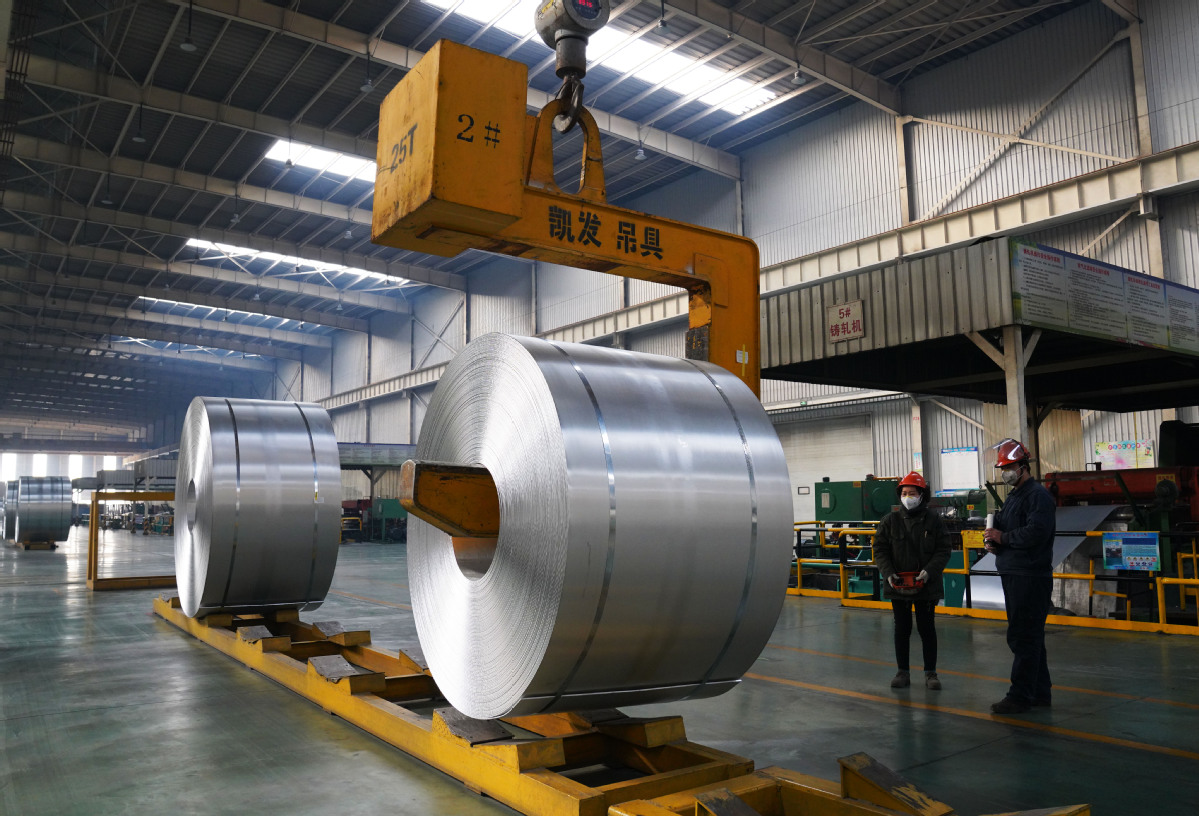
Demand for imported recycled metals, including secondary copper and aluminum, will continue to surge in China, thanks to the country's favorable policies to support the growth of both manufacturing and recycled metals, said officials and business owners.
In October, the government introduced a policy regulating the import of recycled brass, copper and cast aluminum alloys to better manage the purchase of certain recycled metals and supply more reclaimed production goods to factories across the country.
The policy measure took effect on Nov 1 and clearly stipulates that recycled brass raw materials, recycled copper raw materials and recycled cast aluminum alloys that meet the requirements of relevant national standards are not categorized as solid waste and can therefore be imported without legal restrictions, said Pan Cheng, director-general of the department of policy and legal affairs at the General Administration of Customs.
China began a general ban on imported solid waste on Jan 1.
The import of recycled copper and aluminum differs from previous scrap metal imports.
There is no longer a quota and no designated import port, said Ying Hanyang, deputy general manager at Taizhou Julong Trade Co Ltd in Taizhou, Zhejiang province.
As the country's largest metal recycling base by production volume, Taizhou has many companies engaged in solid waste reprocessing, Ying said.
Therefore, greater market liberalization means more opportunities for local players, including Ying's company.
Some companies that used to import scrap metal have already begun to transform and upgrade to importing recycled copper and aluminum that meet the national quality standards, he added.
Apart from building scrap metal dismantling plants in countries of origin such as Japan, South Korea, Malaysia and the United Arab Emirates to meet domestic demand, the company has set goals of producing 6,000 metric tons of copper and brass as well as 6,000 tons of aluminum per month, to expand its production capacity and offset additional costs of overseas operations, Ying said.
To ensure quality of commodities in this category, the national standards contain strict regulations regarding impurities, moisture and quality of metals, together with specific classification inspection methods to better distinguish solid waste and normal raw materials, said Cui Yan, deputy secretary-general of the Beijing-based China National Resources Recycling Association.
Many of these secondary copper goods can be obtained from electric motors, fans, mechanical switches and power wiring. They must first be disassembled into products such as copper meters and copper wire before shipping to China, she said, noting only products with high metal content and those that do not place undue pressure on the environment will be cleared for importation.
In the 1980s, China authorized imports of certain categories of solid waste from which some useful raw industrial materials could be extracted. This was a decade when the country lacked resources to feed its fast-developing manufacturing sector.
However, now more rational behaviors toward both the importation of such commodities and environmental impact are being taken into consideration, said Zhao Ying, a researcher at the Beijing-based Institute of Industrial Economics, which is affiliated with the Chinese Academy of Social Sciences.
"Since the country's industries are becoming more innovation-driven and people more increasingly environmentally aware, it is necessary for China to follow the growth path of many developed economies to control imports of solid waste and tighten supervision of the recycling sector," Zhao said.
Next, China must boost efforts to recycle its own solid waste. Industries that recycle imported solid waste can now further upgrade their technology and management, and dedicate their efforts to disposing of domestic solid waste, most of which ends up in landfills or incinerators, he said.