



White tea brews up bright future for once-impoverished villagers









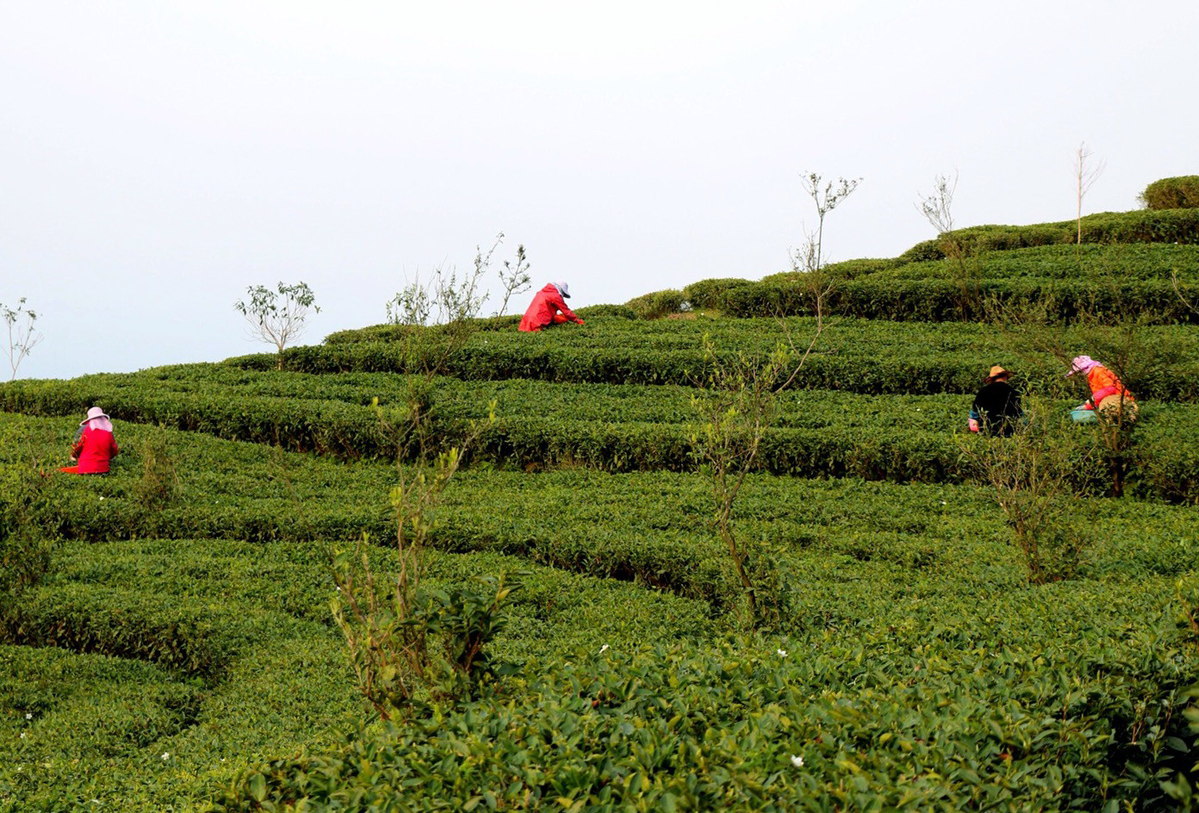
Uneducated and poverty-stricken, 15-year-old Li Zhaotie left his home in Fangjiashan village, in Fuding city of Fujian province, 27 years ago.
In 2011, while he was cutting slates at a stone factory in the Inner Mongolia autonomous region, Li happened to drink a cup of tea that "tasted good and sweet".
"It's white tea," he was told.
"White tea? My hometown Fuding produces a lot of white tea," Li thought.
So he decided to go back and see what he could do with the small tea plantation owned by his parents but left uncultivated.
White tea, a minimally processed tea with low oxidation, was less known than green tea or oolong tea, which dominated the Chinese market.
Making white tea did not bring Li much money in the early years. He even had to chop bamboo in the mountains and use the money he earned to pay workers who picked tea leaves for him.
But things began to improve in 2016 as the white tea market gradually heated up.
Lin Youxi is one of the people who spearheaded the expansion of the domestic market for white tea, especially organic white tea produced in Fangjiashan.
In 1999, Lin, then a 37-year-old tea merchant in Beijing, returned to his hometown of Fuding with his wife and contracted for some tea plantations in Fangjiashan to start his white tea business.
Years of engagement with the tea industry told him that organic tea plantations would be the future.
According to Lin, Fangjiashan, located near the national-level geopark Mount Taimu, has the largest contiguous tea plantation in Fuding. Its soil and altitude are very suitable for making quality tea.
However, like Li Zhaotie, many villagers had fled their hometown due to poverty, leaving their tea plantations uncultivated with weeds springing up.
"I didn't see any road or new house in Fangjiashan at that time. The villagers were in rags and in low spirits due to poverty," Lin said.
With the implementation of the country's resettlement program starting in 2004, villagers of Fangjiashan were organized to bring the mountains under cultivation and grow tea trees and other cash crops such as rice.
"It turned out that tea leaves were sold at a much better price than others, so tea leaves have become the only cash crop Fangjiashan farmers plant now," said Zheng Yanfang, now Party secretary of Fangjiashan.
To improve Fangjiashan's infrastructure and environment, the local government also spent more than 1.2 million yuan ($173,000) to build cement roads and invested more than 200,000 yuan to renovate local toilets and the sewage pipe network, according to Zheng.
Lin said that it would be impossible to promote the idea of developing a favorable environment for growing organic tea in Fangjiashan without the primary-level officials' efforts to persuade local farmers not to use any pesticides or chemical fertilizers.
Now Fangjiashan has become a renowned white tea brand across the country with the annual average income of local farmers reaching 18,161 yuan last year.
Lin's Lvxueya Tea company, which owns an organic tea base of 100 hectares, has become a leading corporation in Fujian province that plants, processes, sells and studies tea, trains talent for the tea industry and promotes tea culture.
Working with agricultural cooperatives established by the local government to make unified purchases of tea leaves from farmers, Lin's company has attracted and encouraged more than 5,000 nearby farm households to develop pollution-free plantations to make organic tea.
"Unlike before, it's hard to find someone in extreme poverty here today," Lin said.
Now more and more villagers who used to work outside are returning home to take part in the white tea businesses.
According to Zheng, the village Party secretary, in the last three years, five merchants have returned to Fangjiashan due to preferential policies and invested more than 10 million yuan building tea factories in the village.
Former stone factory worker Li Zhaotie has been making organic tea with annual sales value of more than 100,000 yuan, and in 2017 he spent 1 million yuan on building his own tea factory.
"I would have made a lot of money if I chose to use chemical fertilizers, but I know I shouldn't damage the environment," he said.
"Only this way can my children and my grandchildren be able to live on the plantation and no longer suffer from starvation."


- Chinese scientists uncover drivers of divergent climate changes across Asia
- Former senior Chinese legislator indicted for taking bribes
- Latest Beauty of Tianjin video showcases city's urban spaces, aesthetic
- Tianjin launches nearly 500 spring events for Canal Peach Blossom Festival
- Follow Du Juan's 22-year journey through Beijing's pulse
- China builds comprehensive groundwater monitoring system





