



UK should make independent decisions on its ties with China









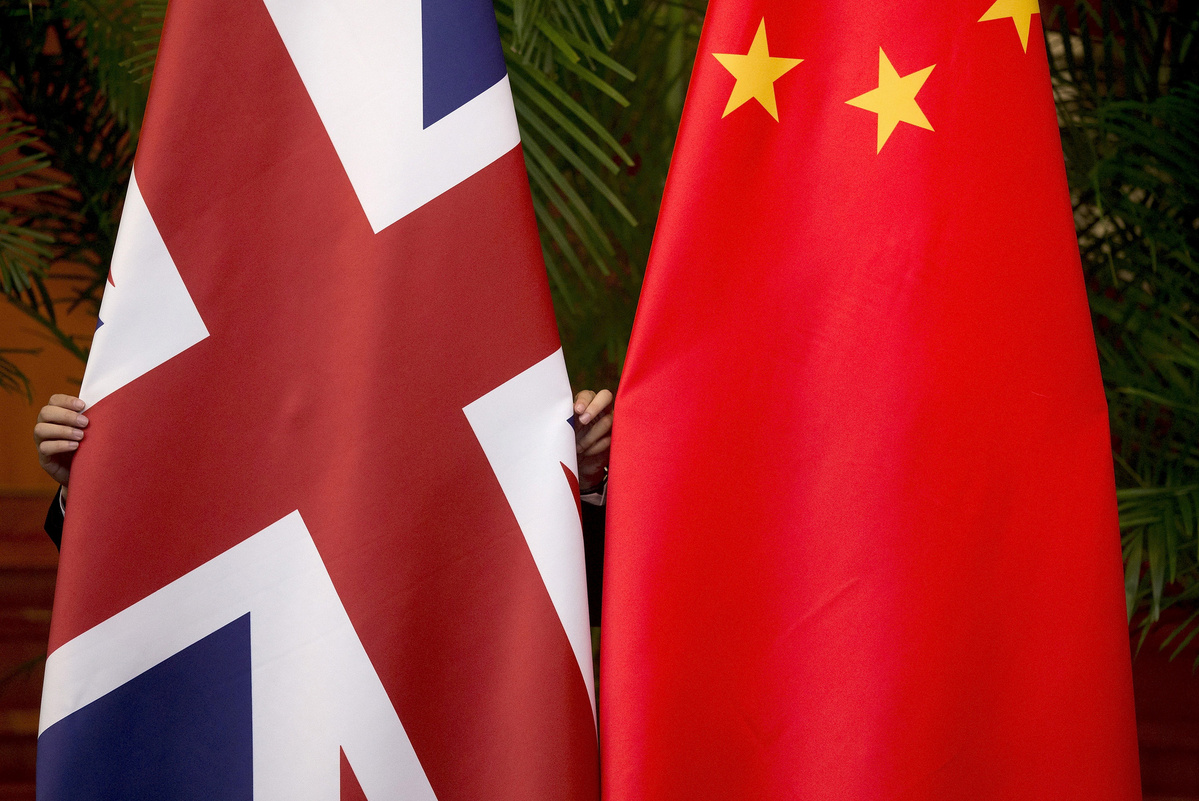
Disputes over national security and trade have soured Sino-British relations, especially after United Kingdom government tried to interfere in Hong Kong affairs after the Chinese central government implemented the national security law in the special administrative region to plug the national security loopholes there, barred Huawei from its telecom network and said it was mulling sending an aircraft carrier to the South China Sea.
Sino-British relations peaked in 2015 when the two sides established a comprehensive strategic partnership and agreed to long-term cooperation. In the following years, however, bilateral ties stagnated only to take a turn for the worse.
After the Brexit referendum in 2016 and a series of international developments, there was a distinct change in the UK's policies because Brexit became the country's top concern. In fact, Brexit will continue to influence the UK's China policy in the following years.
While frequent Cabinet reshuffles made it difficult for the UK government to work out a long-term China policy and some China-UK cooperation projects were either delayed or shelved, the criticisms the lower house of Parliament, NGOs and media outlets leveled against China for its human rights record influenced the UK's China policy.
Amid all this, the United States kept hyping its "China threat" theory by claiming Huawei is using its technology to spy for the Chinese government. The US used every trick possible to persuade the UK, the second-strongest force in the US-led Five Eyes intelligence alliance, to ban Huawei from its 5G network. And realizing that post-Brexit the UK would depend more on US-UK cooperation, including a US-UK free trade deal to be signed to offset the losses caused by Brexit, the US cajoled its anxious ally into taking a hard line against China.
The UK did try to strike a balance between security concerns and cooperation with Huawei, though. In January, the UK government announced that it would allow Huawei limited access to its telecom network. But after Washington barred Huawei and its suppliers from using US technologies and software from September, the UK succumbed to US pressure and banned Huawei from its telecom network.
Also, since the UK government needed to shift public attention from its inadequate response to the novel coronavirus pandemic, it targeted the national security law in Hong Kong for criticism. This, along with the US' constant tirade against China, tilted British public opinion against China, leading to a reset of the UK's China policy.
Sino-British relations have suffered due to poor mutual political trust and the shattered confidence of Chinese investors. Despite China exercising exemplary restraint in the face of the UK government's slanderous statements against Huawei and interference in Hong Kong, in order to prevent bilateral ties from deteriorating further, the UK still chose to do the US' bidding.
However, many in the UK believe that in spite of the deterioration in Sino-British ties, they will be better than Sino-US relations, which are in a free fall. Since many British politicians and businesses still see trade and economic ties with China as vital to the UK's development, the British government needs to take informed decisions on China-related issues.
China can help the UK realize its priority goal of offsetting the economic losses caused by both Brexit and the pandemic. Last year, Sino-British trade crossed £80 billion ($104 billion), and China became the UK's sixth-largest export market and fourth-largest source of imports. And though the US and the UK have a higher level of trade and economic cooperation, Sino-British trade developed faster, exhibiting more potential for cooperation.
The UK gained maximum benefits by not letting its trade relations with the US influence its decisions on its cooperation with China when Sino-US relations were stable. So in the post-Brexit era, too, the UK government should desist from following the US' orders and committing strategic miscalculations, because strengthening Anglo-American ties at the cost of sacrificing Sino-British cooperation runs counter to its policy of seeking complete economic independence through Brexit.
To ensure its sustainable development and diplomatic independence, the UK should expand the scope of trade by repairing Sino-British ties and helping ease tensions between Beijing and Washington.
The author is director of the Department for European Studies, China Institute of International Studies. The views don't necessarily represent those of China Daily.





