



Health and safety promoter









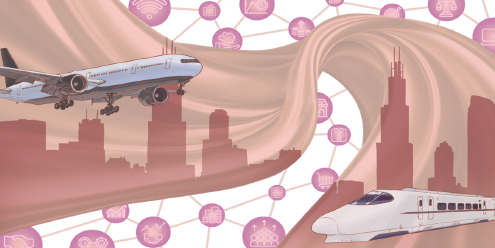
The Belt and Road Initiative is a public good that can help boost the world's post-pandemic recovery
Raging around the world, the COVID-19 pandemic has deeply affected not only the global economic and political landscape, but also the development of the Belt and Road Initiative.
First, the global economic recession caused by this global public health crisis is having negative impact on the financial cooperation between China and the participating countries. The increased instability and uncertainty of the world economy have caused great turmoil in the global market. The unpredictable financial environment resulting from the pandemic has further increased the funding difficulty for the Belt and Road projects.
Second, some countries have chosen to adjust the internal and external layout of their industrial structure and supply chains. While establishing a relatively independent economic system internally, they are seeking to strengthen cooperation with neighboring countries and giving priority to regional cooperation. Europe and the United States have taken radical measures, calling back manufacturing jobs. Japan, the US and other countries have offered to pay the relocation costs for companies to reshore. Meanwhile, some have even stigmatized China and made groundless accusations against the Belt and Road projects. All these factors have had a negative impact on the infrastructure construction in the Belt and Road countries.
Third, mutual trust between countries-especially between developed countries and China-is declining. The lack of trust is undermining communication and in some cases makes previous commitment difficult to deliver. Although trade between China and the Belt and Road countries has maintained growth during the pandemic, some trade routes have witnessed volume reduction and trade suspension, making it difficult to ensure the smooth flow of trade in the future.
Fourth, people-to-people exchanges have been hindered. Some Belt and Road countries may have a wrong perception of China's effort in fighting against the pandemic due to the misinformation campaign of Western countries, which might impair the existing foundation of cooperation among peoples.
Fifth, the outbreak has exposed many non-traditional security threats, such as health security, energy security, economic security and food security, and the lack of international governance to counter them. This requires the Belt and Road Initiative, as a public good of global governance, to constantly evolve to effectively deal with such challenges.
In the post-pandemic era, implementing Belt and Road projects with high quality requires us to adhere to the principle of wide consultation, joint contribution and shared benefits. We should continue to fight against the pandemic with joint efforts and build a new Silk Road of Health, maintain multilateralism, promote international organization reform, and keep developing the Digital Silk Road to help with world economic recovery.
First, as the world's second-largest economy, China should bring more momentum to world economic growth. The pandemic in China has been largely brought under control and China will undoubtedly play an important part in the global recovery. This requires us to improve the domestic environment to facilitate the implementation of the Belt and Road Initiative. By creating a favorable environment for foreign investors and trade, and further liberalizing our market, China will ensure its own economic recovery while contributing to the world economic stability.
Second, we should uphold international cooperation against COVID-19 and build a Silk Road of Health. China's sharing of its experiences in fighting against the virus and the international cooperation supported by China has made a great difference. In the post-pandemic era, as prevention and control of the virus will continue for a long time, we should provide more assistance to developing countries in building their own pandemic prevention systems.
Third, different policies should be adopted for different regions, including Southeast Asia, Africa, Central and Eastern Europe, to enhance cooperation under the framework of the Belt and Road Initiative. China could work with Japan and South Korea in pandemic prevention, anti-pandemic measures, and third-party market cooperation through the 10+3 model (which brings together the members of the Association of Southeast Asian Nations, China, Japan and South Korea) with the focus on trade relations. China should actively engage in policy communication with the European Union to increase mutual trust and deepen the"17+1" cooperation with CEE countries with the China-EU freight train as a starting point. China can also increase its material assistance for Africa's pandemic prevention and control efforts, and based on that help African countries modernize their industrial sectors.
Fourth, as a Chinese solution to global governance, the Belt and Road Initiative should always follow the principle of wide consultation, joint contribution and shared benefits. China can provide new ideas to global governance based on its own experience. This requires us to deepen cooperation with international organizations, especially the United Nations, and provide effective solutions for non-traditional security threats.
Fifth, we should attach importance to the development of the Digital Silk Road and create new growth opportunities for the world economy through emerging technologies. The digital economy has proven itself promising during the pandemic. Chinese people resumed work and production while implementing epidemic prevention with the help of digital services such as cloud-enabled conference calls, cross-border e-commerce and online medical diagnosis. In the post-pandemic era, the Digital Silk Road can provide opportunities for developing countries, prevent the digital "North-South imbalance" from widening, and offer digital solutions for pandemic related issues to help the Belt and Road countries resume work and production effectively and orderly.
The author is a professor in the Department of International Relations at Tsinghua University. The author contributed this article to China Watch, a think tank powered by China Daily. The views do not necessarily reflect those of China Daily.





