Nothing succeeds like success










What can other developing countries learn from China's remarkable achievement in bringing so many people out of poverty
I suspect that this year will go down as a remarkable one in the history of mankind, as a result of the COVID-19 pandemic and the associated collapse of economic activity. The United Nations has already reported that the shock has been so big that it will reverse some of the progress on the eradication of poverty. Let's hope that it is a temporary setback, because certainly one of the greatest achievements in my professional lifetime, which stretches back to 1983, has been the dramatic reduction in global poverty. And it is really important that the world recognizes this achievement during this time of crisis as it has been a truly superb consequence of world economic development.
At the center of this dramatic reduction in global poverty has been China. Its poverty reduction has been a truly astonishing achievement: Not only has China brought more than 800 million people out of poverty, but it has succeeded in realizing the living standards of a major G7 economy for around half that number. No other society in the world has achieved either.
Being the author of the report entitled The World Needs Better Economic BRICs, in which I laid out a scenario where Brazil, Russia, India and China would likely acquire bigger shares of the global economy, I would like to think I did have some awareness of this potential. And in subsequent years, together with my then colleagues at Goldman Sachs, we suggested that by the late 2030s, China's economy in nominal US dollar terms would be as big as that of the United States.
Now, as I look to the future during this COVID-19 pandemic, a question that occurs to me is: What can the other BRICS countries learn from China's remarkable success in bringing so many people out of poverty? This is something that is even more applicable perhaps for most African nations, especially those in sub-Saharan Africa where most of the world's poverty is now located.
Ultimately, economic growth is driven by two forces, the size of a country's labor force and its productivity. The biggest determinant of a country's labor force is that nation's demographic trends, so those with strong birth rates, and high life expectancy, typically enjoy the best labor force dynamics, and the only other factor that can really influence the size of a labor force significantly is immigration. Countries with large populations, especially if they are young, typically can grow more than others. In this regard, China and India have a huge advantage over the other BRICS countries, because of course, they are the only ones with populations in excess of 1 billion. In this regard, there is nothing other countries can learn from China, indeed nor may they need or want to. An exception may be India, as it has a similar large population, and in fact, given that it has a much younger population than China, over the next couple of decades, its overall population is highly likely to be bigger than that of China, and in principle, this should allow India to enjoy higher rates of economic growth than China. But this is not guaranteed.
This brings me to the second determinant of economic growth, namely productivity, and while China does not especially enjoy a natural advantage over the other BRICS countries, it has probably experienced stronger productivity growth in recent decades. This is something that the other countries can learn from.
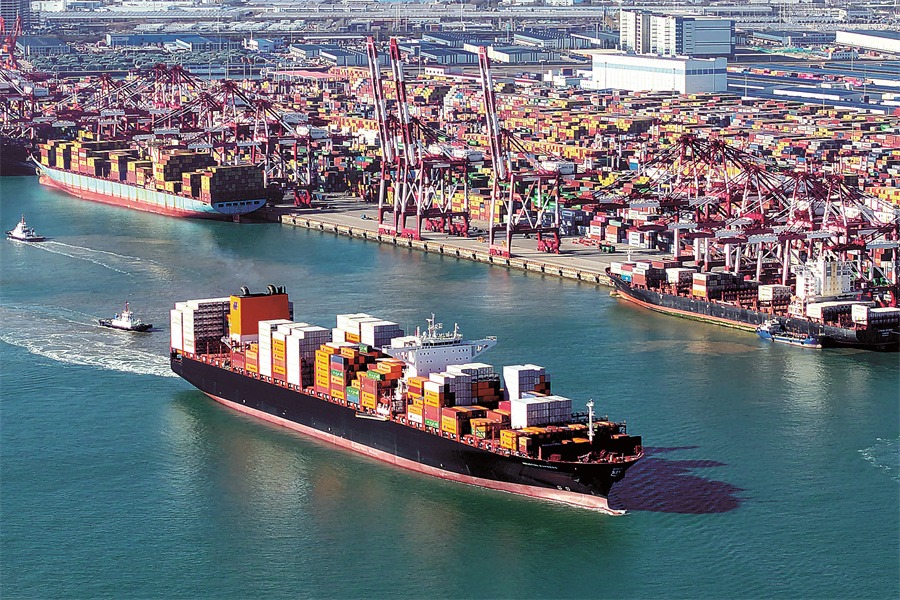
Trying to improve productivity is, unfortunately, not only difficult, but also not a known science. Economists like myself believe that certain successful policies are likely to improve productivity, but we don't know for sure, we can only make educated guesses. But things such as education, life expectancy, healthcare, the quality and availability of infrastructure, both human and physical, and perhaps in modern times, various forms of technology would all appear to be crucial. In addition, stability or strength in the quality of governance institutions, and the stability of the macro economy, including the amount of international trade and investment a nation pursues, and its level of national debt, all seem important. On many of these indicators, China typically scores better than the other BRICS countries.
During my time as chief economist of Goldman Sachs, alongside the BRICS idea, I also presided over the creation of an index called the Growth Environment Score, which attempted to measure 18 variables, many of them mentioned above, that we believed were statistically significant for sustainable growth and positive productivity change. We used to publish annual GES index scores for around 180 countries every year, although publication ceased in 2014.
The different variables were benchmarked and measured in a score that could be no higher than 10. In the 2014 index, Singapore scored the highest of all countries with an overall index of 8.10, and Eritrea scored the lowest of the 183 countries with an overall index of 2.50. China scored the highest among the BRICS members, with a score of 6.03. interestingly, ranking above a G7 country, Italy, for the first time.
In this regard, a glance at the index components shows many things that the other BRICS countries can learn from China, notably its education achievements, its use of technology, as well as many indicators about macroeconomic stability, especially the degree to which China engages in international trade and investment. Although for China to achieve its longer term ambition of even greater shared wealth for all its own citizens, it needs to do better in aspects such as governance and the rule of law. But it is definitely the case that the other BRICS countries have more to learn from China if they wish to achieve the same kind of success.
The author is the chair of Chatham House. The author contributed this article to China Watch, a think tank powered by China Daily. The views do not necessarily reflect those of China Daily.