



New energy car subsidies cut 10% from 2019









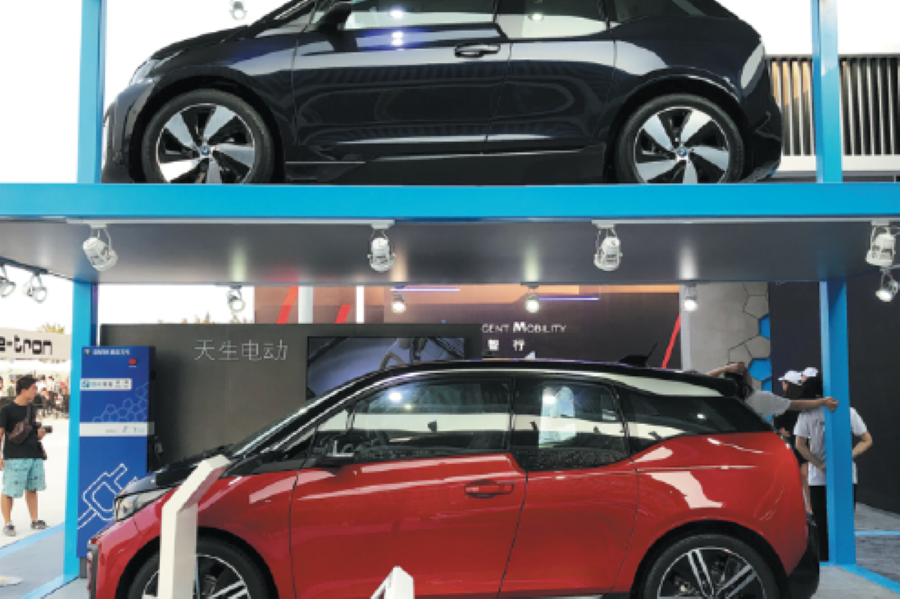
Government extends incentives for two years to bolster weaker demand
China is extending subsidies on new energy vehicles to 2022, with the stimuli for this year a mild drop of 10 percent from 2019, which is expected to alleviate the COVID-19 pandemic's impact on car sales and fuel the budding sector's development.
The authorities planned to end this year the subsidies that have been in place since 2009, but the State Council, China's cabinet, decided in March to extend them for another two years.
China has been the world's largest market for new energy vehicles since 2015. But their sales last year fell 4 percent to 1.21 million. The fall went deeper in the first quarter primarily because of the coronavirus outbreak.
"Extending the subsidies will help buffer the impact of the pandemic, boost car sales, increase the sector's competitive edge and finally promote its high-quality development," said the finance ministry in a statement on Thursday.
China has set a target for new energy vehicles, which consist of electric cars, plug-in hybrids and fuel cell vehicles, to account for a fifth of auto sales by 2025, compared with the current 5 percent.
Under the new plan, China is extending subsidies for another two years, with them cut by 10 percent, 20 percent and 30 percent year-on-year until their expiry from 2023.
The ministry said authorities will raise the requirements in terms of the driving range and power efficiency of cars that qualify for the subsidies which were designed to encourage the capable instead of protecting the incapable.
Electric cars had an average range of 160 km in 2015 with the figure rising to 350 km last year, while power consumption per 100 km fell from 17 kilowatt-hours to 14 kilowatt-hours, the ministry said.
This year, electric passenger cars with a range lower than 300 km will not be eligible for subsidies. Those that run between 300 km to 400 km are entitled to 16,200 yuan, and those run beyond 400 km, 22,500 yuan.
The ministry said the subsidies are designed to promote the widespread use of volume branded vehicles to prevent wasting stimuli on luxury spending so they will apply only to passenger cars costing less than 300,000 yuan ($42,376) before subsidies.
That means, premium electric vehicles such as Porsche's Taycan, Mercedes-Benz's EQC and Audi's etron are unlikely to benefit from the plan.
Tesla's China-made Model 3 sedans, which are currently priced over the benchmark, have the capacity to reduce the price for subsidies, said Thomas Fang, a partner in the China office of global consulting firm Roland Berger.
Tesla said it will raise the rate of localization, which stands at around one third, to 100 percent by the end of the year. The US carmaker made the estimate when it launched the China-made model earlier this year.
Subsidies on commercial new energy vehicles for public purposes will not be cut this year. In addition, when the authorities buy vehicles for government use, they will prioritize new energy vehicles, said the ministry in the statement.
China is also setting a cap of around 2 million on the number of vehicles eligible for subsidies, which will be in a first-come-first-served manner.
"This accounts for some 8 percent of car sales in China," said the ministry. "Setting a cap is a practice in other countries as well, like the UK and Germany."
It said it will issue a notice in advance when the annual tally of new energy vehicle sales nears 2 million so that carmakers have enough time for adjustment.
Carmakers and analysts said the extended subsidies are helpful in promoting new energy vehicles.
BJEV, one of the country's largest new energy vehicle makers, said the extensions of subsidies will promote the sector's long-term, healthy development.
"They will help offset the impact of the pandemic to some extent, stimulate the current weaker demand, and also enable carmakers to ensure investment in research and development," the company said in a statement.
Cui Dongshu, secretary-general of the China Passenger Car Association, said thanks to the extension of subsidies, sales this year are estimated to surge 23 percent from 2019 to 1.6 million units.
"The extension of subsidies is a major boost for the industry," said Cui. "In the long term, it is clear that this will help China to consolidate its global lead in new energy vehicles," he said.


















