



Cross-border e-commerce gains traction









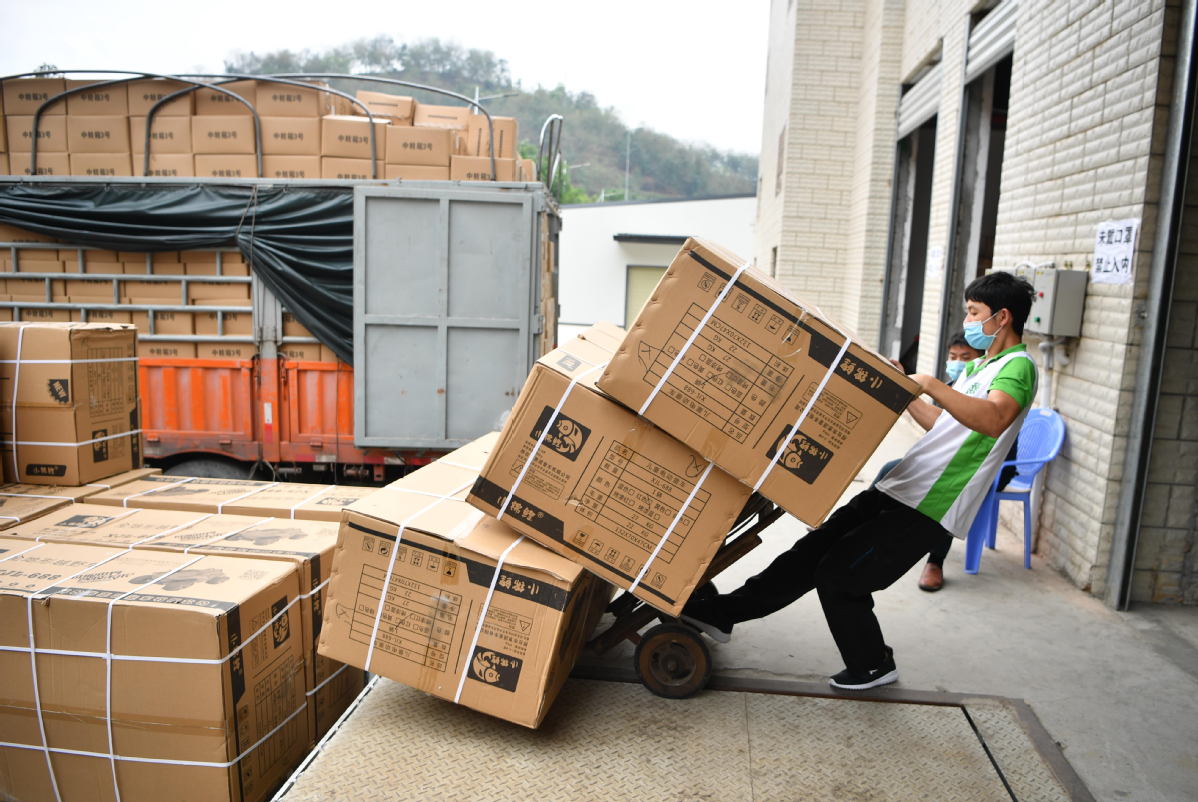
Public, private sectors plan measures to keep trade ticking amid pandemic
Cross-border e-commerce is set to play a bigger role in revitalizing foreign trade, judging by the string of measures enacted by the public and private sectors to salvage the segment ravaged by the novel coronavirus outbreak.
China announced plans on Tuesday to establish new pilot zones for cross-border e-commerce, support the processing trade, and host an online version of the Canton Fair, its signature export fair, as some of the latest responses to curb the contagion's effect on trade activities.
In addition to the 59 cross-border e-commerce pilot zones already set up, China will establish 46 new ones and exempt retail export goods in all pilot zones from value-added tax and consumption tax, while encouraging companies to jointly build and share overseas warehouses.
It took just three months for the fifth, or this latest, batch of pilot cross-border e-commerce zones to materialize, a reflection of the importance the country attaches to traditional trade being hampered by the virus, said Zhang Zhouping, a senior analyst on B2B and cross-border activities at the Internet Economy Institute, a domestic consultancy.
"The latest policy roll-outs will not only expedite the development of cross-border trade at the national level, but also boost economic vitality in respective cities and help local governments attract more investment in the future," said Zhang.
The private sector has quickly followed suit, with e-commerce giant Alibaba Group Holding Ltd unveiling a series of special measures to bolster cross-border trade by facilitating buyers and sellers using digital infrastructure.
In a 16-point circular unveiled by Alibaba on Tuesday to help small and medium-sized enterprises weather the novel coronavirus storm, much of the effort concentrated on boosting foreign trade, which has been affected by the virus in the form of squeezed demand and disrupted global supply chains.
For instance, the company said it will open up resources of its Ali-Express, Lazada, and Tmall World sites, all of which are targeting overseas consumers, to help SMEs broaden the reach of customers.
To help export-driven enterprises acquire new clients, Alibaba has vowed to help them build online pavilions and showrooms, roll out digital commercial markets featuring local specialties as well as digital industrial zones.
As China is among the quickest to flatten the virus curve and is expected to see early signs of economic recovery, the company has pledged to help export enterprises navigate the domestic market, recruiting them as suppliers for Tmall Supermarket and Taobao Xinxuan (a private-label goods market).
It will also set up a dedicated "export zone" on 1688.com, a platform traditionally facilitating domestic wholesale business, and offer a fast-track procedure for export-oriented small and medium-sized enterprises to set up virtual shops with corresponding support.
AliExpress, Alibaba's business-to-customer site selling to overseas market, has just come up with an initiative to directly bridge domestic manufacturers with the overseas customer requirements. The initiative, in tandem with a string of local governments in China, aims to launch online investment attraction venues and use livestreaming measures to promote domestic offerings and seize opportunities overseas.
"To help export-oriented enterprises weather the storm and turn crisis into opportunities, we have teamed up with local governments to bolster exports and create new business opportunities for SMEs backed by our digital infrastructure," said Wang Mingqiang, general manager of AliExpress.
Partnering local authorities include Sichuan province, Fujian province and Suzhou city of Jiangsu province, and AliExpress expected the number to finally top 100 under the initiative.
Buying and selling of industrial products via online platforms could well be the "next blue ocean" in China's e-commerce sector, according to a joint report by consultancy Bain and Alibaba in January. The market value of industrial products e-commerce is slated to hit 2.3 trillion yuan ($333 billion) in 2024 from 700 billion yuan last year.




















