


Pang Hui placed a few more pairs of chopsticks on the table for a family dinner, though she did not expect her extended family of seven would use them as serving chopsticks.
Surprisingly, her 75-year-old father, who used to shrug off the idea of serving chopsticks, became a staunch proponent this time, said Pang, 40, from Beihai, a coastal city of South China's Guangxi Zhuang autonomous region.
Chinese people often share dishes to express intimacy and diners use their own chopsticks to serve themselves food from the shared dishes, a tradition now being challenged by the outbreak of the novel coronavirus.
"We feel a sense of crisis as well as the urge to desert our old habits when we see reports of multiple family cluster infections," Pang said, pointing to reports of the virus spreading via droplets and close contact.
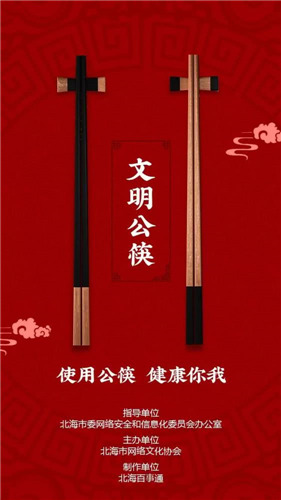
Local governments are helping to encourage a shift in catering etiquette. On Feb 10, local authorities of Beihai started a campaign promoting serving chopsticks and spoons, which will avoid cross-infection caused by the use of personal chopsticks.
Huang Zongjun, president of the Beihai cooking and catering industry association, said the association would guide and supervise its members, including the canteens of schools and colleges. "We will reward those found to provide serving chopsticks and spoons during three consecutive spot checks."
Similar measures were also adopted in other cities like Beijing, Shanghai and Hangzhou. Taizhou city in east China's Jiangsu province even standardized the designs of serving spoons and chopsticks, specifying the color and length of which to help diners differentiate them from personal ones.
Serving utensils are not the only cultural phenomenon that has become trendy amid the epidemic in China, where collective traditions favor intimacy over social distance.
In Haikou, capital of the island province of Hainan, the queue outside a duty-free shop seemed long but sparse. Since its reopening on Feb. 20, the shop has set one-meter bars at its entrance and check-out desks, reminding people in queues to stand at least one meter apart from each other.
A tourist surnamed Ren from the eastern city of Hangzhou said most people get used to keep a distance from those using cashiers or ATMs to protect personal privacy and give a sense of security, but the practice is now being expanded to the whole line as people are concerned about their health.
"China has done a good job of informing the public of the seriousness of the epidemic and how to stop the transmission, which helps raise the public health awareness," Ren said, adding that she will continue to maintain a one-meter gap even after the epidemic.
The novel coronavirus disease (COVID-19) has infected over 80,000 people and killed more than 3,000 in China. To contain the spread of COVID-19, the Chinese government is leading a nationwide campaign advising the public to avoid gatherings, wear masks and adopt a more health-savvy lifestyle.
The city government of Beijing, for example, is mulling amendments of relevant regulations to add clauses on promoting the practice of covering the mouth and nose with a handkerchief or the elbow when sneezing or coughing, and wearing a mask when suffering from a cold.
Wang Yan, who runs a carwash with her husband in Langfang, Hebei Province, said she was taught to cover her mouth with her hands when sneezing or coughing when she was young.
"I didn't know until recently that this will leave bacteria and viruses on the hands and contaminate anything I touch," said Wang, 36, who has just taught her 10-year-old daughter and six-year-old son to adopt the new posture.
The government is also targeting the practice of eating wild animals, which despite becoming increasingly rare in recent decades remains present in certain areas.
China suspended the illegal trading and transportation of wild animals shortly after the outbreak. The move became a permanent ban on Feb 24, when the country's top legislature adopted a decision on thoroughly prohibiting the illegal trading of wildlife and eliminating the consumption of wild animals.
Li Bo with the Hainan international center for wildlife protection said wild animal consumption could lead to the faster extinction of particular species, damage the ecological balance and harm people's health.
"The epidemic could become a turning point to eliminate the bad habit," Li said.








