



Deleveraging efforts may slack off due to faster debt growth









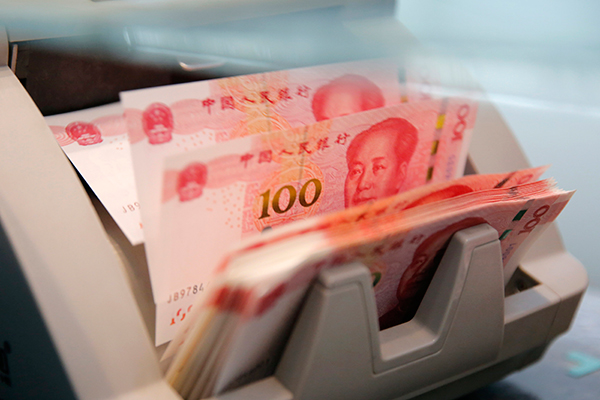
Deleveraging efforts may slacken a bit this year due to credit support that has become necessary to offset the negative impact of the novel coronavirus outbreak on China's economic growth, officials and experts said on Thursday.
In the long term, however, the deleveraging process should continue for prevention of financial risks and easing the already-high debt ratio, they said.
China may face a tougher deleveraging task this year, compared with last year, in light of the economic stability measures for curbing the virus, said Zhang Xiaojing, deputy head of the National Institution for Finance and Development (NIFD) under the Chinese Academy of Social Sciences.
Zhang said the overall leverage ratio may increase by 10 percentage points this year, because of faster debt growth to counter economic slowdown. He said China's macro leverage ratio stood at 245.4 percent in 2019.
The central bank said early this month that the country's overall leverage ratio has been kept stable at "about 250 percent" in the past 10 quarters.
The pace of deleveraging will also be affected by the issue of whether to extend the interim period of the new rules for asset management products-which are crucial for carrying out financial deleveraging and controlling shadow banking.
Officials from the central bank and the banking regulatory body said that they are working on some specific measures to delay the rules. Earlier, it was planned that the rules would take effect from 2021, after a three-year interim period.
"Financial regulation may be eased," said Zhang. "Maybe the rules will be delayed for one more year," he said.
Lou Feipeng, a senior economist at Postal Savings Bank of China, said the postponement might be for one or two years, considering that the deleveraging might trigger a credit crunch for some financial institutions with weak risk management capabilities.
"According to the new rules, enterprises need to pay back loans before they are due, but due to the virus outbreak, borrowers may face difficulties in operations and loan repayments and this will lead to breakages in the financial chain."
Most financial institutions may need two years to dispose of their existing assets, Lou said. More details need to be discussed for the postponement as the measures should consider being fair to different types of institutions, he said.
Maintaining a stable macro leverage ratio should be a goal to be adhered to in the long term, although the novel coronavirus epidemic could have an impact on the short-term economic growth and disrupt the deleveraging initiative, he said.
Policies in the medium term should follow a balanced approach in promoting the objectives of stabilizing growth and leverage, although a higher debt ratio could be tolerated, according to Zhang from the NIFD.
"The central government and private companies still have room to raise the leverage ratio, while the debt level of State-owned enterprises and local governments needs to be controlled."
Grace Wu, senior director of financial institutions-banks at Fitch Ratings, said: "We believe there may be some softening in the regulatory stance toward shadow banking activity for non-banking financial institutions in light of the virus outbreak."
The country's deleveraging efforts are likely to focus on irregular financing activities, after a more than 20 percent reduction in shadow banking assets since 2018. But channel business at securities and trust companies should continue to shrink to comply with the asset management rules, Wu said.
Fitch Ratings said the designation of domestic systemically important banks in China may be further delayed beyond 2020 as priorities shift to stabilizing the financial system and supporting economic growth.
Liang Tao, the vice-chairman of the China Banking and Insurance Regulatory Commission, said at a news conference last week that financial regulators will adjust rules to temporarily tolerate higher nonperforming loans in banks.
"Maybe the nonperforming loans will increase, and we are prepared for that," Fan Yifei, vice-governor of the People's Bank of China, the central bank, said at the same news conference. "The ratio (in Chinese banks) on the whole is not high ... there is quite a large room for us to make such adjustments."




















