WTO accession produces wide-ranging dividends









International practice
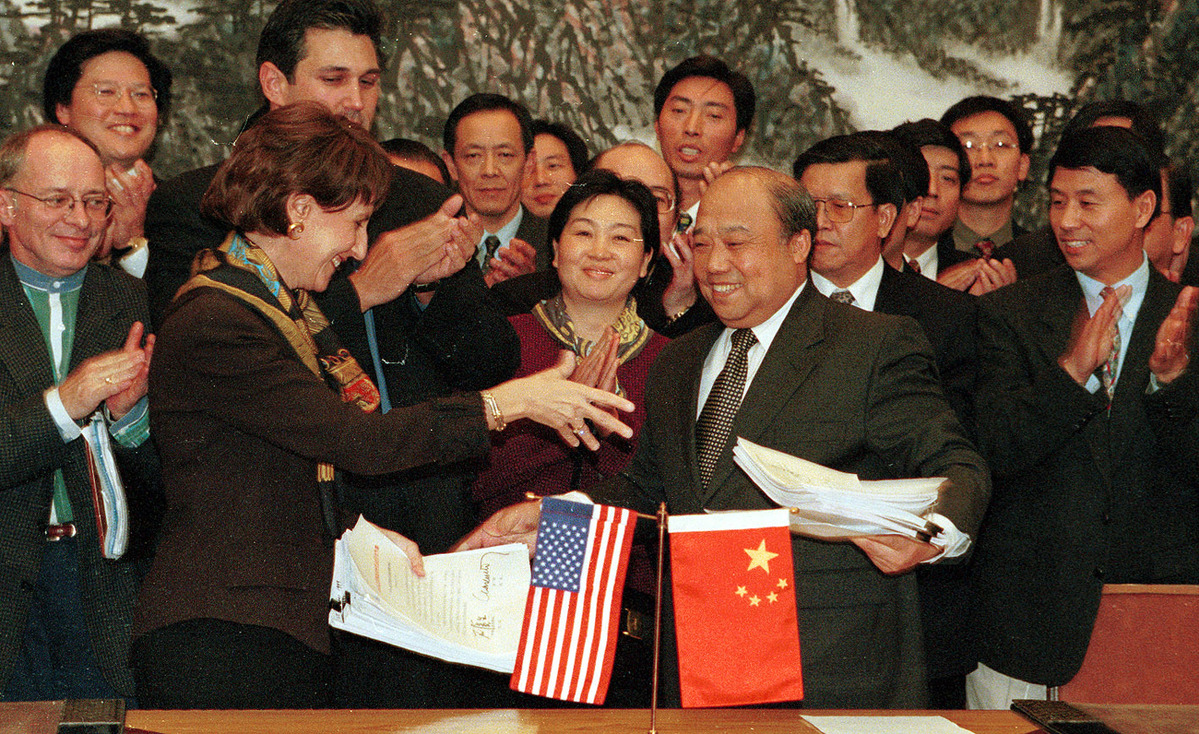
Tu Xinquan, president of the China Institute for WTO Studies at the University of International Business and Economics in Beijing, described the country's WTO accession as a "very important step" since the People's Republic of China was founded in 1949.
He told China Daily that the reform and opening-up policy, introduced before China joined the WTO, was "very much experimental". Citing late leader Deng Xiaoping, he compared it to "wading the river by groping for stones".
"After joining the WTO, China conducted reform and opening-up by following an existing set of rules and conforming to international norms and orders," Tu said, adding that it was a critical move for the country to integrate itself into the international economic system.
The white paper China and the World Trade Organization, released by the State Council Information Office on June 28 last year, said the country had continued efforts to improve its socialist market economy system, further align its policies with multilateral trade rules in all areas, honor its commitments on opening trade in goods and services, and strengthen intellectual property rights protection.
"Remarkable improvements have been made in enhancing the stability, transparency and predictability of its opening-up policies. China has contributed significantly to the effective operation of the multilateral trading system," the white paper said.
After joining the WTO, the country reviewed and revised 2,300 laws, regulations and departmental rules at central government level and 190,000 policies and regulations at sub-central government level, covering trade, investment and IPR protection.
By 2010, China had fulfilled all its tariff reduction commitments, cutting the average level from 15.3 percent in 2001 to 9.8 percent. It lowered the average tariff level for manufactured goods from 14.8 to 8.9 percent, and the corresponding rate for agricultural produce from 23.2 to 15.2 percent-about a quarter of the global average and far lower than the 56 percent imposed by WTO developing members and the 39 percent by developed members.
The country has taken major steps to lower nontariff barriers. These included eliminating import quotas, import licenses, specific import tendering requirements and other nontariff measures in 2005 for 424 items such as cars, machinery and electronic products, and natural rubber.
The domestic services market has also been opened up, with the white paper stating, "By 2007, China had honored all of its commitments on trade in services."
The country has also lowered the threshold for foreign investment in services. In 2010, foreign direct investment in China's services industry exceeded that in the manufacturing industry for the first time. In 2017, FDI in the services industry accounted for 73 percent of all such investment in China.
The white paper listed major efforts made by the country to strengthen IPR protection through formulating laws and regulations and improving their enforcement.
By May last year, 16 free trade agreements had been signed by China with 24 countries and regions. The country is also negotiating the Regional Comprehensive Economic Partnership, a free trade agreement between the 10 members of the Association of Southeast Asian Nations and Australia, China, India, Japan, New Zealand and South Korea.
Lamy, the former WTO director-general, said China has lived up to its commitments to the organization. He said that when the country had violated these commitments, it was taken to the WTO Dispute Settlement Mechanism, and when Beijing lost a case, it complied with the decision.
The white paper said that by April last year, China had brought 17 disputes to the WTO, of which eight had been concluded. The country had also been the subject of complaints in 27 disputes, of which 23 had been concluded.
"China actively defended the cases against it, respected the WTO rulings and made adjustments ... according to WTO rules. Up to now, none of the complainants has requested retaliation against China," the white paper said.
David Dollar, a senior fellow at US think tank the Brookings Institution, said, "China has largely honored its WTO commitments", but added that it has fallen short in its pledges to open up banking, credit cards and government procurement.