



Rare earth, nation's edge









New research
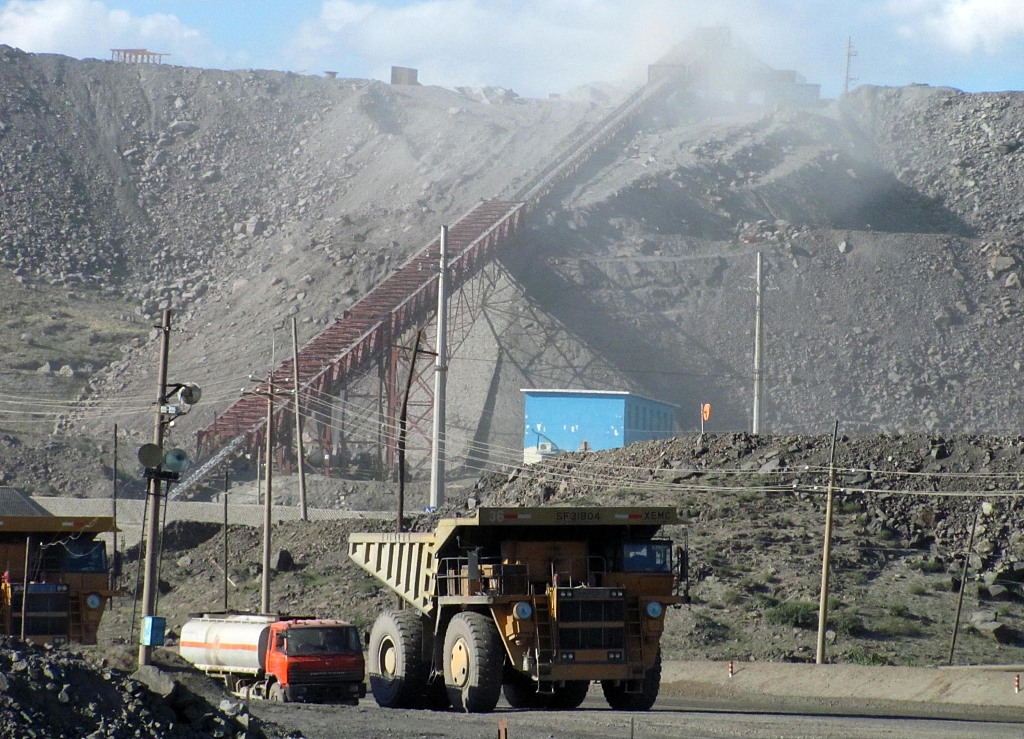
China currently produces around 80 percent of the world's supply of raw rare earths. But the domestic industry is plagued by illegal mining and production, lack of innovation and environmental violations.
A tectonic shift could be in the making for the whole rare earth industry worldwide.
A study published earlier this month in the journal Physical Review Letters by researchers from three universities - the University of Michigan in the United States, together with France's Lorraine and the UK's Cambridge universities - found that more common elements could be combined to make electronically useful materials that could replace some rare earths at much lower cost in the future.
A report about the study for newatlas.com by Michael Irving on July 5, noted efforts by some companies, such as Honda and Samsung, to recycle rare earth materials and deal with "the ever-growing e-waste problem". The researchers lauded such initiatives but suggested that "it would be easier to just use cheaper alternatives" for some applications.
Their study found that combining elements from neighboring groups in the Periodic Table could create compounds with properties similar to rare earth metals for lighting and solar panels. Researchers were able to produce the compounds in a thin-film form by layering more common elements "with atomic precision", Irving wrote.
He quoted Roy Clarke, one of the study's authors, as saying: "It's not viable for technology to rely on something that's likely to run out on a scale of 10 to 20 years."
Rare earths at a glance
·Rare earth elements are used in a wide range of consumer and military products, from iPhones to electric car motors, jet engines, satellites and lasers. China is a major supplier.
·Rare earth metals are a group of 17 elements. They are considered rare because they appear in low concentrations in nature and are difficult and costly to mine and process.
·China has most of the world's processing capacity. In 2017, China accounted for 81 percent of the world's rare earth production, according to the US Geological Survey.
·Few alternative suppliers are able to compete with China, which is home to 37 percent of global rare earth reserves.
·California's Mountain Pass mine is the only operating US rare earth facility. It ships roughly 50,000 metric tons of rare earth concentrates extracted annually in California to China for processing. Rare earths are also mined in India, South Africa, Canada, Australia, Estonia, Malaysia and Brazil.
How are they used?
Rare earth elements are used in rechargeable batteries for electric and hybrid cars, advanced ceramics, computers, DVD players, wind turbines, catalysts for cars and oil refineries, monitors, televisions, lighting, lasers, fiber optics, superconductors and glass polishing.
Several rare earth elements, such as neodymium and dysprosium, are critical to the motors used in electric vehicles. A bright blue oxide called YInMn Blue, which includes the rare earth Yttrium, is used in oil paints for artists.
Military applications
Some rare earth minerals are essential in military equipment, including jet engines, missile guidance systems, anti-missile defense systems, satellites and lasers. Lanthanum, for example, is needed to manufacture night vision devices.
Who depends on Chinese supplies?
Companies such as Raytheon, Lockheed Martin and BAE Systems in the US all make sophisticated missiles that use rare earth metals in their guidance systems and sensors. Other companies in Europe and elsewhere also need them.
Apple Inc uses rare earth elements in speakers, cameras and the so-called "haptic" engines that make its phones vibrate. The company says the elements are not available from traditional recyclers because they are used in such small amounts they cannot be recovered.
What about prices?
Prices held largely steady for months, but export prices of an array of rare earth elements have rallied strongly over the last couple of months. President Xi Jinping visited a processing company in southern China in May, bringing the sector into the spotlight.
So far, the US government has exempted rare earths from tariffs on Chinese goods.
The price of neodymium (a metal used in magnets and speakers) increased 26.5 percent in late May from $50 per kilogram to $63.25 per kg. Dysprosium (a metal used in lasers), erbium oxide and gadolinium oxide (used in medical imaging and fuel cells) were up around 10 percent in early summer.
Yuan Hui in Hohhot and Wang Jian in Nanchang contributed to this story.




















