



Battery maker: tariffs costly to Americans









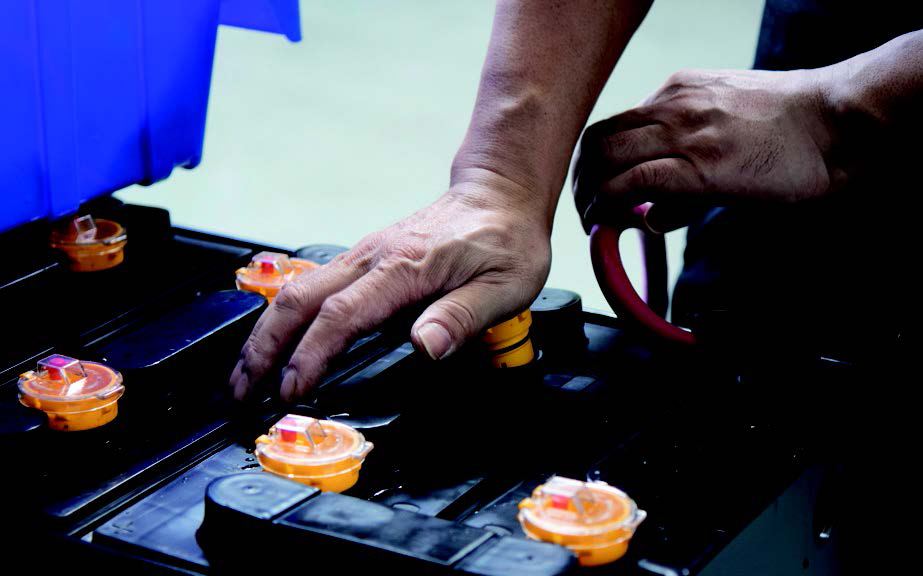
His company imports batteries produced in China with components from the US, China and some other countries. After final assembly in the US, the batteries are sold to various end-users from original equipment manufacturers (OEMs) to the federal government.
Speaking on condition of anonymity and under the pseudonym Peter, the owner of a Texas battery company discussed how the tariff dispute between the United States and China has impacted his business, and ultimately American consumers' pockets.
When the Trump administration first imposed an extra 10 percent tariff on imported batteries last summer, Peter said he was able to absorb the extra cost by negotiating a 5 percent price-reduction from Chinese manufacturers, with his company assuming the other 5 percent.
The administration of US President Donald Trump recently announced a new round of tariffs on Chinese goods.
For Peter, it means that the batteries he imported from China now face an extra 25 percent tariff, on top of the original 3.5 percent tariff before the trade dispute started.
"I have to send out letters to my customers that I am forced to raise the price tag by at least 10 percent effective this month," he said. He calls the price increase a "temporary tariff surcharge", hoping the situation will be resolved soon.
"I have been in constant worry about how to make my business profitable amid all these tariff hikes ever since the trade war first started," Peter said.
The tariff situation has forced Peter to change aspects of his business. He has given up using American components because of China's retaliatory tariff of 25 percent.
As a result, those parts face a 25 percent tariff levied by China when they go to China, and another 25 percent tariff levied by the US as part of the batteries being imported to the US. That amounts to a more than 50 percent tariff on the parts.
"Our batteries have been made with 15 to 20 percent American components. We have always made an effort to include as many American components as possible in our products," Peter said.
His company exported roughly $2 million in American battery parts to China in 2018. Under the latest tariffs, those $2 million in parts would incur an extra $1.125 million in levies when imported back as part of batteries.
"I am forced to replace the American parts with China-made parts," Peter said. "I don't think Trump's policy is helping the US at all."
Peter's company imported almost $6.4 million worth of energy-storage batteries in 2018 from China. With a 25 percent tariff, the extra cost would be close to $1.6 million. Such a cost increase is simply not sustainable for his business.
To avoid the 25 percent tariff on batteries, Peter said the industry began to move the factories from China to Southeast Asian countries such as Malaysia, Vietnam and Thailand.
"The battery-production chain can't get back to the US anymore due to strict environmental laws and public perception," he said.
Such reality is evident in recent statistics published by the US Census Bureau. According to Census Bureau data, US imports from China dropped by 13.9 percent, while US exports to China fell 23 percent in the first quarter of 2019.
Meanwhile, US imports from Vietnam have increased by more than 40 percent in the same period.
As the industry scrambles to revamp its production chain, the moves increase costs, Peter said.
"It normally takes six months to set up a system of production with quality control, a year to raise production, and a year and half to reach normal capacity. The tariff has brought a ripple effect at the manufacturing end," Peter said.
Ultimately, it's the American consumers who pay for the added cost, he said.
According to Peter, OEMs will have to raise the prices of their final products; the US Federal Emergency Management Agency (FEMA) will pay more to buy Peter's batteries to provide emergency power services to disaster areas; and green-energy companies will pay more to buy his batteries to store wind and solar power.
The batteries are a component in forklifts, which are widely used by retailers and restaurants.
"Tariffs on batteries alone will results in extra costs for almost all consumer goods and even energy," Peter said.










