US ports prepare for trade war storm









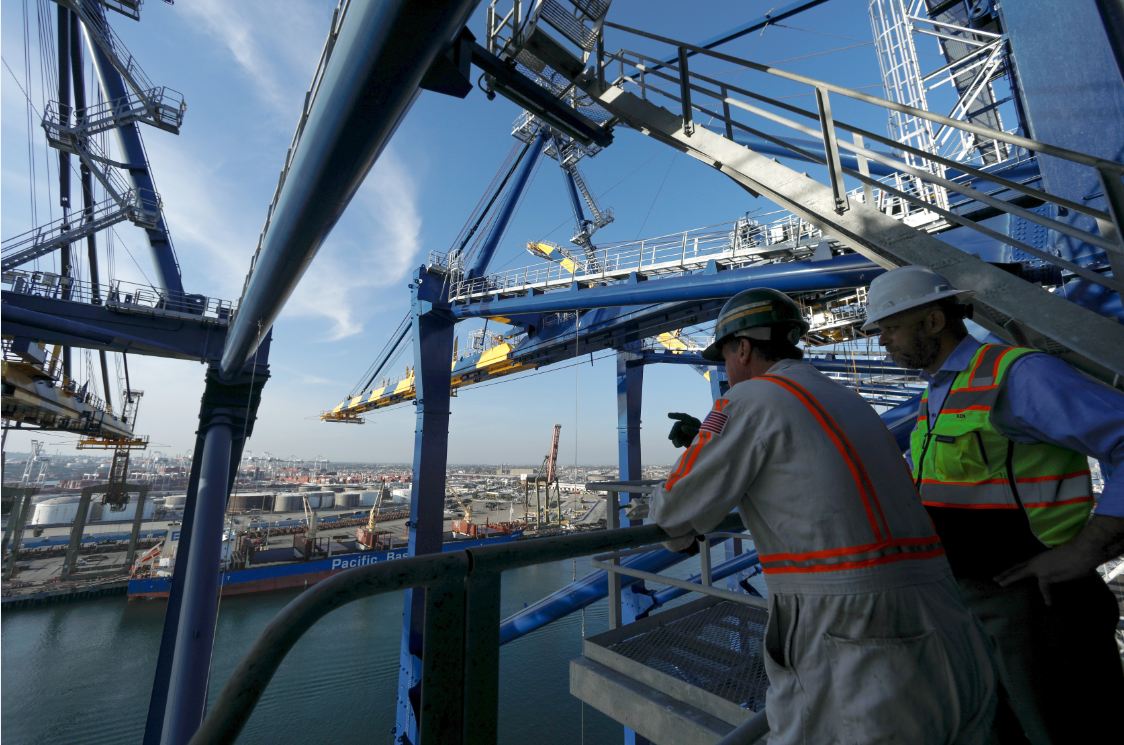
Fears voiced over blue-collar jobs
Some seaports on the West Coast of the United States are bracing to bear the brunt of the US-China trade war.
Rising tensions between the world's two largest economies continue to create uncertainty, disrupt the global supply chain and dampen job opportunities.
Hopes for a potential trade deal have been dampened after the two countries failed to reach an agreement after months of negotiations.
On May 10, the US raised tariffs on $200 billion worth of Chinese imports from 10 percent to 25 percent. It has also threatened to place tariffs on a group of products worth $300 billion.
On May 13, China retaliated by announcing tariffs on $60 billion worth of imports from the US.
Eric Schinfeld, senior manager of federal and international government relations at the Port of Seattle, said: "For most businesses, including ours, the worst thing is the lack of predictability. So all of these changes - new tariffs, uncertainty about whether or not there will be negotiations or a settlement between the US and China - it just makes it hard for us to plan."
Jock O'Connell, international trade adviser for independent research and consulting company Beacons Economics, said nearly 50 percent of all trade at the ports of Los Angeles and Long Beach last year involved China.
"If you look at the amount of trade that goes through these ports, it's off by over 14 percent since last year, and it's particularly down with respect to exports," he said.
"The volume of US exports going through the ports of Los Angeles and Long Beach to China is down by nearly 35 percent from last year. Imports are down by 12.6 percent from last year," he added.
But for O'Connell, the most worrying aspect is that the trade war will result in the loss of blue-collar jobs at the ports.
"A lot of these people are what are generally called occasional or temporary workers. They work in warehouses and distribution centers, they drive trucks, their work is dependent upon whether there's a box to be moved ... when there are no boxes to be moved, these people get sent home," he said.
Phillip Sanfield, director of media relations for the Port of Los Angeles, said one in nine jobs in Southern California is tied to the twin ports of Los Angeles and Long Beach.
Mario Cordero, Port of Long Beach executive director, said its operations generate 555,000 jobs in Southern California, along with 2.6 million directly and indirectly in the supply chain throughout the US.
He said more than 70 percent of the imports handled at the Port of Long Beach are from China - the most common commodities being household goods, furniture, electronics, machinery, textiles and footwear.
Tariffs put in place before those imposed this year had not necessarily had a significant impact on jobs, Cordero said. But the scenario has since changed.
"What we are talking about now is a different level - a level of 25 percent on application, a level of tariffs on an escalating number of products. That scenario does present potential job losses."
In Seattle, the impact on jobs and the economy is two-fold, because items are traded with China through both Seattle-Tacoma International Airport and the Port of Seattle.
Schinfeld, from the Port of Seattle, said: "We really rely on two-way trade with China through our seaport and airport gateways. It's the core of our business, but even more important than our business as a port, it's important to the customers we serve."
He said a diverse mix of people - retailers, manufacturers and farmers, all of whom use the two gateways to trade with China - could be affected by the tariffs.
China is the top trading partner for the Port of Seattle in terms of imports and exports. It is the No 1 export destination for goods transported from the airport, Schinfeld said.
The Northwest Seaport Alliance, which covers the ports of Seattle and Tacoma in Washington state, generated 20,100 jobs and $1.9 billion in income through all maritime cargo activities in 2017, data from the organization show.
While most imports from China do not remain in the local market, the port and airport serve as transit points for shipping products such as manufactured goods, retail and consumer items to the rest of the US.
Freight transported from the airport and seaport to China includes manufactured goods, aerospace components, seafood and agricultural products.